Following the 1986 nuclear disaster, the Soviet Union raced against the clock to erect a concrete shelter over Chernobyl's reactor number four. That first shelter was built under extreme conditions and with an estimated lifespan of barely thirty years. Over the decades, deterioration threatened a collapse that would disperse tons of highly radioactive dust into the atmosphere. However, building a new dome directly over the ruins would have exposed workers to lethal doses of radiation.
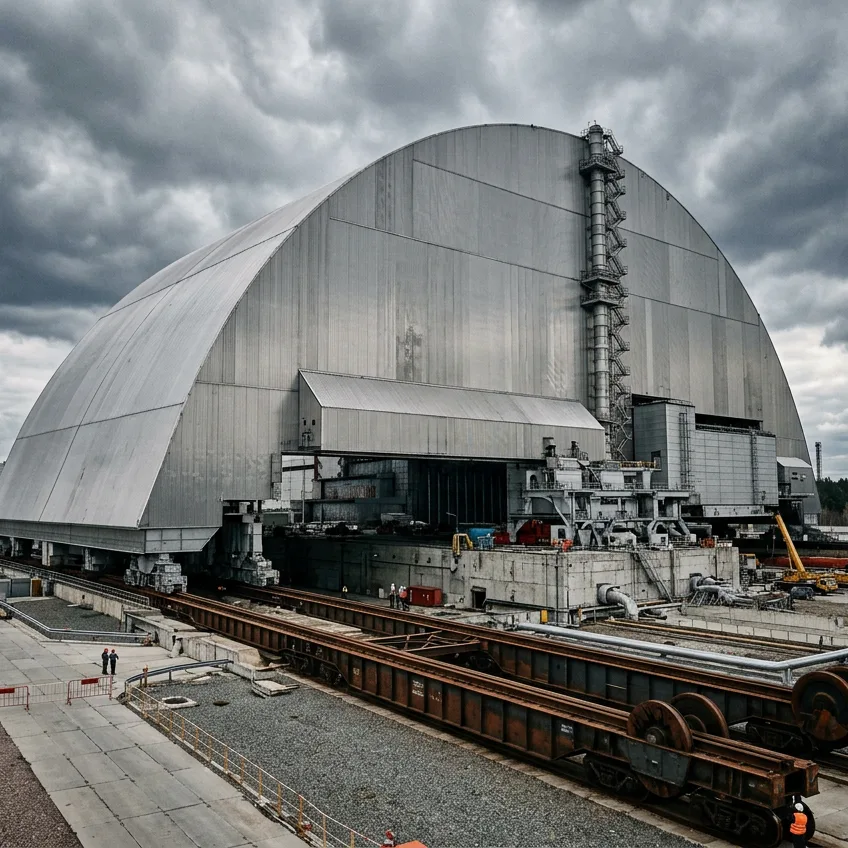
The international engineering solution was unprecedented: design the New Safe Confinement and assemble it in a clean area located 327 meters away. Standing 108 meters high, 162 meters long, and with a span of 257 meters, the monumental steel arch was larger than the Statue of Liberty and weighed over 36,000 tonnes, three and a half times as much as the Eiffel Tower.
The true feat culminated in November 2016. To move such a massive structure, engineers installed a system of stainless steel rails coated with Teflon and graphite pads to reduce friction. Using 224 computerized hydraulic jacks, the structure moved at a millimeter pace of ten meters per hour for over forty continuous hours. Today, this hermetic shield withstands temperatures between -43 °C and +45 °C, Class 3 tornadoes, and houses robotic overhead cranes inside designed to dismantle the radioactive core over the next one hundred years.
Source: European Bank for Reconstruction and Development (EBRD) / Novarka Consortium