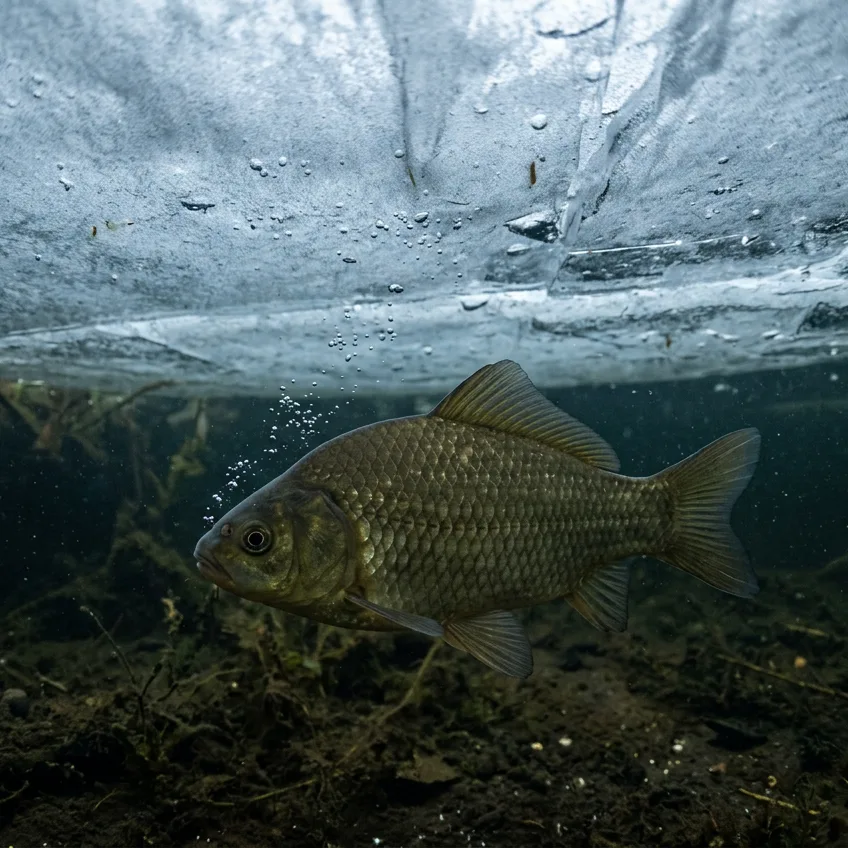
During the freezing winters of Northern Europe, many lakes and ponds freeze completely at the surface. Cut off from the atmosphere, the water loses all its dissolved oxygen in a matter of days due to organic decomposition. For the vast majority of vertebrates, this anoxic environment means death by suffocation within minutes. However, the crucian carp (Carassius carassius) and its relative, the goldfish, can spend up to five months living comfortably in water with zero oxygen.
The secret to this physiological feat lies in a unique metabolic adaptation described by scientists from the universities of Oslo and Liverpool. When animal cells run out of oxygen, they turn to anaerobic fermentation to generate energy. However, this mechanism quickly builds up toxic lactic acid in the blood and tissues, causing lethal acidosis.
The crucian carp avoided this fatal fate thanks to a duplication of its genome eight million years ago. Its muscles developed a set of proteins that function much like brewer's yeast: they channel metabolites into producing ethanol instead of lactic acid. The fish then diffuses this alcohol outward through its gills, preventing it from reaching fatal concentrations.
Throughout the winter, blood alcohol levels in the crucian carp reach over 50 milligrams per 100 milliliters, exceeding the legal driving limit in much of the world. This true biological distillery allows it to thrive in inhospitable habitats where no predator can survive.
Source: Scientific Reports (Fagernes et al., 2017: 'Extreme anoxia tolerance in crucian carp and goldfish through a specialized ethanol-producing metabolic pathway')