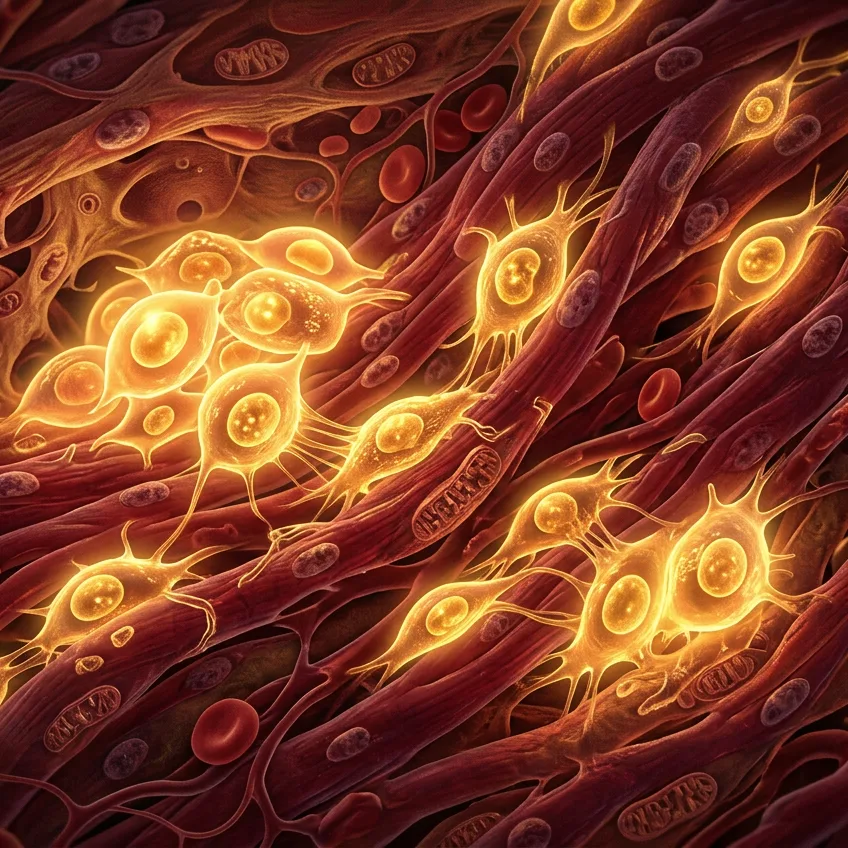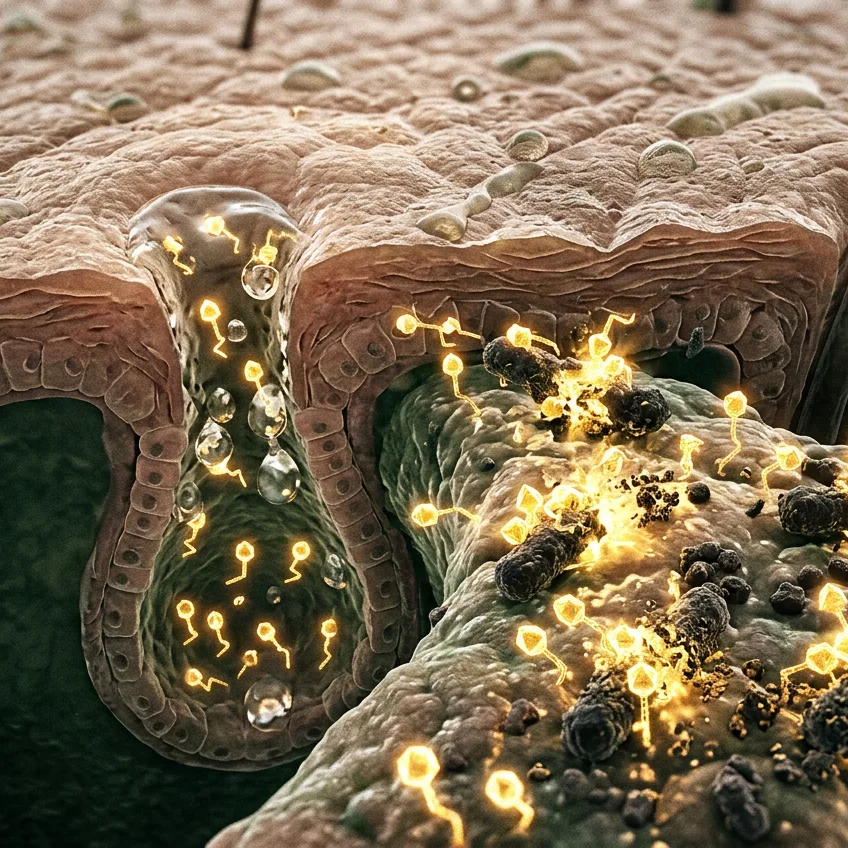
We tend to think of sweat as a simple thermal cooling mechanism or a bodily nuisance, but biology hides a sophisticated immune barrier within it. In the year 2001, researchers at the University of Tübingen discovered dermcidin, a potent antimicrobial peptide produced exclusively and constantly by human eccrine sweat glands.
Unlike most known antibiotics, dermcidin does not lose its effectiveness in hostile environments; on the contrary, it is biologically designed to activate in the salty, slightly acidic environment of perspiration. Its mechanism of action is lethal and purely physical:
- Specialized structure: Upon contact with sweat, dermcidin molecules self-assemble in the presence of zinc ions.
- Lethal perforation: They form stable pore channels in the cell membranes of invading pathogens, causing a massive leakage of water and nutrients that destroys bacteria through osmotic shock.
- Broad-spectrum efficacy: It successfully neutralizes fungi such as Candida albicans and dangerous bacteria such as methicillin-resistant Staphylococcus aureus (MRSA).
Because it punctures the bacterial wall directly instead of interfering with internal metabolic processes, microorganisms can hardly develop resistance to it. Every time you sweat, your body not only regulates its internal temperature, but also deploys a liquid layer of molecular armor that disinfects your body surface in a matter of minutes.
Source: Nature Immunology (Schittek et al., 2001; Song et al., 2013: 'Structure and mechanism of the human antimicrobial peptide dermcidin')