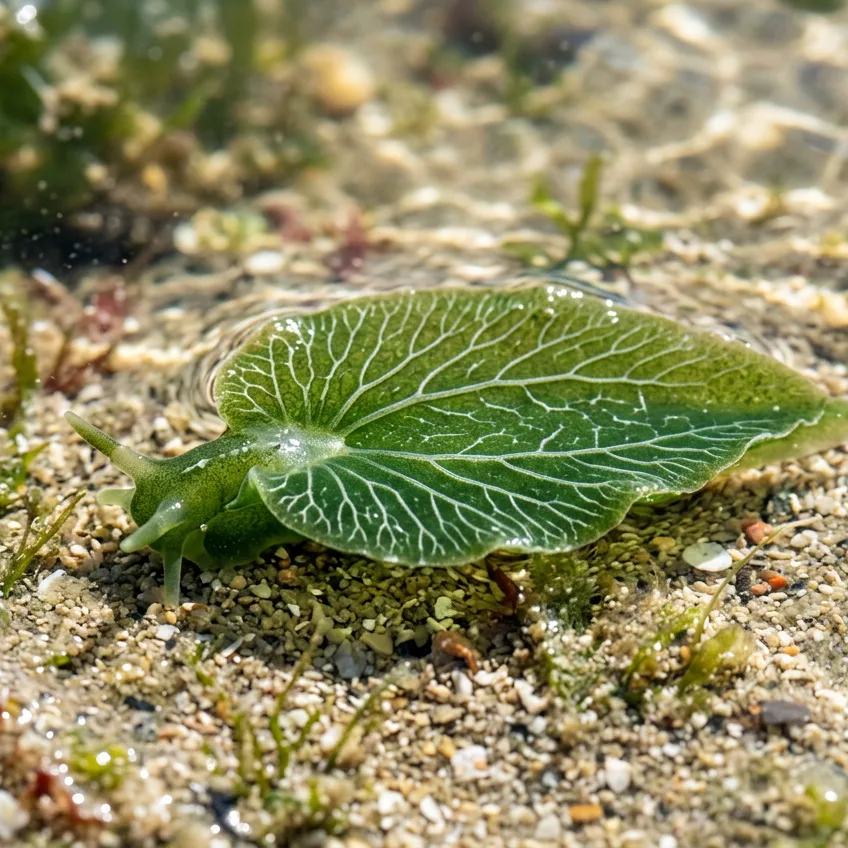
At first glance it looks like a delicate green leaf floating in the salt marshes of North America, but Elysia chlorotica is actually a sea slug with an extraordinary metabolic ability: kleptoplasty. This small gastropod feeds on the alga Vaucheria litorea, but instead of digesting all its cellular content in its stomach, it punctures the plant walls, sucks out the cytoplasm, and preserves fully functional chloroplasts.
Far from destroying them with its digestive juices, the mollusk channels these photosynthetic organelles into the fine branches of its digestive gland, which spread throughout most of its body. As a direct result, the animal takes on a vibrant emerald color and begins producing its own food using only water, carbon dioxide, and sunlight. After an initial feeding period as a juvenile, an adult can live for nine to ten months without eating a bite, surviving solely on sugars synthesized by the sequestered plant organelles.
The great evolutionary mystery was how these chloroplasts manage to stay operational for nearly a year without the support of the original alga, since they require maintenance proteins usually produced by the plant cell nucleus. Several molecular studies have shown that Elysia chlorotica underwent horizontal gene transfer events throughout its evolution, incorporating algal DNA fragments into its own genome to synthesize the proteins that keep its solar engines alive.
Source: Proceedings of the National Academy of Sciences (PNAS)