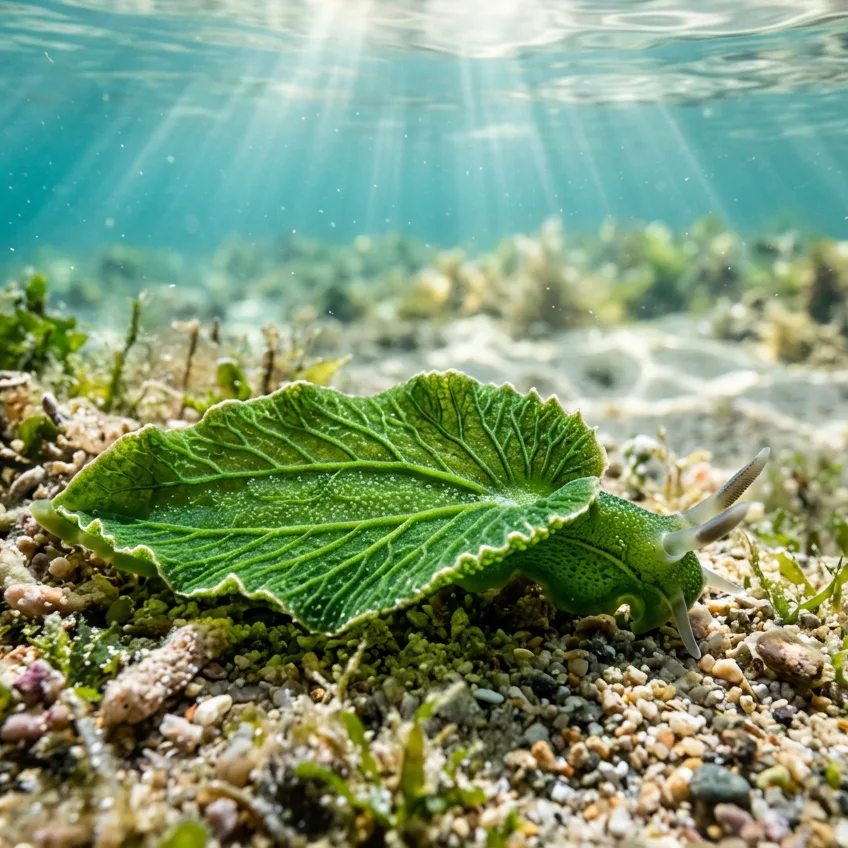
At first glance it looks like a delicate green leaf floating in the salt marshes of North America's Atlantic coast, but Elysia chlorotica is actually a gastropod mollusk with one of the most extraordinary biological abilities on the planet: kleptoplasty, the selective theft of plant cell organelles for its own benefit.
Unlike most herbivores, which completely break down what they ingest, this sea slug feeds on the alga Vaucheria litorea by piercing its filaments and sucking out the cell contents. However, its digestive system does not break down the chloroplasts (the tiny cellular factories where photosynthesis takes place), but instead absorbs them intact and houses them in the branches of its gut, distributed throughout its translucent body.
What is truly astonishing about this phenomenon includes several biological milestones:
- Energy autonomy: After feeding during its early stages of development, the slug can spend up to nine consecutive months without eating a bite, staying alive, active, and healthy solely by sunbathing in shallow waters.
- Cellular maintenance: For a chloroplast to function for months outside its original alga, it requires specific proteins. Elysia chlorotica has developed unique biochemical mechanisms to stabilize and nourish these foreign organelles, defying the classic boundaries between the animal and plant kingdoms.
This astonishing functional hybrid not only turns Elysia chlorotica into a living biological solar panel, but also into one of the most fascinating research models for understanding symbiotic transfer and cellular bioenergetics.
Source: Proceedings of the National Academy of Sciences (PNAS)



