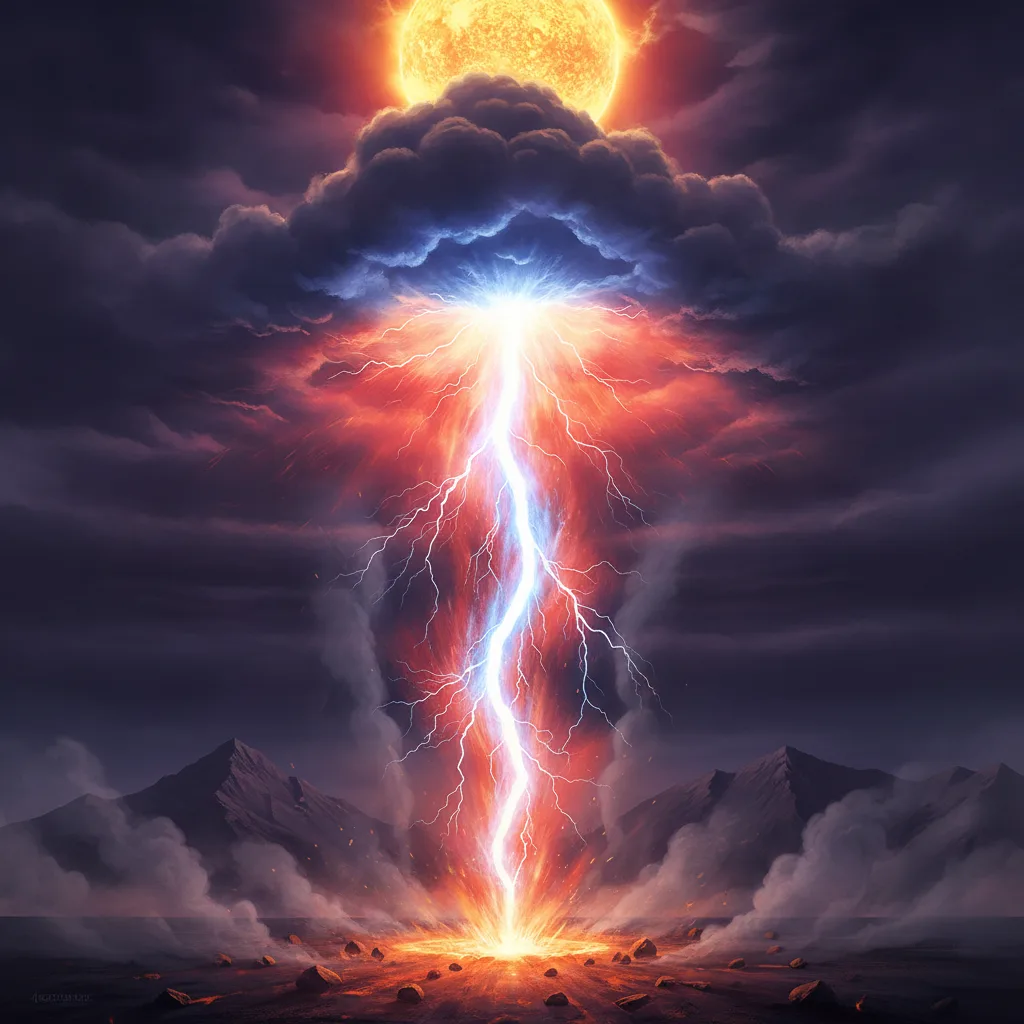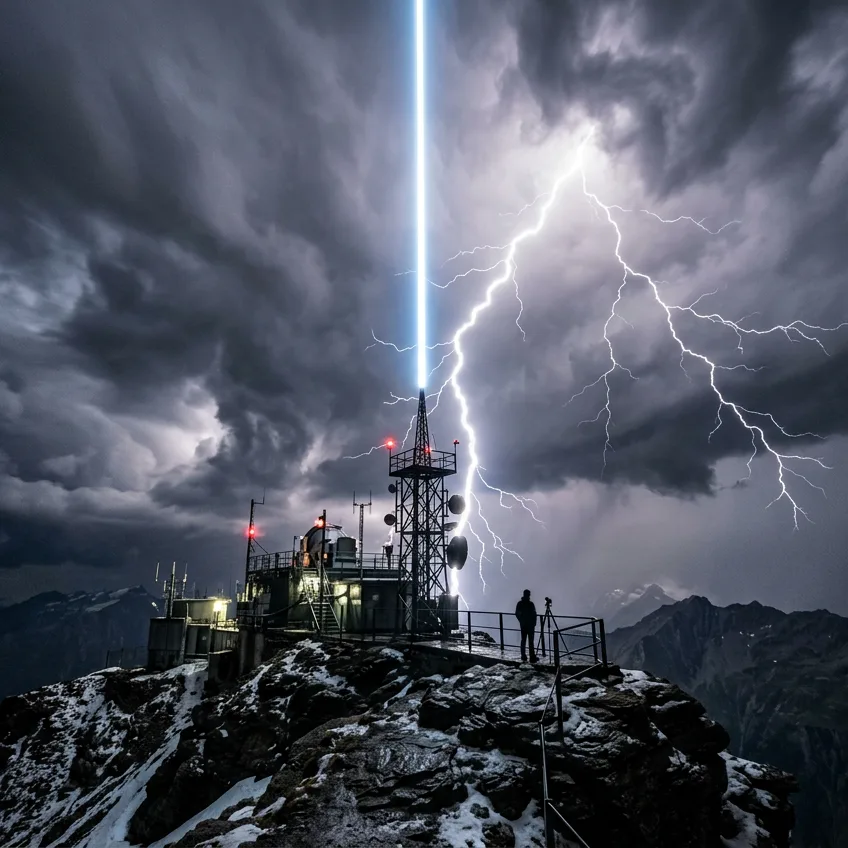
When lightning strikes the ground, it releases colossal energy in a fraction of a second. If the discharge hits terrain rich in quartz sand or siliceous sediments, the temperature instantly exceeds 1,800 °C—sometimes reaching peaks of 30,000 °C, hotter than the surface of the Sun. This extreme thermal shock does not completely vaporize the ground; instead, it instantly melts mineral grains along the path of the electric current, creating a fascinating structure called a fulgurite.
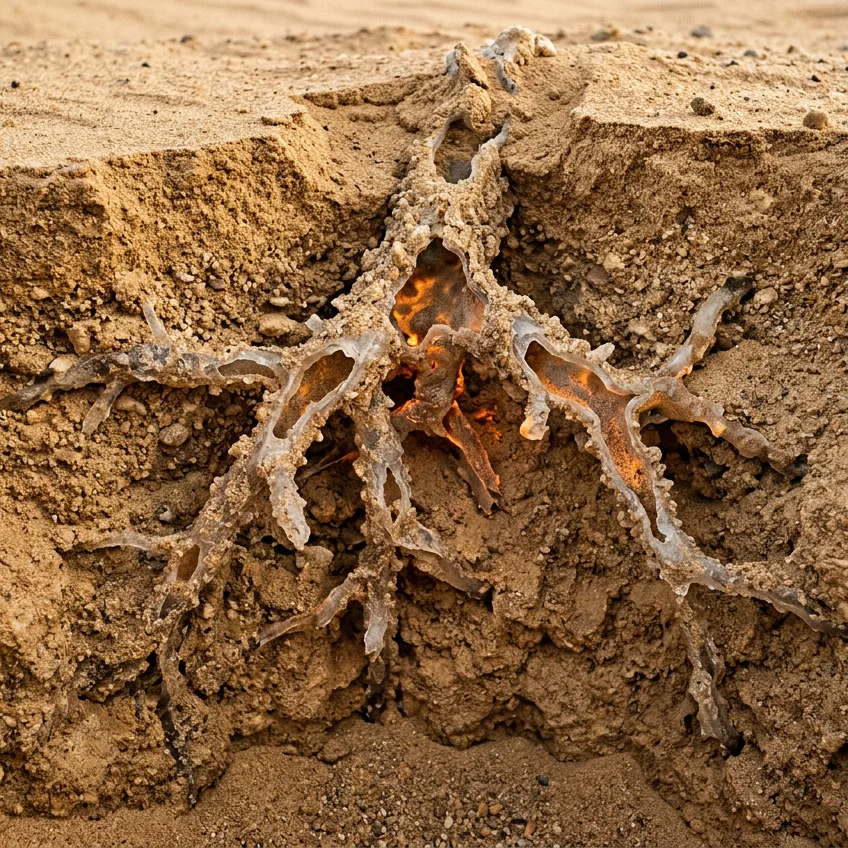
Often nicknamed "lightning fossils," fulgurites are not ordinary rocks, but hollow tubes of lechatelierite, an unusual natural form of amorphous silica glass. Their morphology exactly mimics the branched path of lightning underground: a brittle cylinder, rough and covered with partially melted sand grains on the outside, but with a perfectly smooth, glassy, and shiny interior that reveals the rapid expansion of superheated gases.
Beyond their sculptural appearance, these formations represent invaluable time capsules for geologists and paleoclimatologists:
- Fossil atmosphere bubbles: Rapid cooling traps tiny air bubbles inside the glass, preserving chemical samples of the atmosphere from the exact moment of the strike.
- Paleoclimate markers: Large fulgurites have been discovered in hyperarid areas of the Sahara Desert dating back 15,000 years, irrefutable proof of past eras with abundant tropical storms and fertile vegetation.
Able to penetrate several meters underground, fulgurites demonstrate how a fleeting celestial phenomenon can be immortalized in stone for millions of years.
Source: Geological Society of America (GSA) & Scientific American