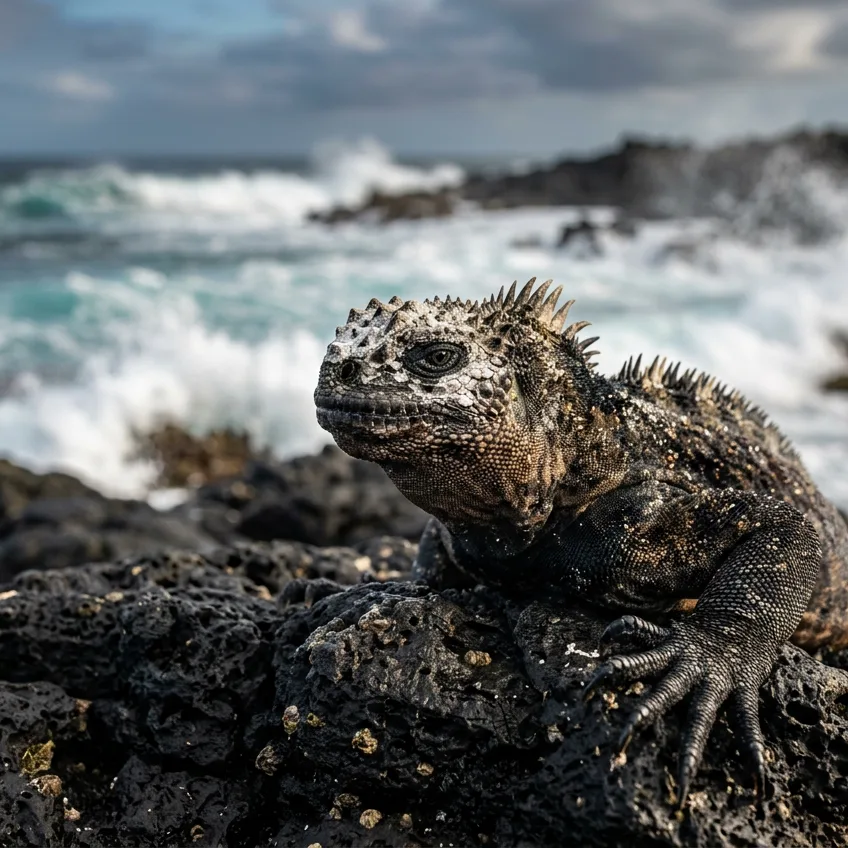
In the animal kingdom, losing body weight when food is scarce is a common biological response; however, shrinking one's own bone structure in adulthood seemed physiologically impossible. The Galapagos marine iguana (Amblyrhynchus cristatus) defies this scientific dogma with one of the planet's most extreme survival adaptations: it can shorten its total body length by up to 20 % when food is scarce.
This unusual phenomenon was documented by marine biologists led by Martin Wikelski and published in the journal Nature in 2000. During El Niño climate events, warm waters halt the upwelling of marine nutrients, killing the red and green algae that these iguanas feed on exclusively. Facing imminent starvation, the reptile's body actively breaks down its own bone matrix and connective tissue through osteoclastic reabsorption, reducing the size of its spine and limbs.
This structural reduction provides critical survival advantages:
- Thermodynamic efficiency: A smaller body requires a substantially lower basal metabolic rate to stay alive.
- Optimized foraging: Shrunken individuals move with less hydrodynamic resistance and need fewer bites of algae to fill their digestive tract.
- Complete reversibility: When cold waters return and algae proliferate, the bones grow back to reach or even exceed their original size.
This dynamic cycle of skeletal shrinkage and growth can repeat multiple times throughout the animal's three decades of life, establishing it as a key biomedical model for studying human osteoporosis.
Source: Nature (Wikelski & Thom, 2000: 'Marine iguanas shrink to survive El Niño')