In the defensive arsenal of the human body, there is an extreme tactic comparable to a suicidal combat maneuver: NETosis (from Neutrophil Extracellular Traps). Discovered in 2004 by researchers led by Arturo Zychlinsky at the Max Planck Institute for Infection Biology, this phenomenon showed that neutrophils—the most abundant white blood cells in the blood—kept an astonishing ace up their sleeve when traditional phagocytosis fell short.
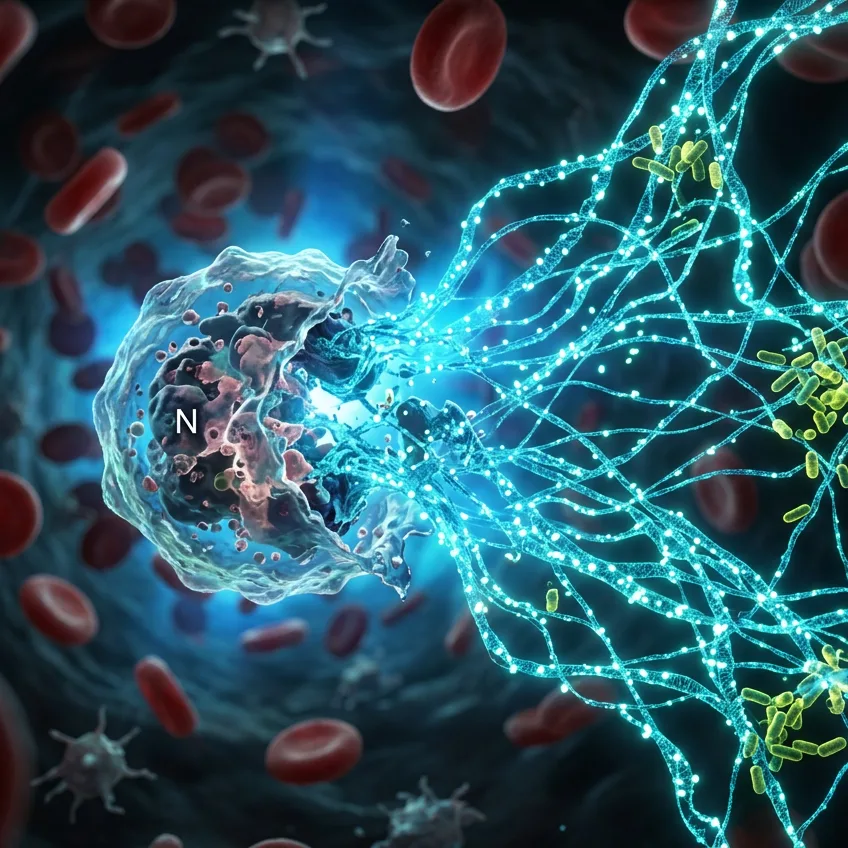
When facing pathogens that are too large, such as fungal filaments or dense bacterial colonies, the neutrophil triggers an irreversible biochemical cascade. Its nuclear membrane dissolves, and its own DNA decondenses to blend intimately with lethal antimicrobial enzymes, such as myeloperoxidase and elastase. Finally, the cell ruptures in a controlled manner and catapults its genetic material into the extracellular space as a three-dimensional molecular spider web.
These sticky webs perform crucial functions for our survival:
- Physical immobilization: They trap bacteria and mechanically prevent them from spreading through the bloodstream to vital organs.
- Concentration of biological venom: Because the chromatin strands are studded with destructive proteins, they kill microorganisms through direct contact without dispersing toxins into healthy tissue.
- Neutralization of fungi: They make it possible to fight multicellular invaders that are twice the size of the white blood cell itself.
However, this shield requires precise balance: if the body does not dissolve these DNA webs in time using enzymes like DNase, the leftover meshes can trigger blood clots or exacerbate autoimmune conditions such as lupus.
Source: Science (Brinkmann et al., 'Neutrophil Extracellular Traps Kill Bacteria', 2004)