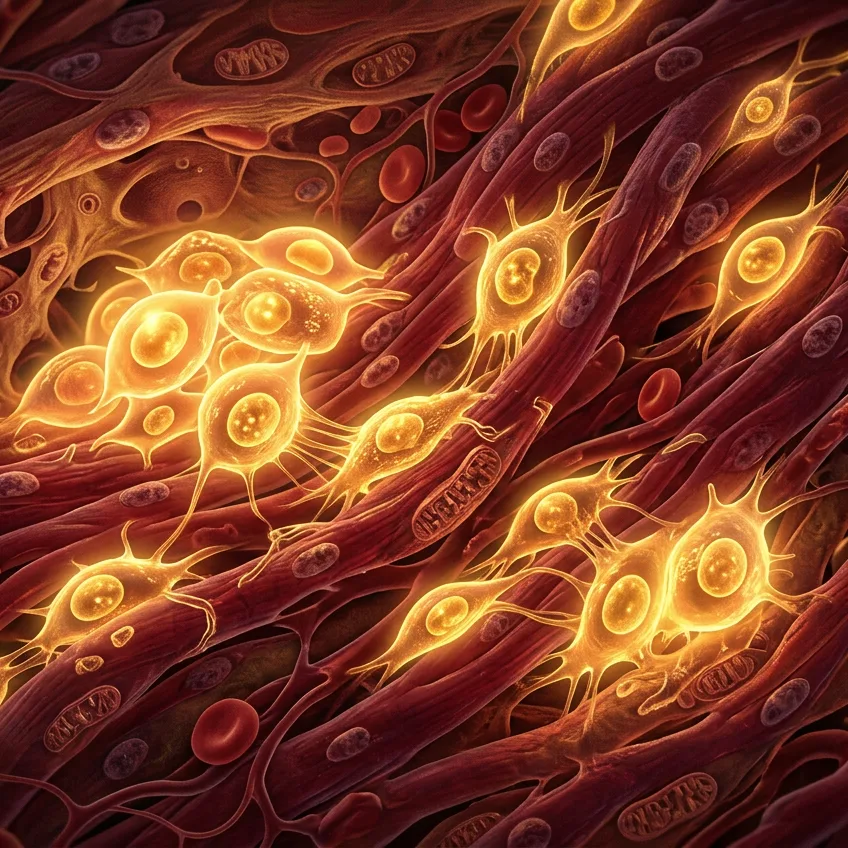
For decades, muscle mass was considered a simple mechanical structure meant for movement and strength. However, in 2012, a team of researchers from Harvard Medical School demonstrated a revolutionary reality: skeletal muscle is actually the largest endocrine organ in the human body, capable of synthesizing and prescribing its own biochemical pharmacy.
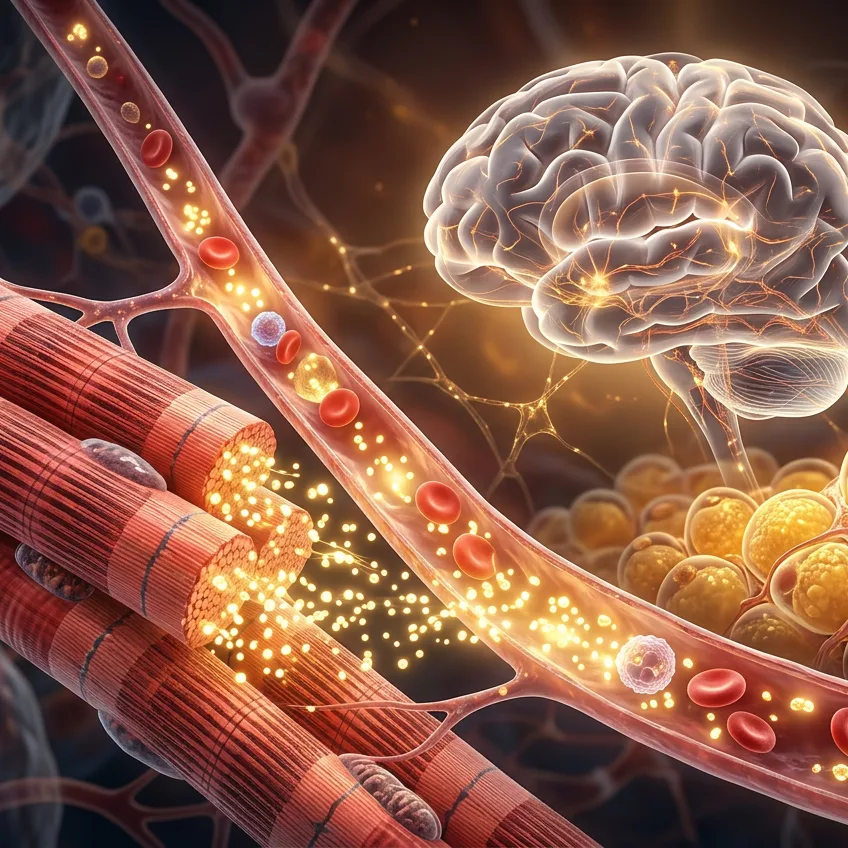
When muscle fibers contract during physical exercise, they release hundreds of signaling proteins called myokines into the bloodstream. The most famous of them is irisin, named after Iris, the messenger goddess of Greek mythology. Its mission in the body is as varied as it is crucial:
- Fat transformation: Irisin travels to white adipose tissue (storage fat) and activates the uncoupling protein UCP1. This transforms adipocytes into 'beige fat', a specialized tissue that does not store energy, but actively burns calories to generate heat.
- Brain fertilizer: The molecule crosses the blood-brain barrier and reaches the hippocampus, where it triggers the production of BDNF (brain-derived neurotrophic factor). This protein stimulates the survival of existing neurons and promotes the birth of new synaptic connections.
- Anti-inflammatory regulation: Myokines counteract the inflammatory cytokines produced by stress and a sedentary lifestyle, shielding the cardiovascular system.
This finding explains why a lack of physical activity rapidly degrades mental agility: without muscle contraction, the brain is deprived of the protective compounds that only movement can prescribe.
Source: Nature (Boström et al., 2012: 'A PGC1-α-dependent myokine that drives brown-fat-like development of white fat and thermogenesis')