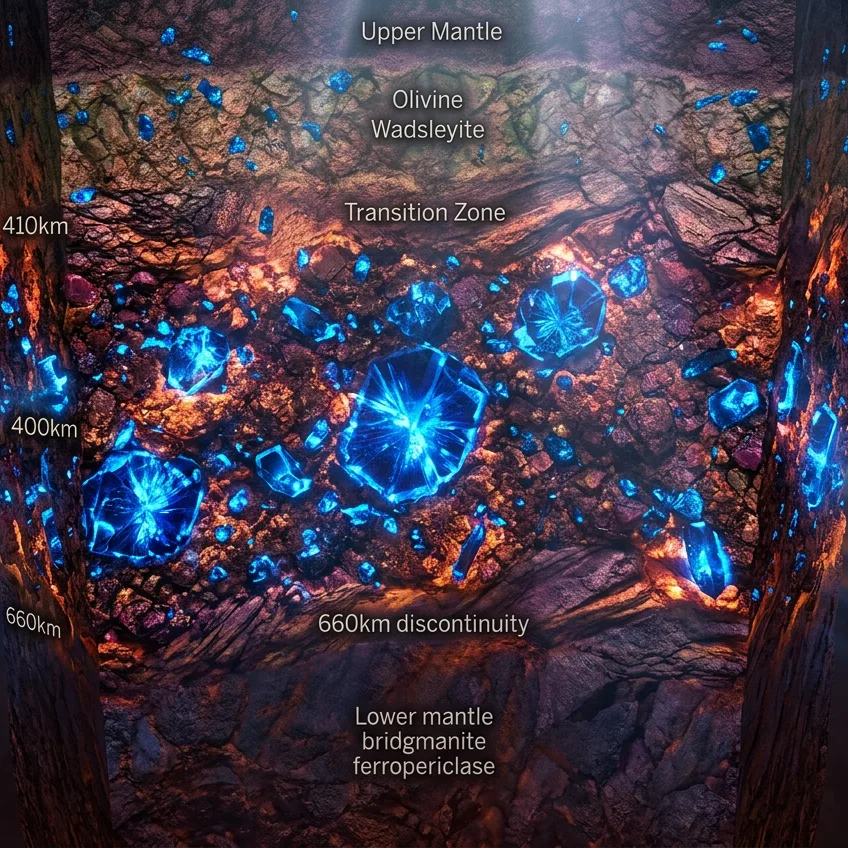
Thermodynamically, diamond is an anomaly at Earth's surface: at ambient pressure, the stable structure of carbon is not this sparkling gem, but humble graphite. If diamonds, forged more than 150 kilometers deep in Earth's mantle under temperatures exceeding 1,000 °C, were to rise at the slow pace of conventional magmas, the drop in pressure would inevitably transform them into black dust before seeing the light.
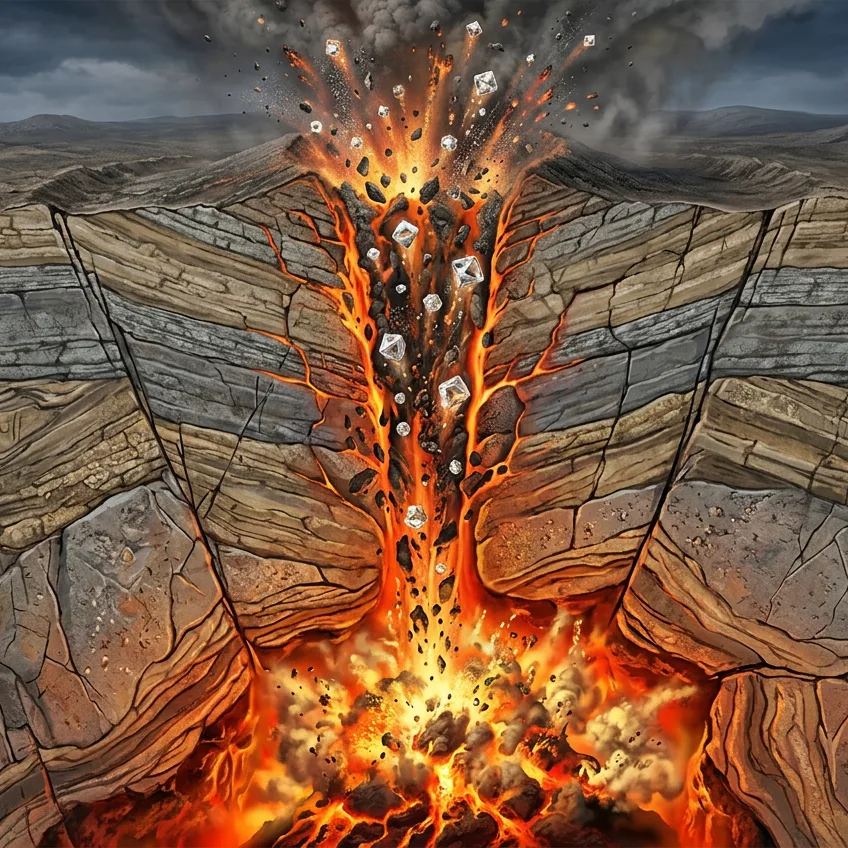
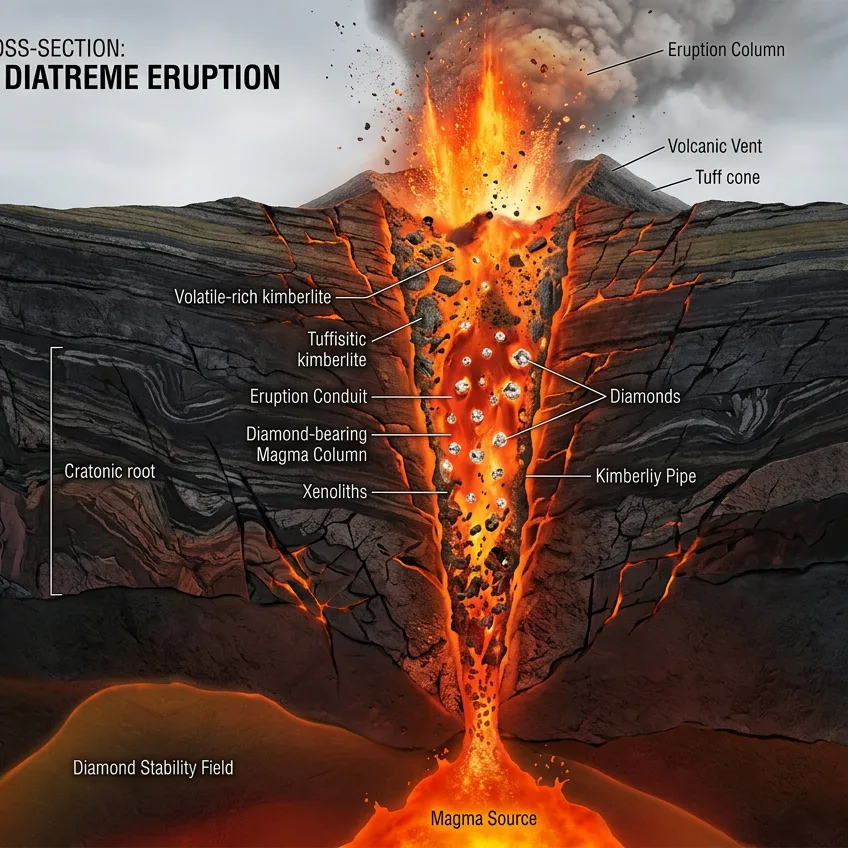
The only reason they survive in Earth's crust is kimberlite pipes, deep volcanic conduits that operate as a geological emergency elevator thanks to extreme dynamics:
- Supercritical fluid propulsion: Kimberlitic magmas harbor colossal concentrations of dissolved water and carbon dioxide at gigantic pressures, acting like shaken geological champagne as they breach the lithosphere.
- Relentless speed: This magma ascends through the crust at estimated speeds between 30 and 130 km/h at depth, reaching supersonic speeds near the surface as gases expand violently.
- Kinetic freezing: The entire journey takes merely a few hours, producing a shock cooling that 'locks' the diamond's crystal lattice before its carbon atoms have enough energy to rearrange into graphite.
Upon reaching the surface, the violent decompression excavates conical craters known as diatremes. Without this natural magmatic speedster, the mantle's greatest treasures would never have reached our hands intact.
Source: Nature / Geological Society of London