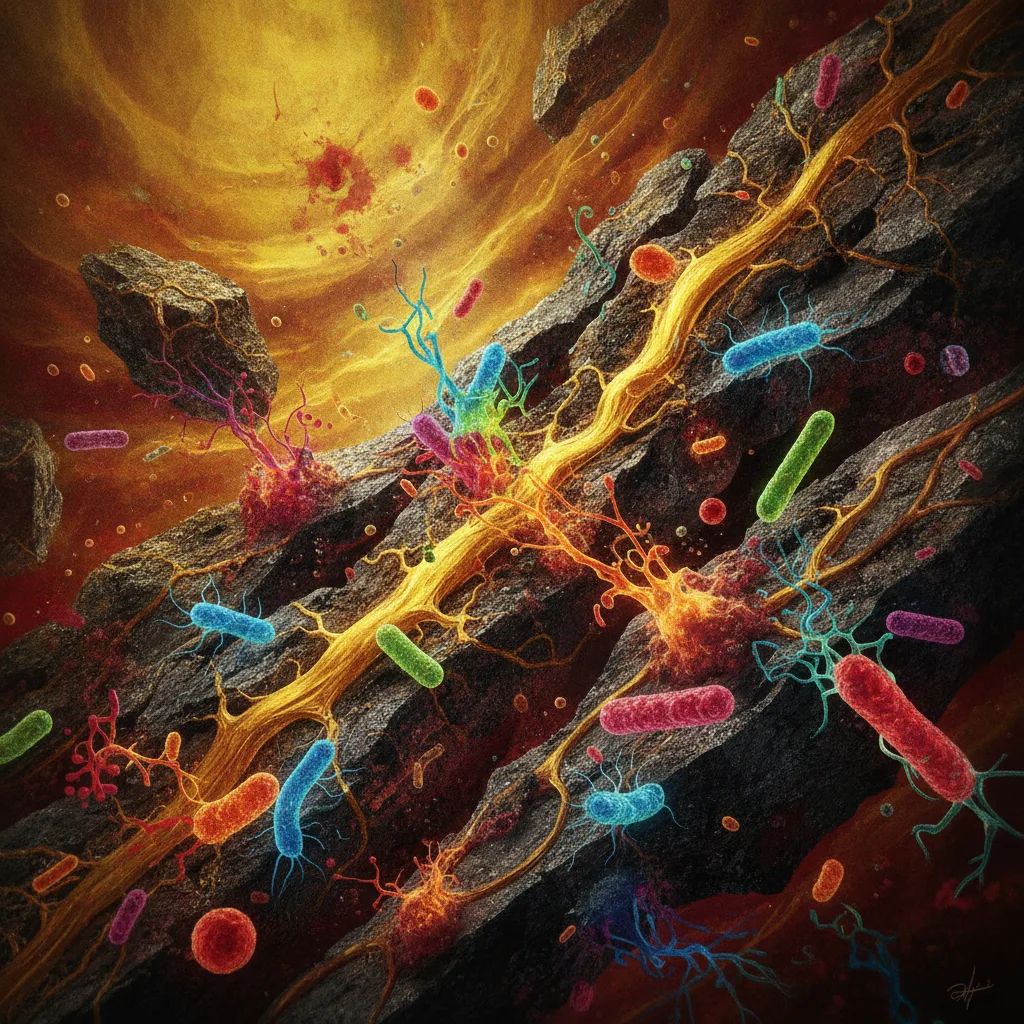
In the most extreme corners of the planet, from acidic springs to underground mineral deposits, a legion of microorganisms is carrying out a form of mining that challenges our traditional understanding. "Mining bacteria" or extremophiles are able to thrive in environments that would be lethal to most life forms, and they do so by developing potent biological acids that dissolve rocks.
These microscopic engineers, such as bacteria of the genus Acidithiobacillus ferrooxidans, use sulfur and iron compounds as an energy source, producing sulfuric acid. This acid not only breaks down rock matrices, but also releases valuable metals such as gold, copper, and uranium. This process, known as "bioleaching," has been used industrially for decades, but its potential continues to grow.
Bioleaching offers a more sustainable and less polluting alternative to conventional mining methods, which often involve the use of cyanide or high temperatures, leaving a significant environmental footprint. By harnessing the natural chemistry of these bacteria, scientists are exploring new ways to extract metals from low-grade ores or mining waste, recovering resources that were once considered unfeasible. This not only reduces ecological impact, but also opens doors to metal recovery from deposits with very low concentrations, boosting the circular economy and the sustainability of the mining industry.
Source: Scientific articles on bioleaching, publications from universities and environmental biotechnology research centers, such as Universidad de Atacama or institutions researching biological mining.



