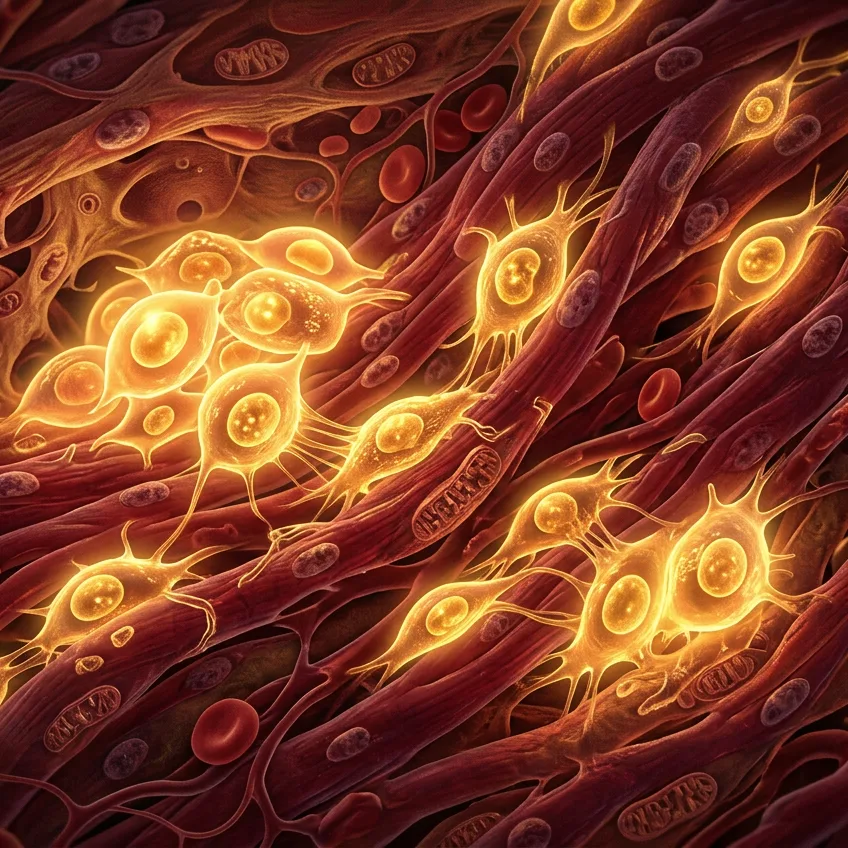
For decades, skeletal muscles were considered mere mechanical levers intended to enable movement and support body structure. However, in 2012, a team of scientists from Harvard University, led by cell biologist Bruce Spiegelman, discovered that muscle tissue also acts as a sophisticated endocrine gland capable of communicating with the rest of the body through chemical substances called myokines.
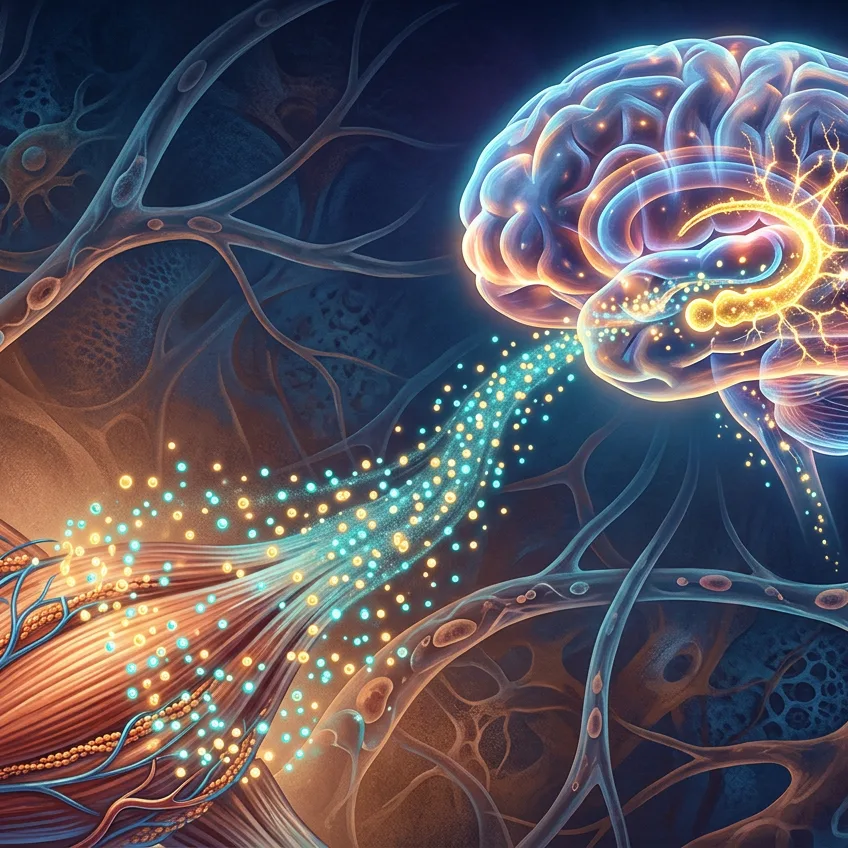
The most prominent of these molecules is irisin, named after Iris, the messenger of the gods in Greek mythology. When muscle fibers contract continuously during strength or aerobic exercise, they cleave a membrane protein called FNDC5, shedding irisin directly into the bloodstream. What is truly revolutionary about this peptide is its ability to cross the tight blood-brain barrier.
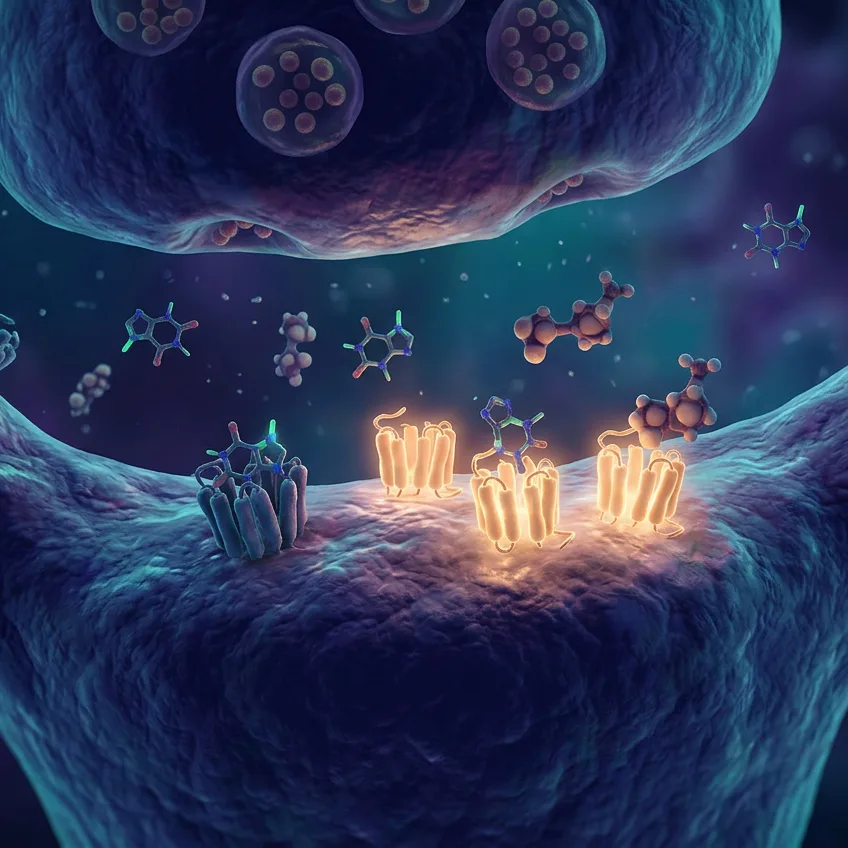
Once inside the central nervous system, irisin triggers a biological cascade of enormous impact:
- BDNF stimulation: It activates the production of brain-derived neurotrophic factor in the hippocampus, the region responsible for learning and memory consolidation.
- Adult neurogenesis: It promotes the survival and maturation of new neurons in a mature brain.
- Synaptic protection: It reduces neuroinflammation and hinders the accumulation of amyloid-beta protein plaques characteristic of Alzheimer's disease.
This finding revealed the exact molecular mechanism by which regular physical activity not only strengthens the body, but also acts as an active biological shield against cognitive decline.
Source: Nature Medicine / Harvard Medical School (Cell Metabolism, 2012)