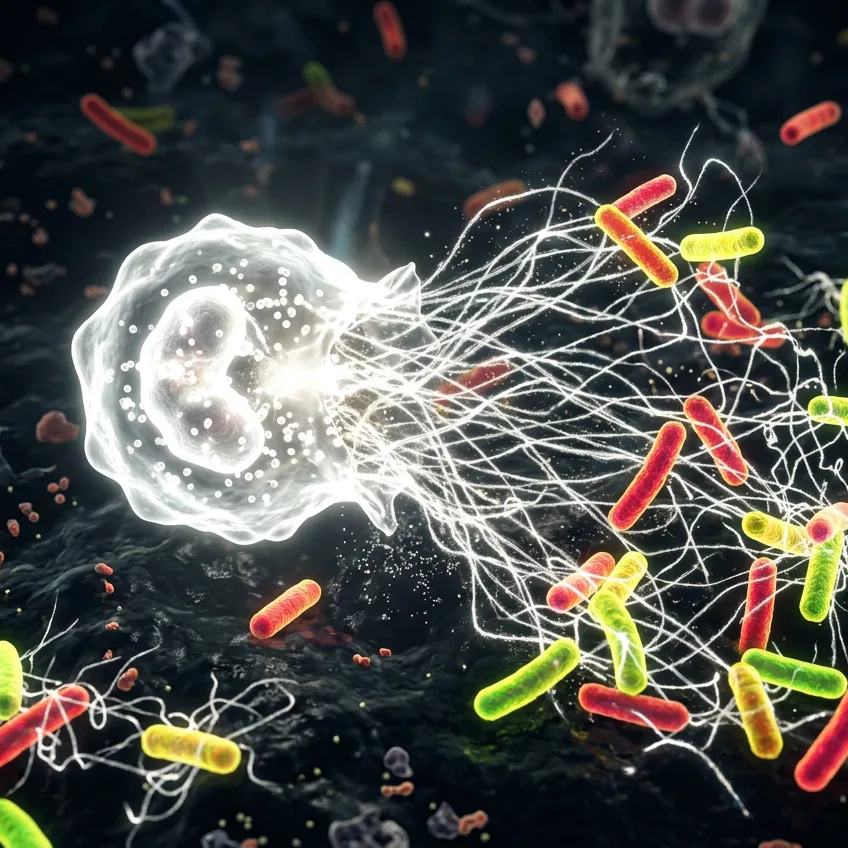
When we think of the immune system, we often imagine white blood cells devouring microbes one by one through phagocytosis. However, in 2004, a team led by biologist Arturo Zychlinsky at the Max Planck Institute in Berlin revealed a defensive tactic worthy of science fiction: NETosis, a coordinated cellular suicide through which the body shoots webs of its own DNA.
The architects of this strategy are neutrophils, the most abundant white blood cells in the bloodstream (between 50% and 70% of the total) and the first to arrive at any site of infection. When facing massive bacterial colonies or fungal toxins that exceed their absorption capacity, they execute a lethal sequence:
- Nuclear dismantling: The neutrophil's inner membrane dissolves and its DNA completely unwinds, becoming impregnated with lethal enzymes like myeloperoxidase and elastase.
- Detonation and deployment: The cell membrane bursts open suddenly, ejecting a dense web known as a Neutrophil Extracellular Trap (NET).
- Biological ambush: This web acts like microscopic concertina wire; its electrostatic charge physically immobilizes bacteria and fungi, neutralizing them on the spot and blocking their entry into the bloodstream.
Although this heroic sacrifice saves countless lives by containing severe infections, contemporary biomedicine closely studies its balance: an uncontrolled expulsion of these sticky webs can inflame healthy tissues, trigger blood clots, or fuel autoimmune diseases such as lupus.
Source: Max-Planck-Gesellschaft / Science (Brinkmann et al., 'Neutrophil Extracellular Traps Kill Bacteria', 2004)