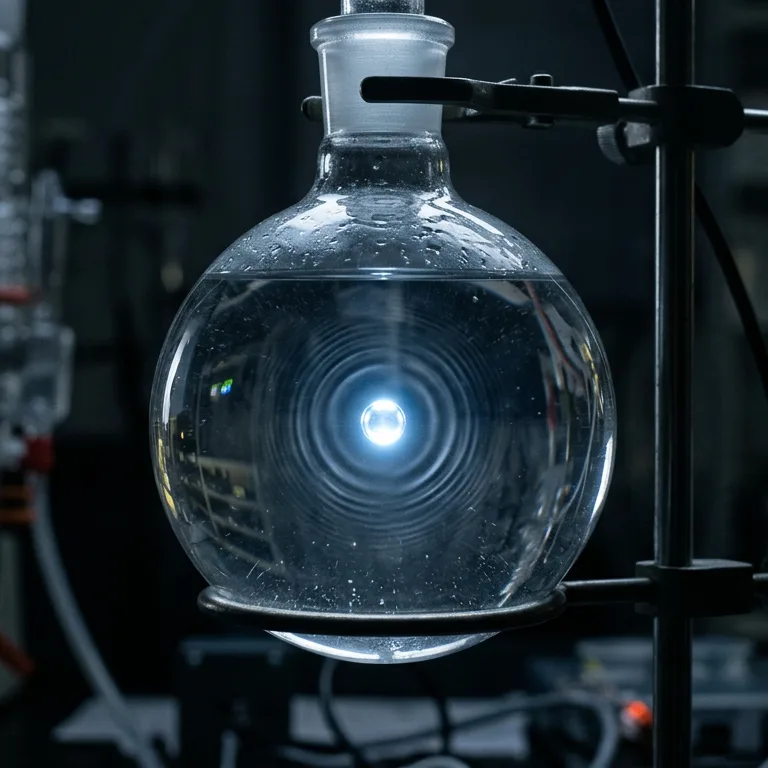
For decades, the concept of a "tractor beam" capable of immobilizing and moving objects from a distance belonged exclusively to science fiction. However, at the nanometer scale, modern optics turned this fantasy into one of the most momentous tools in physics and biology: optical tweezers.
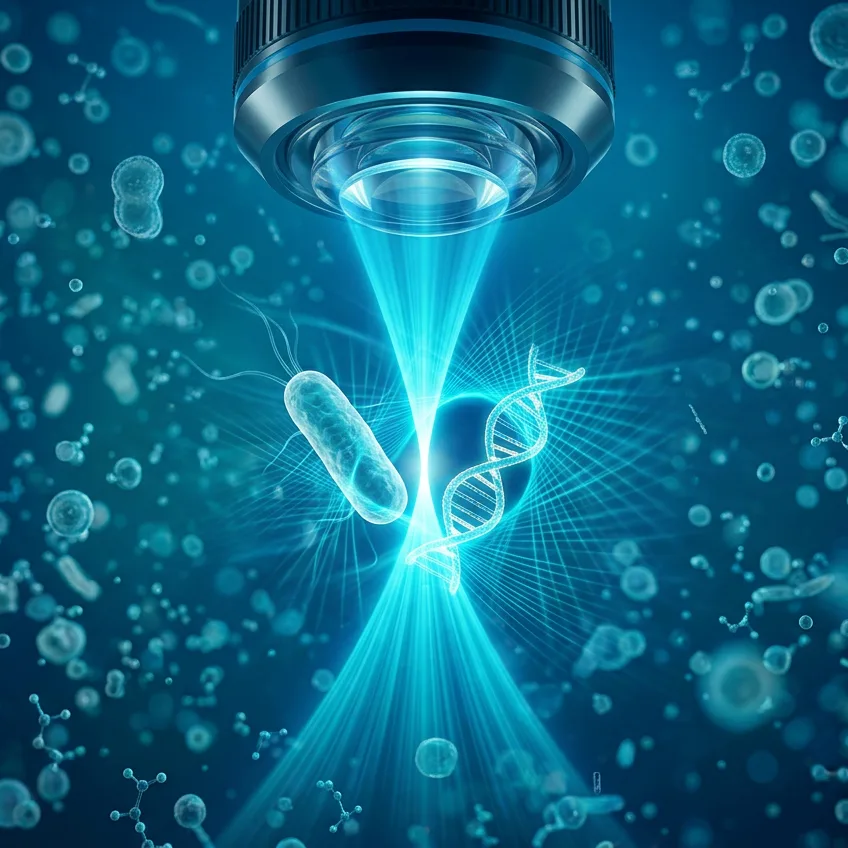
Perfected by American physicist Arthur Ashkin at Bell Laboratories—an achievement that earned him the Nobel Prize in Physics in 2018—these tweezers take advantage of a surprising physical phenomenon: light exerts real mechanical force. Although photons lack rest mass, they carry momentum. When an infrared laser beam is focused with extreme precision through a microscope lens, an electromagnetic gradient zone so intense is created that it attracts dielectric particles toward the geometric center of the beam.
The result is an invisible and astonishingly delicate three-dimensional trap that allows scientists to:
- Trap and move living bacteria, viruses, and intracellular organelles without piercing their membranes or destroying them with heat.
- Measure mechanical forces on the order of the piconewton (one trillionth of a newton), the scale at which cellular protein motors operate.
- Unwind and manipulate an individual strand of DNA to record how enzymes read and repair the genetic code in real time.
By mastering the subtle push of photons, humanity managed to craft microscopic hands of pure light, capable of interacting with the fundamental machinery of life without physically touching it.
Source: The Nobel Prize in Physics 2018 - Scientific Background (Royal Swedish Academy of Sciences)