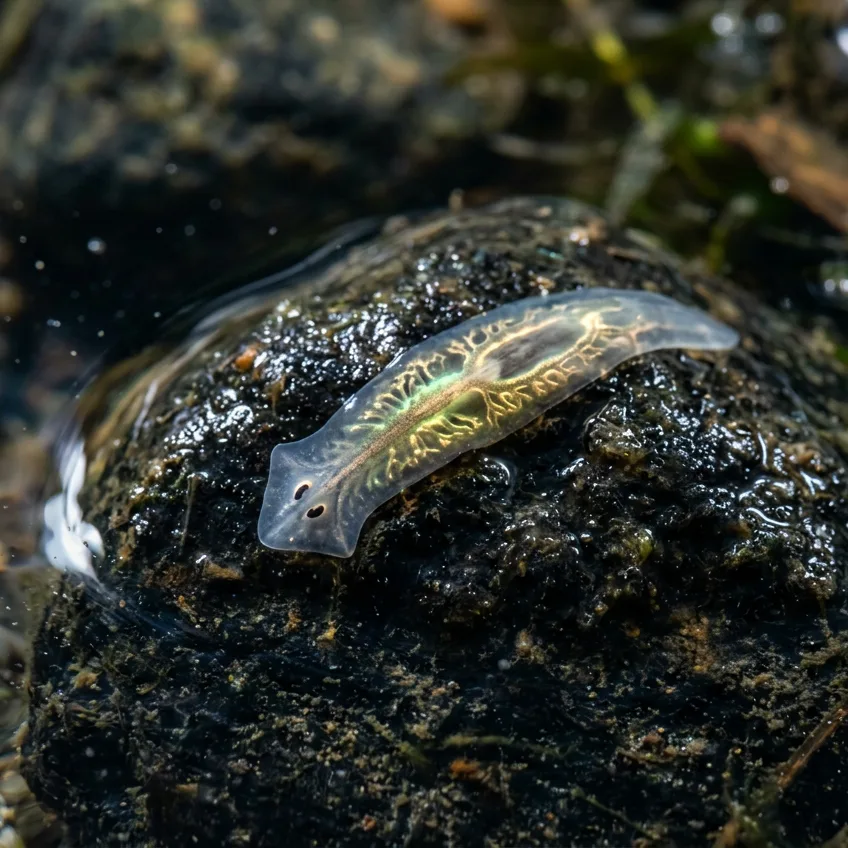
Planarians, small freshwater flatworms, harbor one of the greatest biological wonders of the animal kingdom: a virtually unlimited regenerative capacity that challenges biological aging. If a planarian is cut into more than two hundred microscopic fragments, each of those sections will transform into a new, symmetrical, and fully functional worm in just a few days.
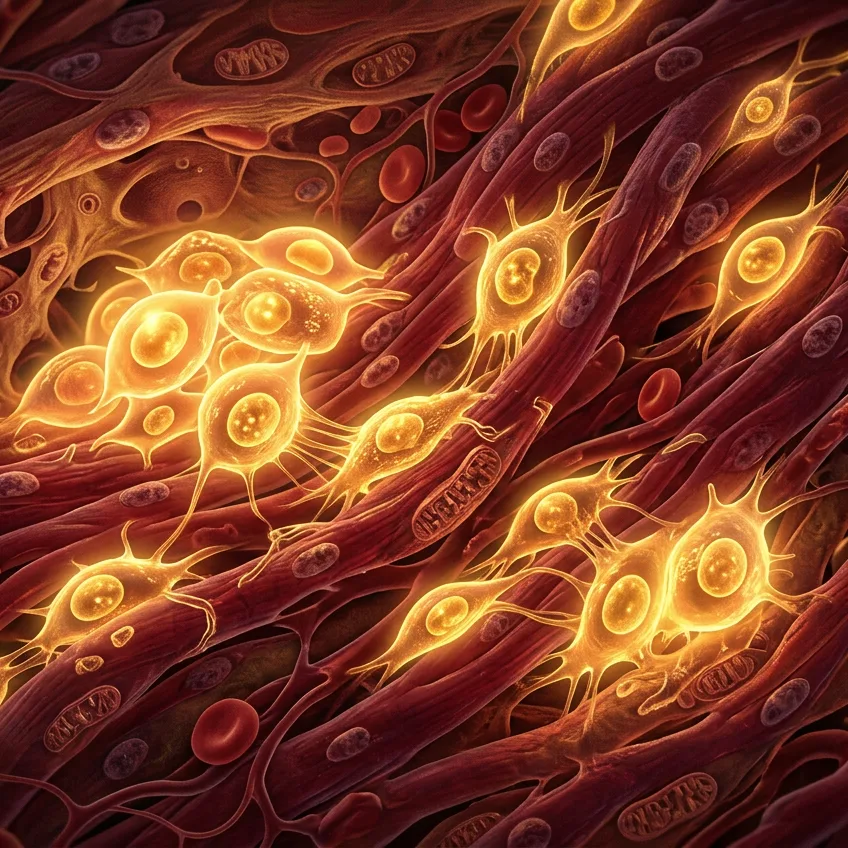
This astonishing power lies in neoblasts, a massive reserve of adult pluripotent stem cells that make up about 25% of their entire body. Unlike mammalian stem cells, a single neoblast is capable of multiplying and giving rise to any missing tissue: optical photoreceptors, intestinal tissue, muscles, and even a complete central nervous system. Furthermore, thanks to the constant renewal of their telomeres, strains that reproduce through asexual fission are considered biologically immortal.
However, the most baffling finding came from neurobiology at Tufts University. In a celebrated experiment published in 2013 by Tal Shomrat and Michael Levin, specimens of Schmidtea mediterranea were trained to lose their innate fear of light in exchange for food. Immediately afterward, their heads were completely amputated. Two weeks later, once the animals had regenerated an entirely new brain from scratch, they were subjected to the same test: they retained the learned memory intact.
The discovery shook the foundations of traditional neuroscience, demonstrating that memory is not confined exclusively to brain synapses, but can instead be encoded or stored in the somatic network and in epigenetic marks throughout the body.
Source: Journal of Experimental Biology (Shomrat & Levin, 2013)