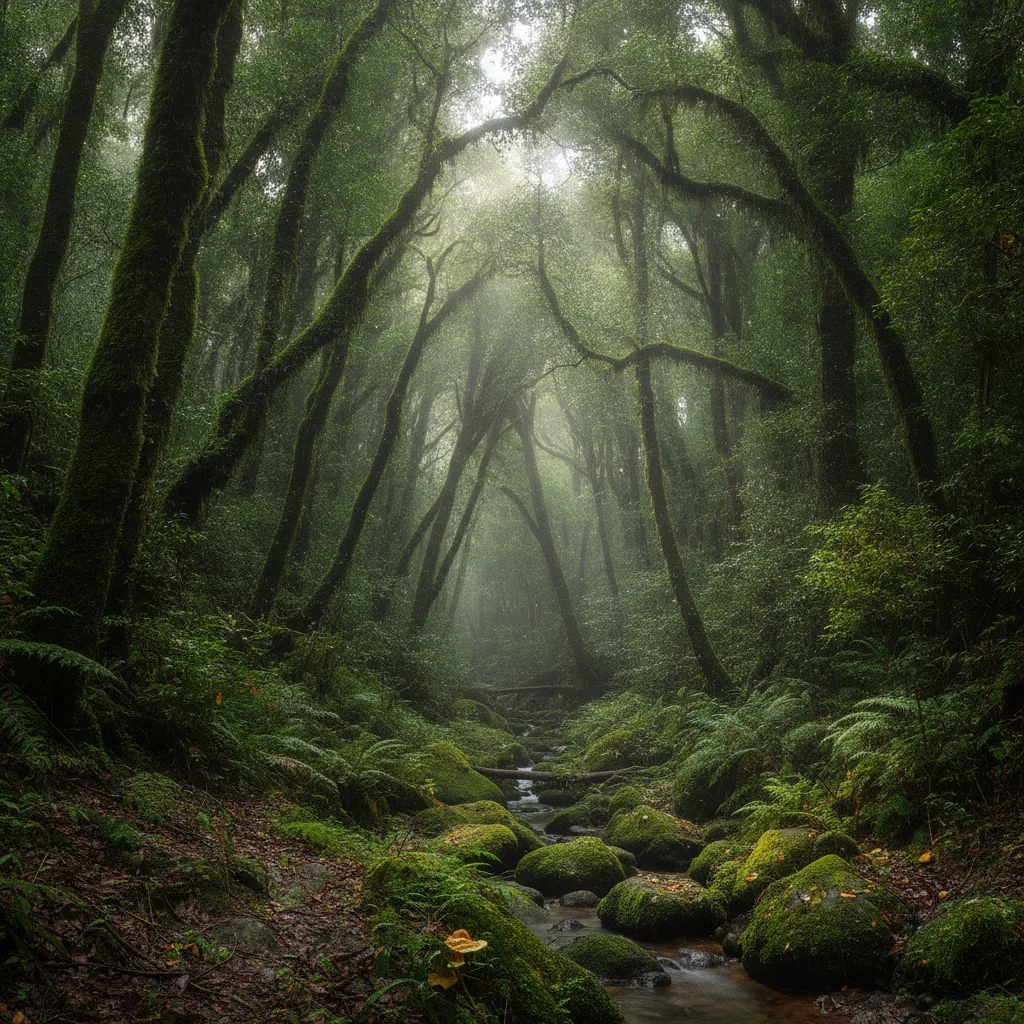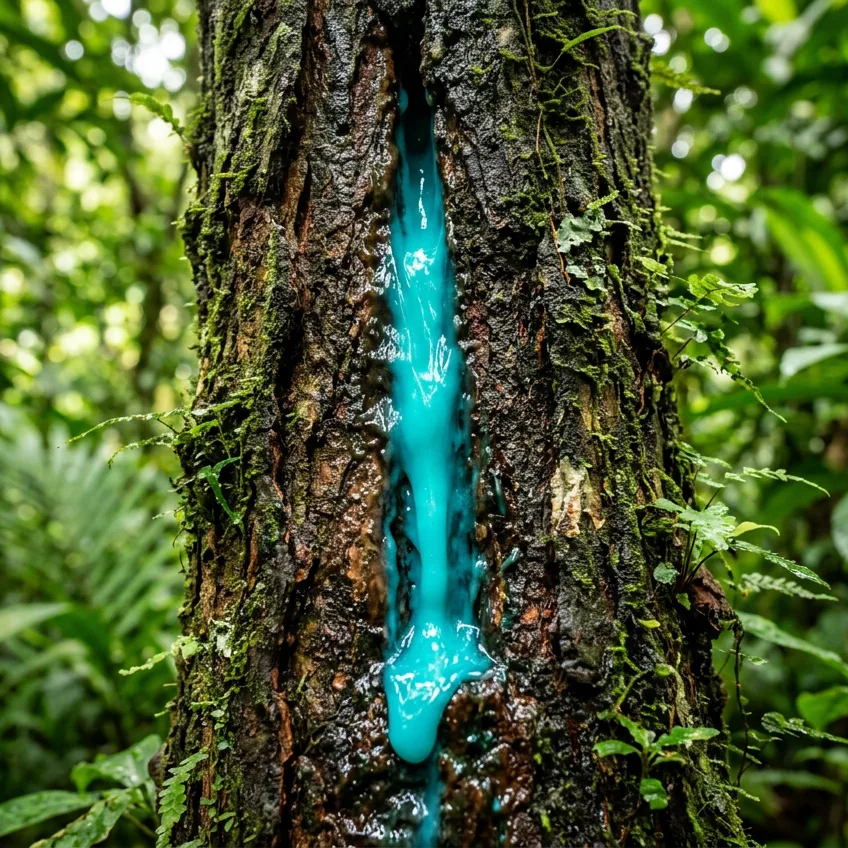
In the rainforests of the island of New Caledonia lives a botanical marvel that seems straight out of a science fiction novel: the tree Pycnandra acuminata. If a small incision is made in its bark, the usual whitish or amber resin does not flow, but rather a thick latex of a bright, hypnotic turquoise blue color.
This alien shade is not caused by conventional organic pigments, but by a monstrous concentration of heavy metal. The tree's latex contains up to 25 % pure nickel by dry weight, an amount thousands of times higher than what would prove lethal to almost any other known life form on the planet.
How does it manage to survive such a dose of poison? Pycnandra acuminata is an extreme hyperaccumulator plant. Through its roots, it actively absorbs the nickel dissolved in the island's ultramafic soils, a hostile and sterile volcanic substrate for the vast majority of plants. The tree encapsulates the toxic metal within safe cellular vacuoles and uses it as a devastating chemical defense: no herbivorous insect, bacterium, or fungus can feed on its tissues without suffering immediate lethal poisoning.
This phenomenon has sparked enthusiasm in the scientific community for two revolutionary reasons:
- Phytoremediation: Its astonishing physiology makes it possible to clean up land severely contaminated by industrial waste and mining spills.
- Phytomining: The concept of planting forests that act as "biological mines," extracting precious metals from the subsoil directly through leaves and branches without destroying the landscape with open-pit excavations.
Source: Nature Plants / ScienceDirect (Jaffré et al., 'Nickel-accumulating plants of New Caledonia')