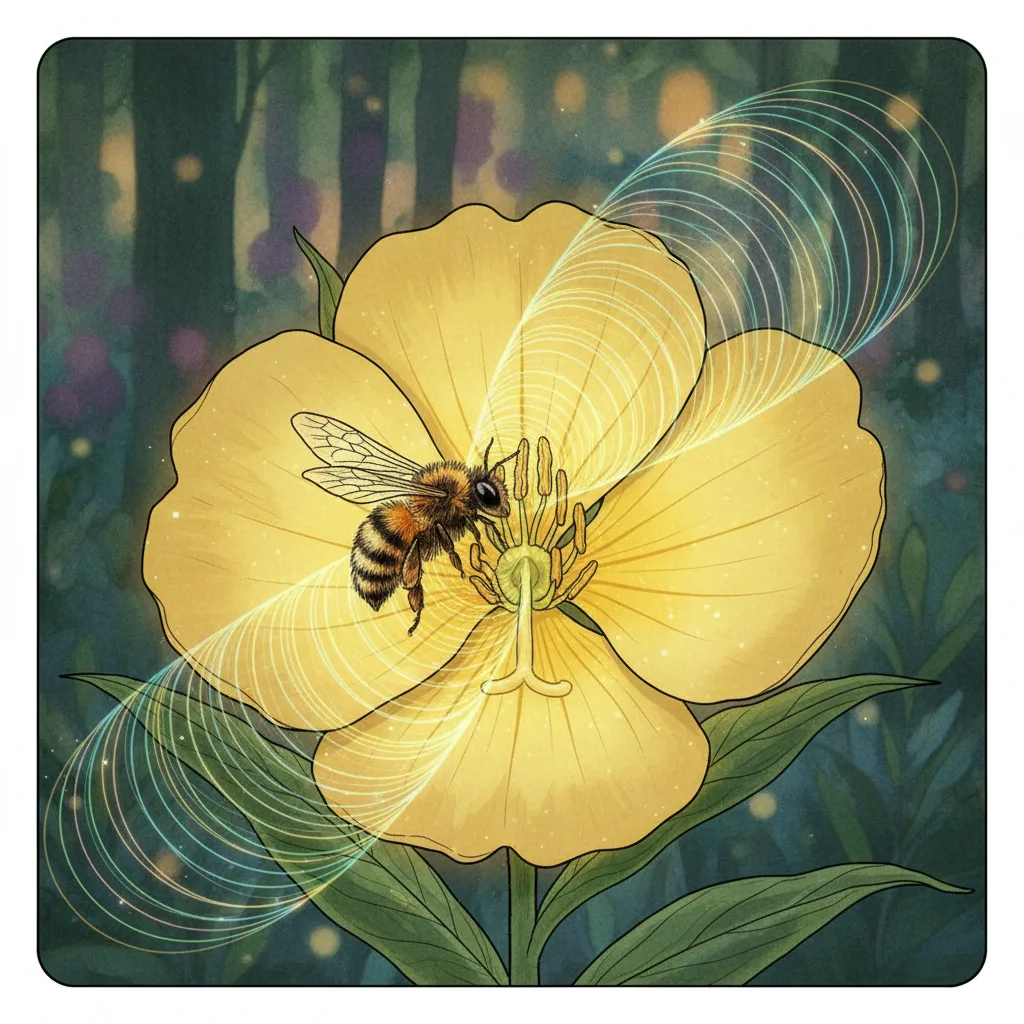
Although they lack ears in the traditional sense, some plants demonstrate a surprising ability to perceive the world through sound. A fascinating study has revealed how the humble evening primrose (Oenothera drummondii) is able to "hear" the buzzing of bees and respond by modifying the sweetness of its nectar, an ingenious strategy to ensure its pollination.
The research, published in the journal Ecology Letters, exposed these flowers to various recordings: the buzz of a bee, other unrelated sounds, and silence. The results were astounding: in just a few minutes after "hearing" the buzz of bees, the flowers increased the sugar concentration in their nectar by up to 20%. This increase makes them more attractive to pollinators, which in turn maximizes the plant's chances of reproductive success.
But how do they do it? It is believed that flowers, and specifically their petals, act as tiny resonators, vibrating at the frequencies of the sound of bee wings. This ultra-sophisticated communication system not only benefits the plant with more efficient pollination, but also offers bees a sweeter reward, creating a perfectly tuned symbiosis.
This discovery opens a new chapter in our understanding of plant life, suggesting that the botanical kingdom possesses senses that are much more complex than we imagined. It invites us to reconsider how plants interact with their environment, not only through chemicals or light, but also in a silent dialogue of vibrations that orchestrates the dance of life.
Source: Research published in the scientific journal Ecology Letters