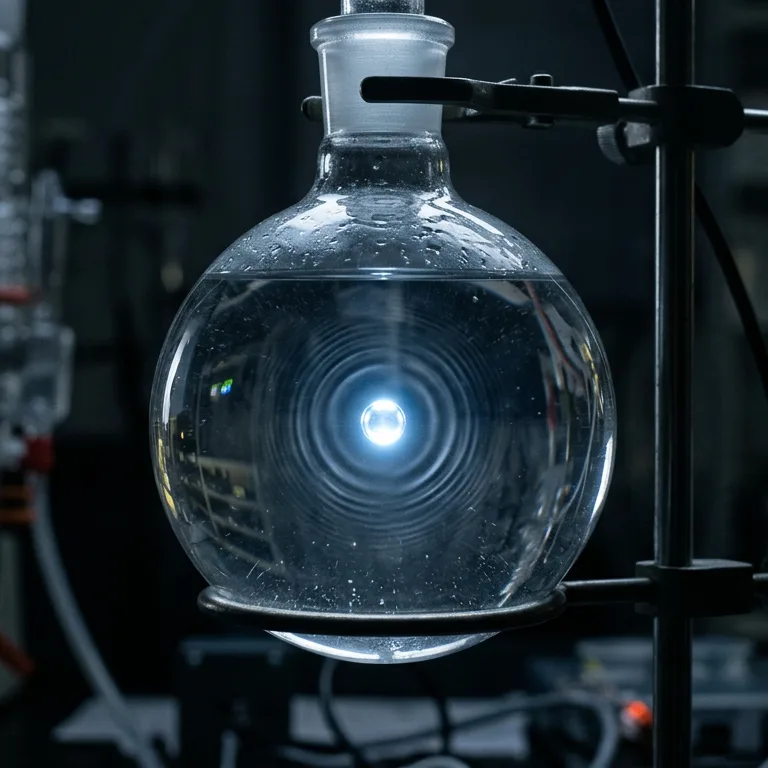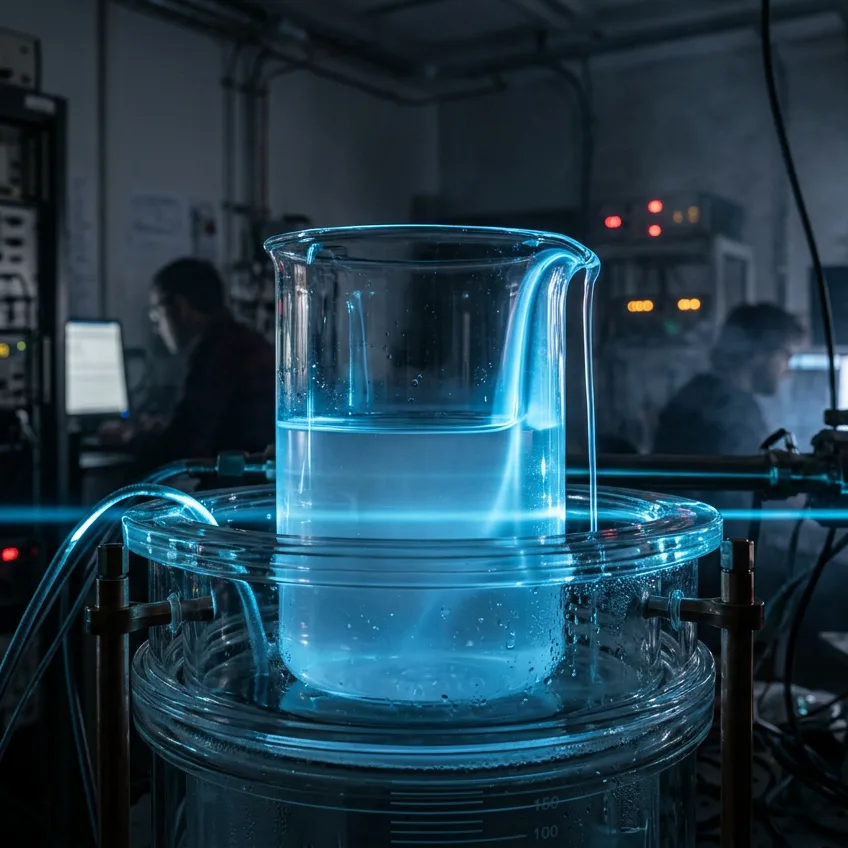
In 1999, NASA launched the Stardust space probe with an almost impossible objective: to capture tiny particles from the coma of comet Wild 2 traveling at over 20,000 km/h (six times the speed of a bullet) without destroying or vaporizing them upon impact. The key to this engineering feat was silica aerogel, a substance so unique that in scientific circles it is popularly known as "frozen smoke" due to its translucent and ethereal appearance.
Invented by chemist Samuel Kistler in 1931, aerogel is obtained by extracting all the liquid from a silica gel using a supercritical drying process, replacing it with gas without allowing the structure to collapse. The result is an extraordinary solid with extreme properties:
- Ultralight: It is composed of more than 99.8% air, boasting a density only three times higher than that of Earth's atmosphere.
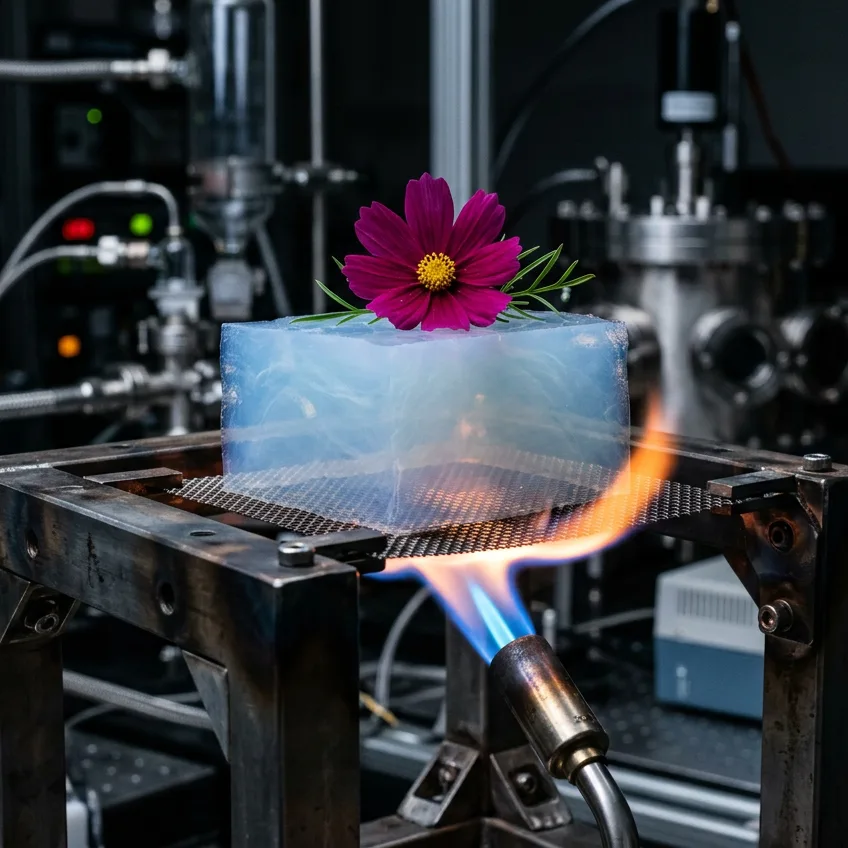
- Incomparable thermal insulator: It has such low thermal conductivity that a sheet of just a few millimeters allows a flower to rest on it while a blowtorch at over 1,200 °C is applied directly underneath without withering a single petal.
- Hyperbolic shock absorber: Upon impacting at cosmic speeds, the dust grains penetrated the material, leaving a carrot-shaped conical track and slowing down progressively without melting from friction.
Thanks to this technology, in 2006 the capsule returned to Earth with the first intact samples of the comet, proving that this nearly immaterial gel is not only a thermodynamic wonder, but a physical window to touch the origins of the solar system.
Source: NASA Jet Propulsion Laboratory (JPL) - Stardust Mission & Aerogel Technology