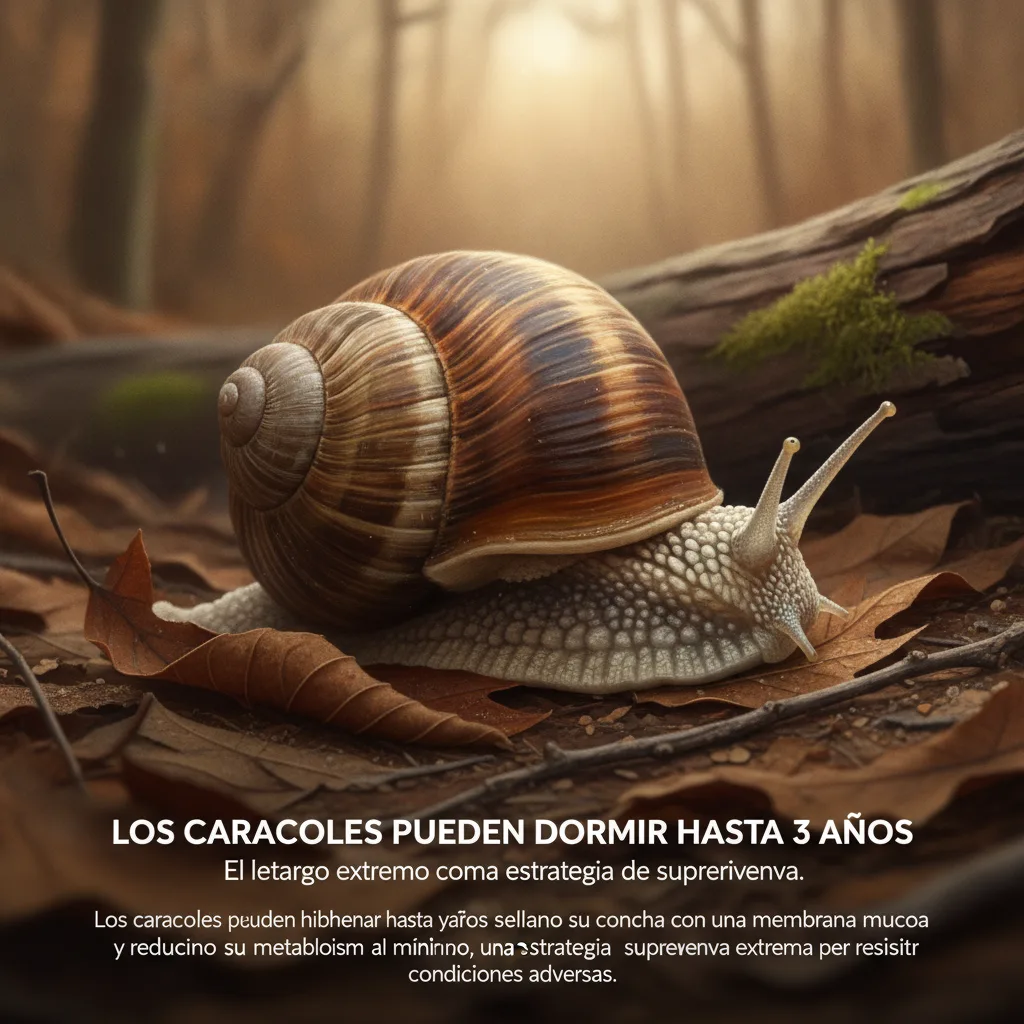
Land snails possess an extraordinary hibernation ability that surpasses any other known animal.
When environmental conditions become adverse, such as during prolonged droughts or extreme winters, snails can enter a state of estivation (summer dormancy) or hibernation that can last up to three consecutive years.
During this period, they seal the opening of their shell with a mucous membrane called an epiphragm, which acts as an airtight door. This protective barrier prevents moisture loss and allows the snail to survive without water or food.
Their metabolism slows down to minimal levels, reducing their heart rate and breathing almost to a complete stop. This survival strategy enables them to endure conditions that would be lethal for most animals, patiently waiting for the return of favorable conditions to resume their normal activity.
Source: Malacological Studies