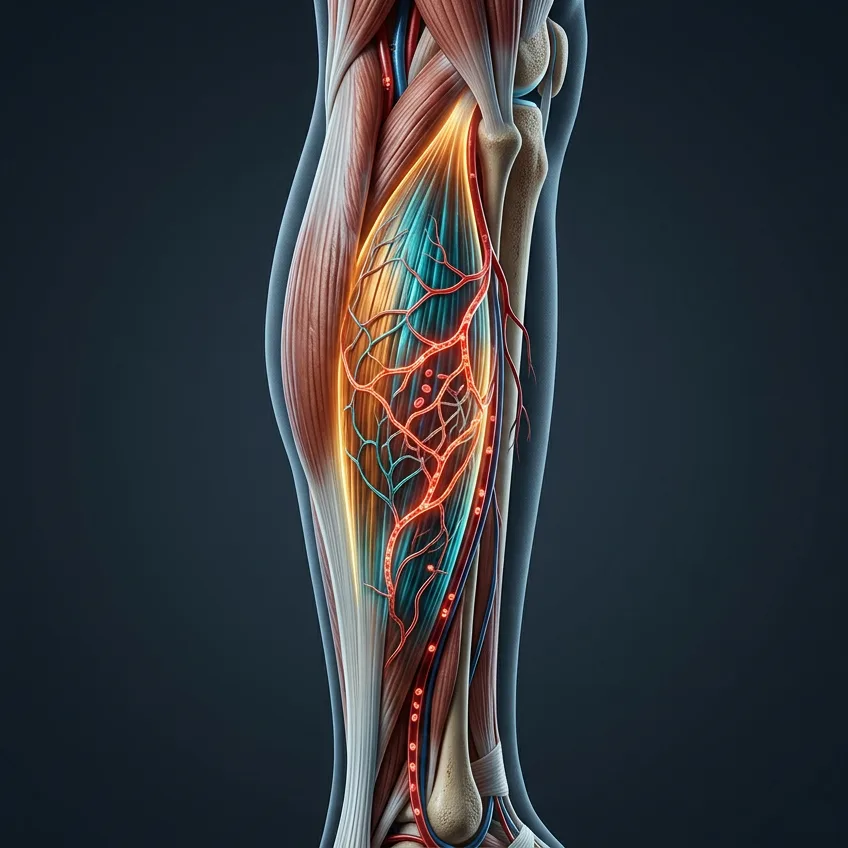
Hidden in the back of the leg, just beneath the gastrocnemius, lies the soleus muscle. Although it represents barely 1 % of our body weight, neurophysiology and metabolic medicine consider it a true biological gem with functions so extraordinary that it is often called the human "second heart."
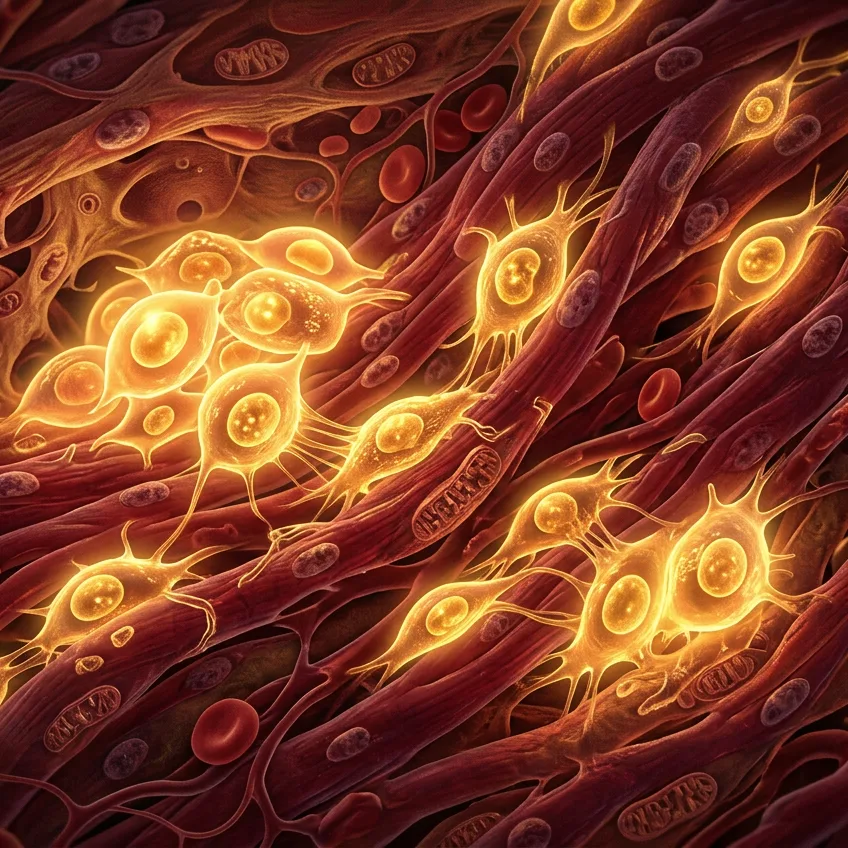
Unlike most skeletal muscles, designed to burn stored glycogen and fatigue quickly by producing lactate, the soleus consists almost entirely of slow-twitch fibers (type I). In 2022, pioneering research from the University of Houston led by Dr. Marc Hamilton showed that this muscle has an exceptional oxidative metabolism: it can directly use glucose and lipids circulating in the bloodstream instead of its own internal reserves.
Among its most amazing properties are:
- Passive glycemic control: Performing rhythmic heel raises while keeping the ball of the foot seated activates the soleus in isolation, reducing post-meal glucose fluctuations by up to 52 % and lowering insulin demand by 60 %.
- Immunity to fatigue: Because it does not rely on anaerobic glycolysis, it can contract continuously for hours without depleting itself or accumulating lactic acid.
- Peripheral hemodynamic pump: Its powerful contractions compress the deep veins of the calf, overcoming gravity to return hundreds of milliliters of venous blood back toward the heart and brain, preventing edema and thrombi.
Source: iScience (Cell Press) / University of Houston (Study by Marc T. Hamilton on soleus activation, 2022)