For more than a century, science assumed an unshakeable biological dogma: vertebrates, equipped with a complex and aggressive immune system against any foreign body, were entirely incompatible with the presence of living microalgae inside their own tissues. However, a landmark study published in 2011 by biologist Ryan Kerney broke this paradigm by revealing the secret of the spotted salamander (Ambystoma maculatum).
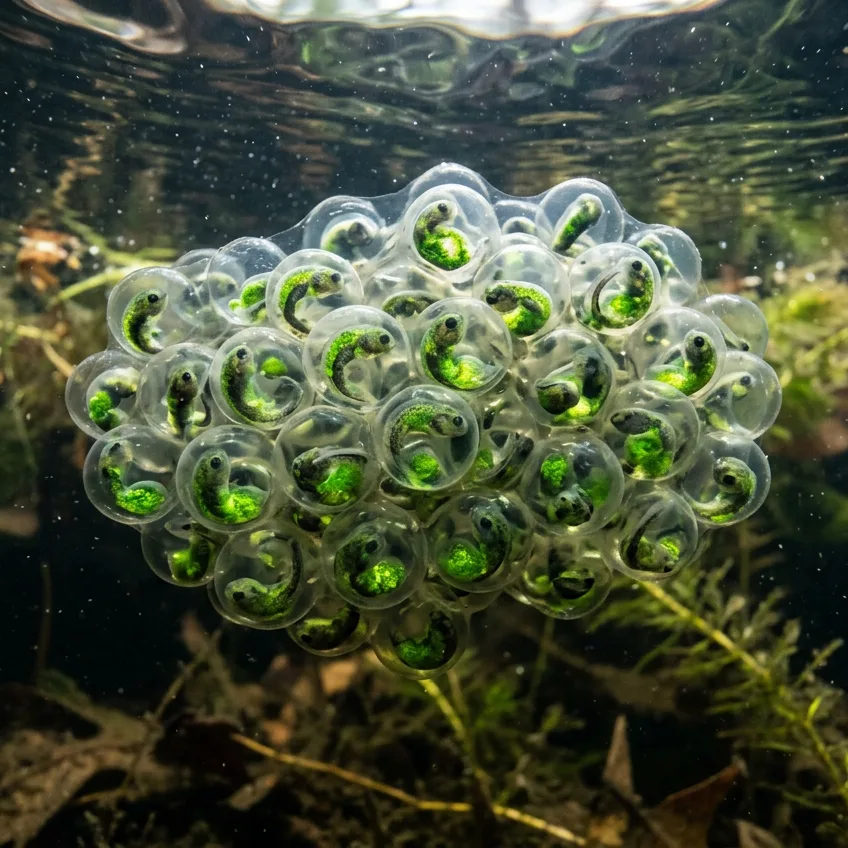
The eggs of this North American amphibian always displayed a striking emerald hue due to the presence of the alga Oophila amblystomatis, whose name means "salamander egg lover." Initially, it was believed to be a conventional external symbiotic relationship: the algae consumed the ammonium expelled by the embryo and provided oxygen through the jelly coat. But analysis using confocal and fluorescence microscopy uncovered something unprecedented: the plant cells had crossed the animal's cellular boundary.
The algae enter the salamander's somatic cells before its immune system matures, settling next to its mitochondria. Thanks to this, the embryo directly absorbs glucose and oxygen generated through photosynthesis, accelerating its growth in stagnant, oxygen-poor waters. Surprisingly, researchers found traces of DNA from these microalgae in the oviducts of adult salamanders, indicating that this solar machinery is not only tolerated, but inherited from mothers to offspring.
Source: Proceedings of the National Academy of Sciences (PNAS), 2011: «Intracellular invasion of green algae in a salamander host»