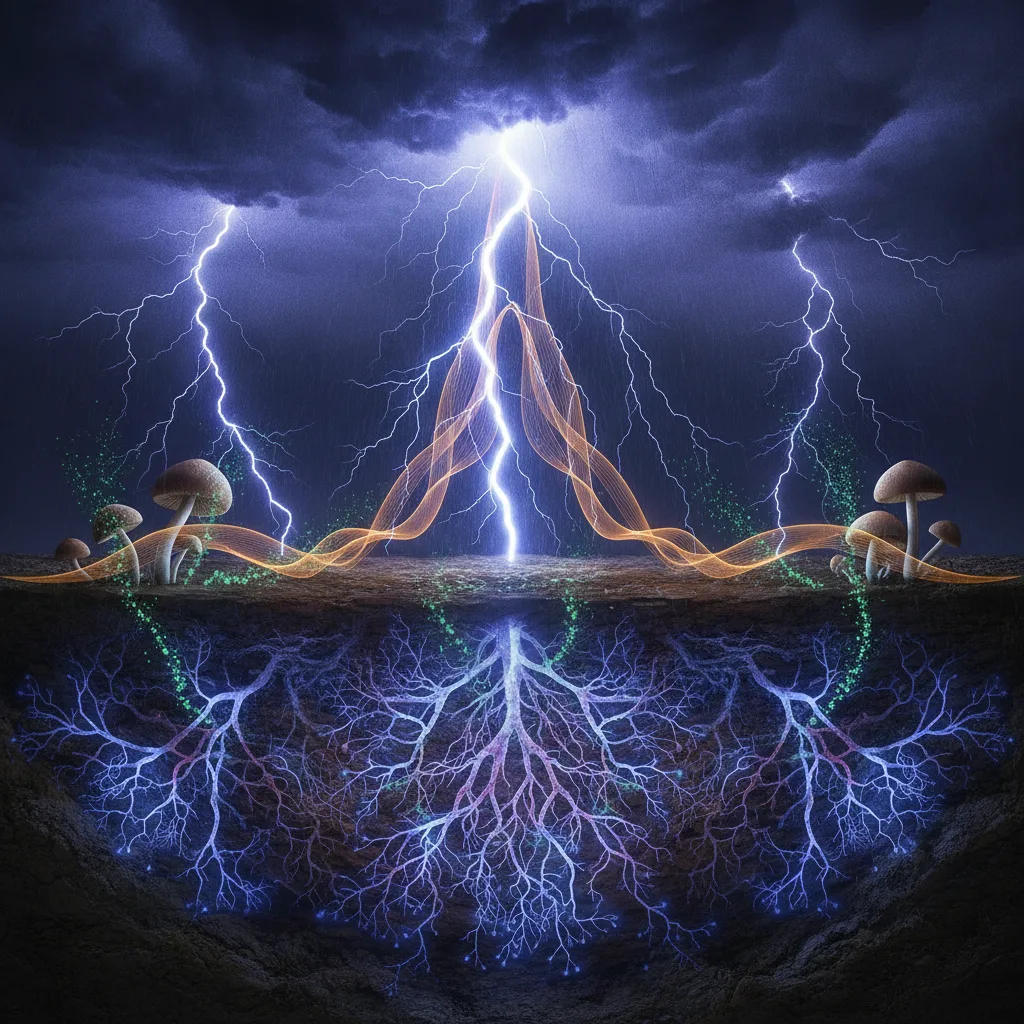
Scientists from the University of Vienna have discovered that underground fungal mycelium networks can detect and 'listen' to the electromagnetic changes in the air that precede thunderstorms. Through mechanisms not yet fully understood, these fungal structures respond to variations in air ionization and atmospheric electric fields, processing them as environmental signals.
Mycelium, the network of white filaments that constitutes the main body of the fungus underground, acts as a distributed sensing system. When a storm approaches, changes in atmospheric pressure and electrical charge subtly alter the chemical environment of the soil. Fungi respond by modifying their growth, accelerating spore production, or changing the direction of their hyphae.
- Electromagnetic detection: Fungal hyphae are sensitive to electric fields as low as 100 volts per meter
- Predictive response: They begin reacting up to 6 hours before precipitation arrives
- Chemical communication: They release volatile compounds that alert plants and other organisms in the ecosystem
This 'environmental sonification' capability allows fungi to optimize their spore dispersal, timing it for right after the rain when conditions are ideal for germination. It is yet another example of the sophisticated ecological intelligence possessed by these organisms, which have been underestimated for decades.
Source: Study published in 'Fungal Ecology', Vol. 54, 2022. University of Vienna, Department of Fungal Ecology.