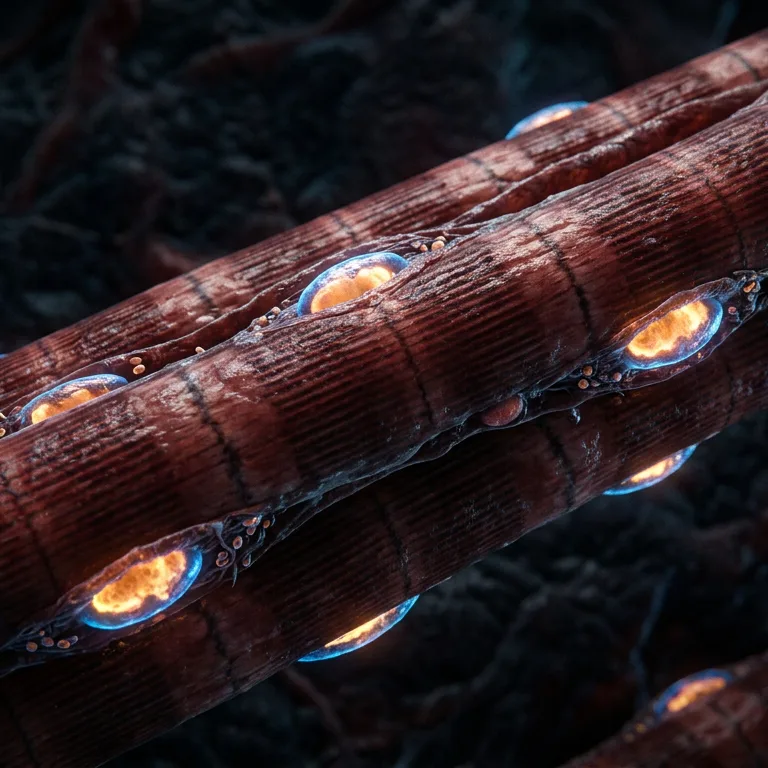
For decades it was believed that when a person stopped training and their muscles atrophied, all prior effort vanished completely. Popular wisdom spoke of "muscle memory," but medicine usually attributed this phenomenon almost exclusively to the central nervous system and motor learning. However, pioneering research led by the University of Oslo showed that a direct biological archive exists right inside the fibers: persistent myonuclei.
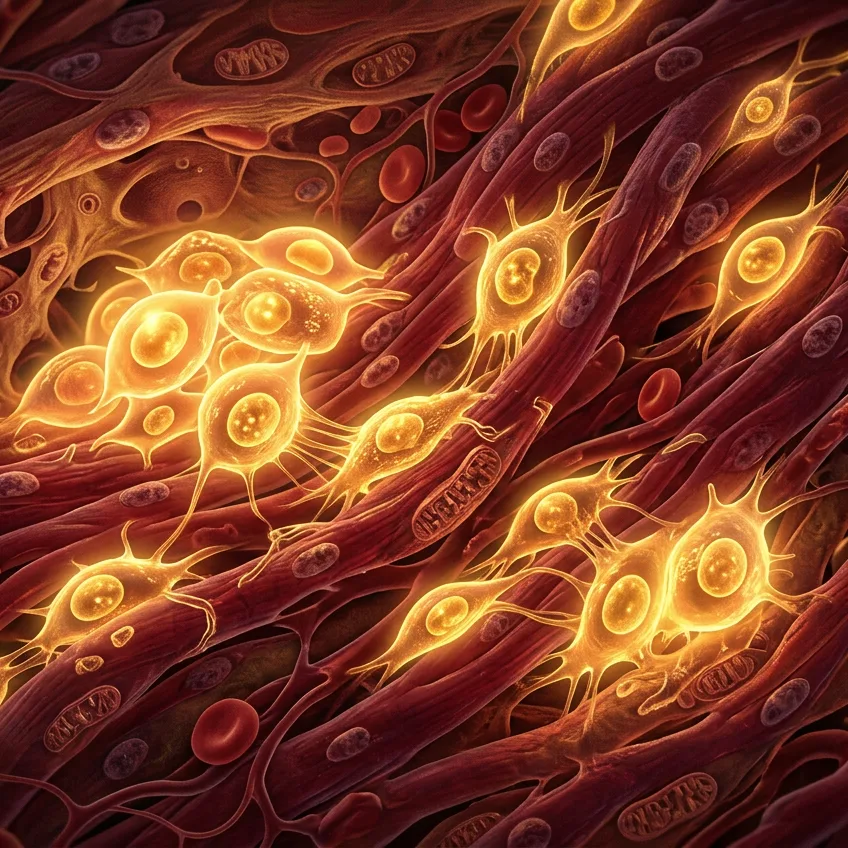
Unlike most cells in the body, which have a single nucleus, skeletal muscle fibers are gigantic multinucleated structures. Each cellular nucleus can only supervise and synthesize proteins for a limited volume of cytoplasm, a concept known as the myonuclear domain. When we subject muscle to strength training so it grows, dormant stem cells called satellite cells activate, divide, and fuse with the fiber, donating new nuclei to support the increase in size.
The fascinating part happens when we stop exercising. Although muscle mass shrinks and protein reserves empty out, the newly acquired nuclei do not die by apoptosis. Instead of being destroyed, these myonuclei remain hibernating inside the fiber for years, possibly for life. If you decide to train again in the future, these genetic factories are already in place. The muscle does not need to recruit new nuclei from scratch; instead, it instantly reactivates its protein synthesis machinery, recovering its former volume and strength in a fraction of the original time.
Source: Proceedings of the National Academy of Sciences (PNAS)