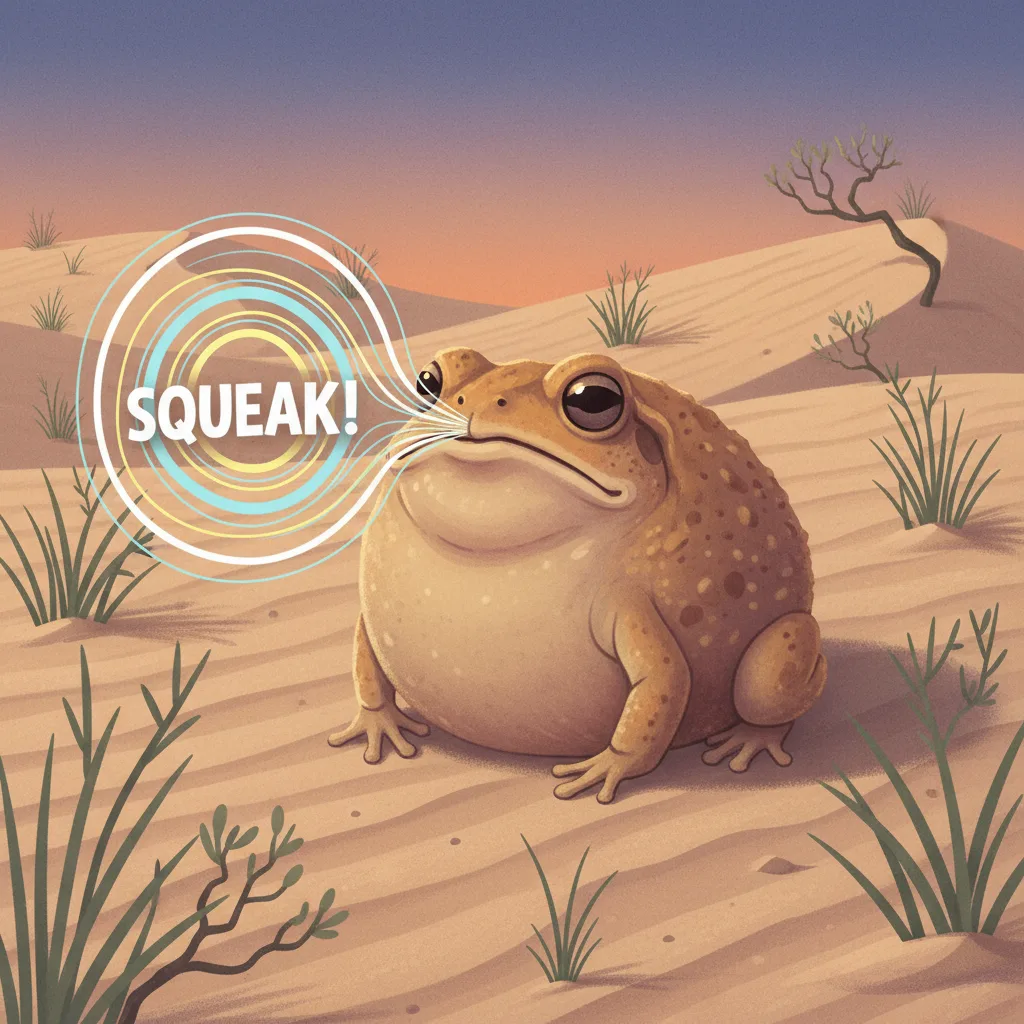
The Breviceps macrops, commonly known as the desert frog or desert rain frog, is a truly remarkable creature. Unlike most amphibians that prefer moist environments, this species thrives in the arid coastal dunes that stretch from Namibia to South Africa. But its most captivating trait is not just its habitat, but its unique defense mechanism.
When threatened, instead of leaping or hiding, Breviceps macrops puffs up, adopting a more spherical shape to appear larger and harder to swallow. Simultaneously, it emits a surprisingly loud "squeak," which many describe as sounding like a squeezed rubber toy. This high-pitched, jarring sound is an effective tactic to scare off predators, such as snakes or owls, that approach its underground burrows.
Its adaptation to subterranean life is also fascinating. During the day, it burrows into the moist sand of the dunes to avoid extreme heat and desiccation. Its hind legs are short and strong, perfect for digging, and its skin is relatively smooth to facilitate movement under the sand. This small amphibian, measuring just about 4-6 centimeters, is a testament to the incredible diversity and resilience of life in the planet's most challenging ecosystems, showing that even the most modest inhabitant can possess extraordinary survival strategies.
Source: National Geographic, Encyclopedia of Life, Animal Diversity Web, Journal of Herpetology