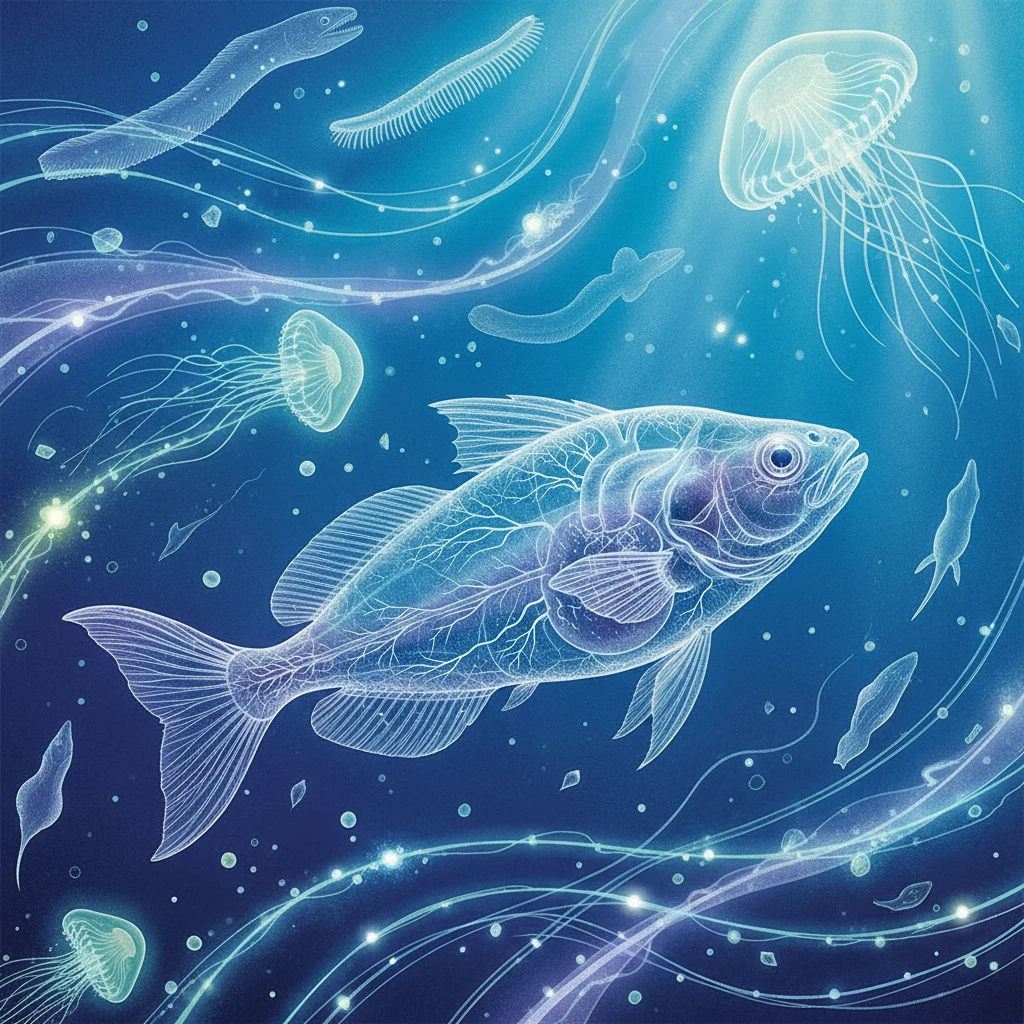
In the freezing and dark waters of the Southern Ocean, where temperatures can drop below freezing, lives a truly extraordinary marine creature: the icefish (family Channichthyidae). What makes these fish unique in the animal kingdom is their astonishing adaptation to survive in such a hostile environment: they have no hemoglobin or red blood cells in their blood, giving them a translucent appearance and an almost transparent heart.
Unlike almost all other vertebrates, which use hemoglobin to transport oxygen throughout the body, icefish have evolved a different strategy. Their blood, which is colorless, carries oxygen dissolved directly in the plasma. This is possible thanks to several factors: the enormous amount of oxygen that can dissolve in cold water, their large gills that maximize oxygen absorption, and an expanded cardiovascular system that pumps blood more efficiently.
In addition, to prevent their body fluids from freezing in sub-zero waters, these fish produce antifreeze proteins. These proteins bind to small ice crystals that may form, preventing them from growing and damaging cells. This incredible ability to "not bleed" and to resist freezing is a testament to the diversity and ingenuity of life in the most extreme environments on our planet, offering valuable insights into evolution and biochemistry.
Source: National Geographic, Science Magazine, Antarctic Science