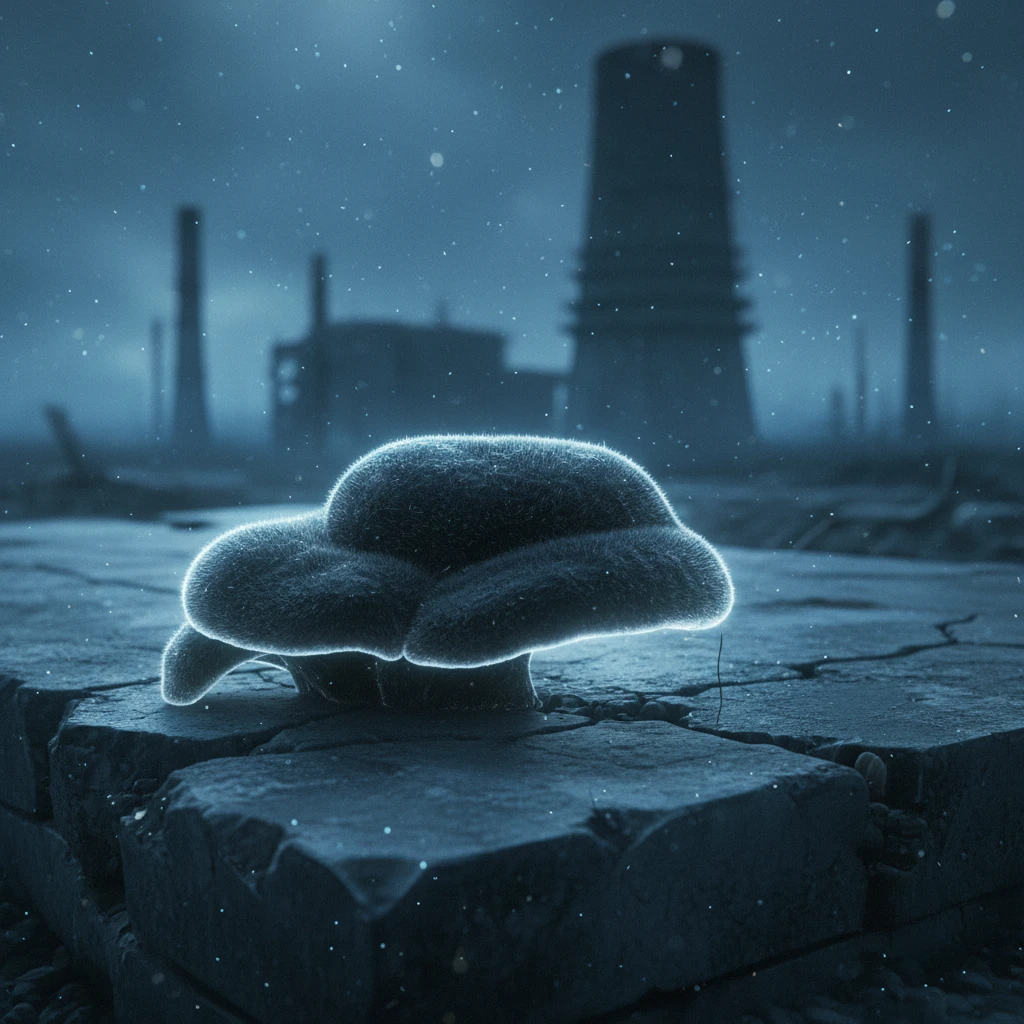
Imagine an organism capable of thriving in the most contaminated places on Earth, transforming poison into nutrients. That is exactly what the fungus Cladosporium sphaerospermum does, a superpower of nature that is revolutionizing the cleanup of nuclear disasters.
This fungus, discovered in the ruins of Reactor 4 at Chernobyl in 1999, not only survives radiation, but uses it as an energy source. Through a process called radiotrophy, the fungi convert gamma energy into usable chemical energy using melanin, the same pigment that protects our skin from the sun. In recent experiments, it has been shown that it can grow up to 20% faster when exposed to radiation.
- Fungal bioremediation: Fungi can break down hydrocarbons, heavy metals, and, now, radiation.
- Real-world application: They are being tested in the cleanup of sites such as Fukushima and Chernobyl.
- Impact: They could reduce the need to bury tons of contaminated soil.
This capability is not just a biological miracle; it is a concrete tool to repair environmental damage we consider irreparable. Nature, once again, finds solutions where humans only see destruction.
Source: Journal of Fungi, NASA Astrobiology, Chernobyl Sarcophagus Studies