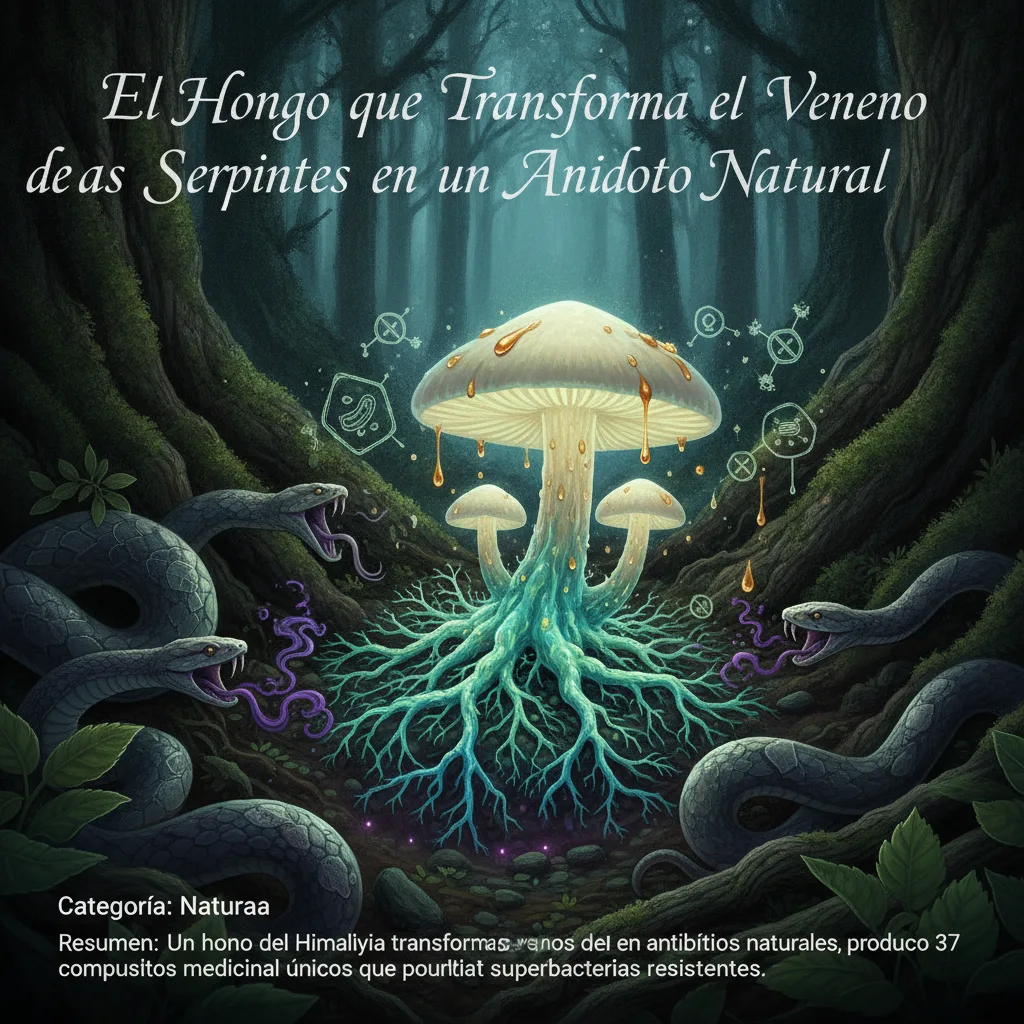
In the cold Himalayan mountains, a parasitic fungus called Ophiocordyceps sinensis has developed one of the most fascinating survival strategies in the fungal kingdom. This organism, known as 'caterpillar fungus' in traditional Tibetan medicine, infects ghost moth larvae buried in the soil and turns them into a kind of 'living pharmacy'.
What is truly extraordinary is that this fungus not only consumes its host, but also metabolizes venoms present in the soil and transforms them into compounds with unique antibiotic and anti-inflammatory properties. Researchers from Peking University discovered in 2019 that Ophiocordyceps sinensis produces 37 different bioactive compounds, including cordycepin and adenosine, which have proven effective against antibiotic-resistant bacteria.
- The transformation process takes between 4 and 6 weeks
- A single specimen can synthesize up to 1.2 mg of medicinal compounds
- It is found exclusively at altitudes above 3,800 meters
This biotransformation capability has inspired modern pharmacology studies to develop new natural antibiotics that can fight superbugs. The fungus literally 'cleans' venom from the environment and turns it into medicine, proving once again that in nature, even the deadliest substances can serve a constructive purpose.
Source: Study published in 'Journal of Ethnopharmacology' (2019), Peking University