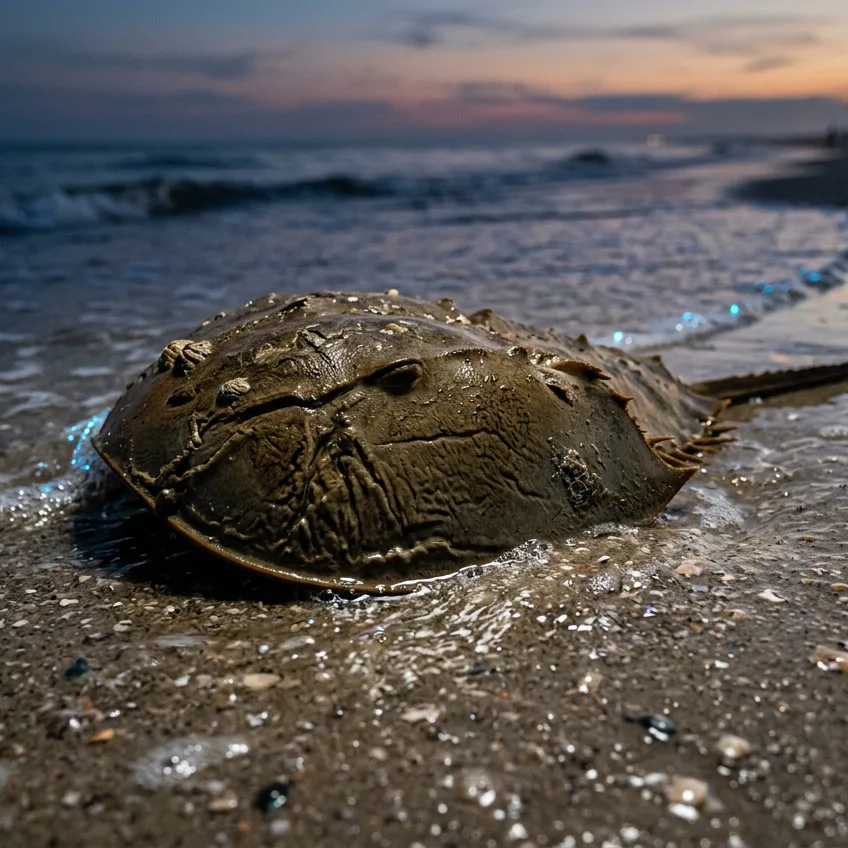
Long before the first dinosaurs walked the Earth, some 450 million years ago, the ancestors of the horseshoe crab (Limulidae) were already crawling across the ocean floor. Despite their common name, they are taxonomically more closely related to scorpions and spiders than to true crabs. However, their most astonishing secret is not just their evolutionary longevity, but their bright blue blood.
This unique color is due to hemocyanin, an oxygen-carrying protein that uses copper instead of the iron that stains human hemoglobin red. But its crucial scientific value lies in its defenses: lacking an adaptive immune system capable of creating antibodies, they developed cells called amebocytes with extraordinary chemical sensitivity.
When an amebocyte comes into contact with dangerous bacterial endotoxins, even in concentrations of just a fraction per trillion, it releases an enzymatic cascade that instantly clots the vital fluid, forming a solid gel that isolates and neutralizes the invader in a matter of seconds. Thanks to this biological shield:
- The biomedical industry developed the LAL (Limulus amebocyte lysate) test, the mandatory global gold standard for certifying the sterility of vaccines, intravenous fluids, and surgical implants.
- Any current medical injection or implant has been previously verified with this extract to prevent lethal bacterial infections.
An ancient biological wonder that remains the invisible guardian of contemporary pharmacology.
Source: Marine Biological Laboratory (Woods Hole) / Frontiers in Marine Science