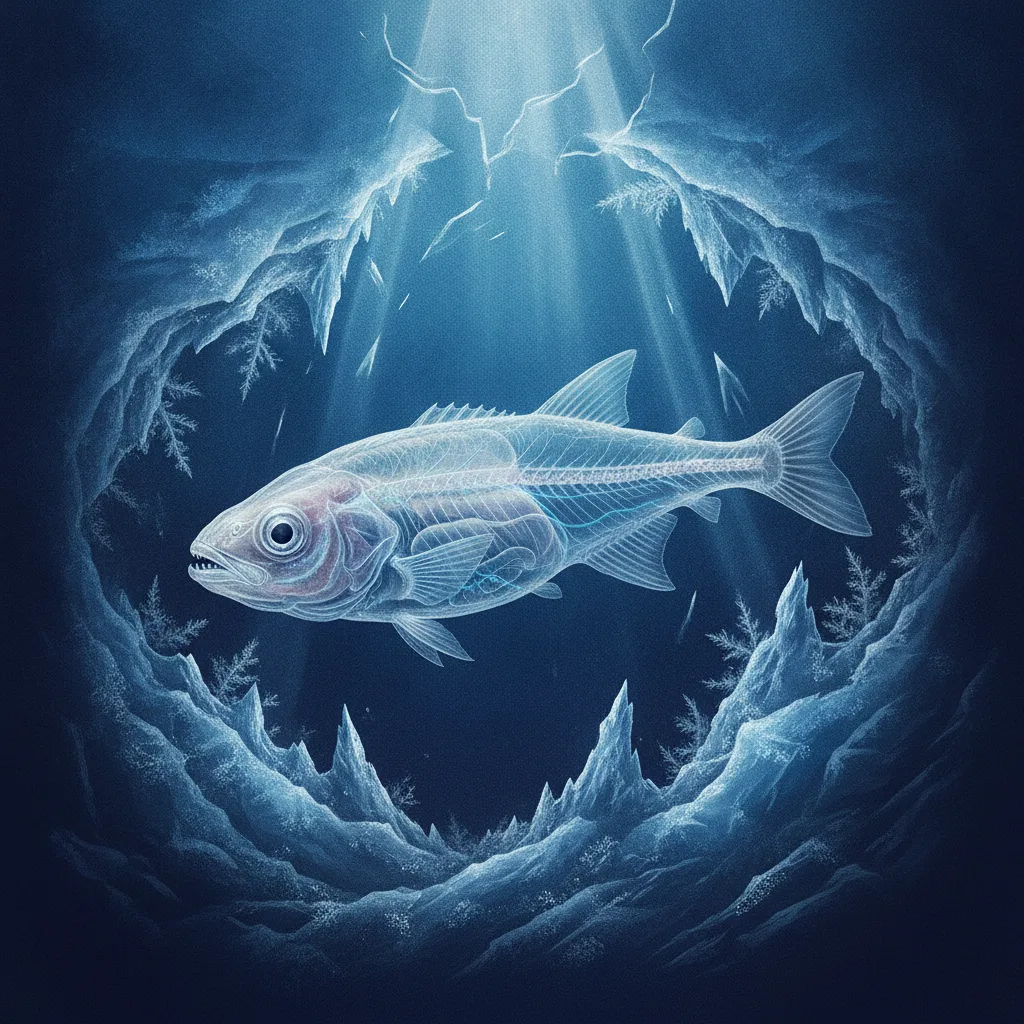
In the frozen depths of the Southern Ocean, where the water temperature drops below the freezing point of blood, lives a creature that defies the laws of biology as we know them: the icefish (Channichthyidae). The most astonishing fact about these fish is that they are the only known vertebrates that lack red blood cells and, therefore, hemoglobin, the protein that carries oxygen in the blood of almost all other animals.
To survive in such an extreme environment without this vital oxygen carrier, icefish have developed a series of extraordinary adaptations. Their blood is transparent and flows with low viscosity, reducing strain on the heart. Oxygen dissolves directly into their blood plasma and travels to tissues through a circulatory system up to five times larger than that of red-blooded fish of similar size. In addition, they possess natural antifreeze proteins circulating in their blood, preventing the formation of ice crystals that would destroy their cells.
These fish have remarkably large gills and skin, allowing them to absorb enough oxygen directly from the cold water, which is naturally rich in this gas. Their hearts are surprisingly large and pump blood at a higher rate. This unique adaptation not only allows them to thrive where other species cannot, but also offers a fascinating field of study on the evolution of life in extreme conditions and potential new applications in medicine.
Source: National Geographic, Scientific American, Nature Communications



