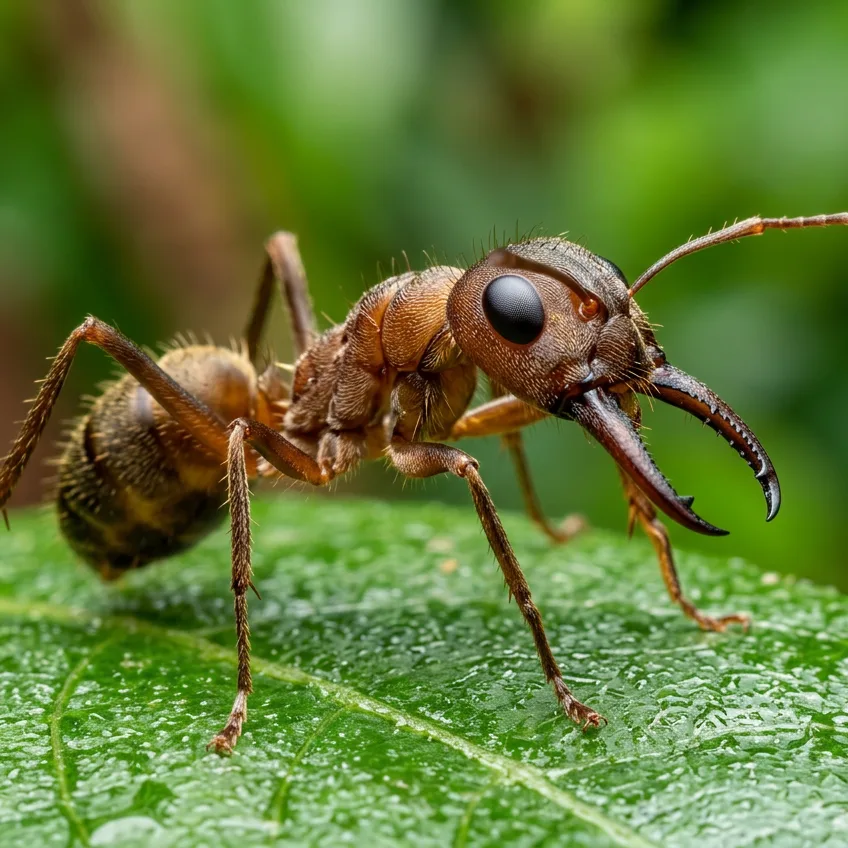
In the animal kingdom, caste roles are usually permanent, but the Indian jumping ant (Harpegnathos saltator) directly defies the laws of aging biology and neurology. When the queen of the colony dies, the workers do not accept extinction: they begin a ritual dueling tournament with their antennae that can last for weeks. The winners undergo a radical metamorphosis and become functional reproducers called gamergates.
This transition triggers a cascade of anatomical transformations unheard of in the animal world:
- Brain shrinkage: Their brain volume shrinks by around 20 %. Since they no longer need to patrol outside, hunt agile prey, or evade predators, the ant dismantles highly demanding neuronal tissue to reallocate metabolic resources.
- Reproductive hypertrophy: Their ovaries expand to five times their initial size, colonizing most of the abdomen.
- Quintupled lifespan: While a typical worker lives about seven or eight months, upon ascending to royal status its life expectancy skyrockets to reach three or four years, driven by an epigenetic adjustment in insulin pathways.
The most extraordinary finding, confirmed by neurobiologists at New York University, is that this transformation is completely reversible. If a gamergate is isolated and demoted back to the rank of worker, its ovaries are reabsorbed, its biological clock resumes, and its brain regenerates its original volume. This amazing quality makes the species a cutting-edge model for investigating neuroplasticity and the cellular brakes of aging.
Source: Cell / PNAS (Proceedings of the National Academy of Sciences)