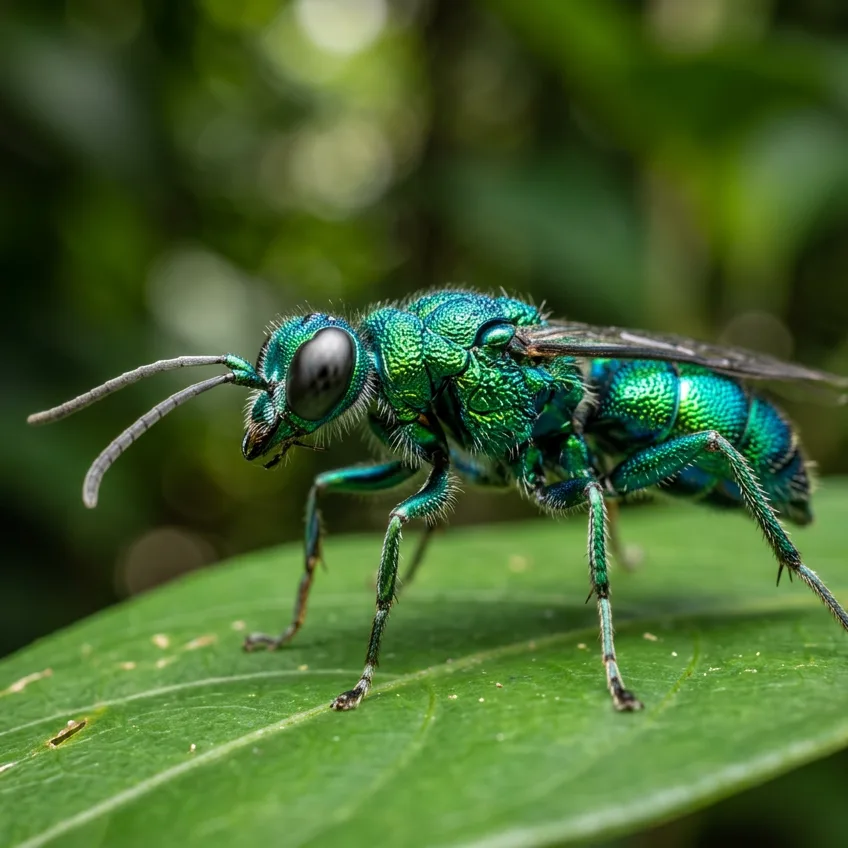
In the animal kingdom, there is no predator that combines surgical precision and neurological manipulation quite as astonishingly as the jewel wasp (Ampulex compressa). This solitary insect with a brilliant emerald-green exoskeleton does not kill its prey in combat; instead, it performs a veritable chemical lobotomy to turn it into a submissive, living storehouse for its offspring.
The attack consists of two thrusts of millimeter precision. The first sting briefly paralyzes the cockroach's front legs to neutralize its defense. Immediately after, the wasp inserts its stinger directly through the prey's head capsule, guided by sensory mechanoreceptors on its tip until reaching the supraesophageal and subesophageal ganglia of the brain.
There, it injects a specific molecular cocktail that blocks the receptors of octopamine, a key neurotransmitter that activates the escape response and motor motivation in insects. Surprisingly, the cockroach is neither immobilized nor anesthetized: its muscles function perfectly and it can walk without difficulty, but its survival instinct has been completely switched off. It is stripped of all self-initiative.
Next, the wasp bites an antenna of the subdued cockroach and leads it walking docilely—as if walking a dog on a leash—toward a burrow. After moving it inside, it lays an egg on its abdomen and seals the entrance with pebbles. The hatched larva systematically devours the cockroach's organs, saving the vital parts for last in order to keep the food fresh for weeks.
Source: The Journal of Experimental Biology / Ben-Gurion University of the Negev



