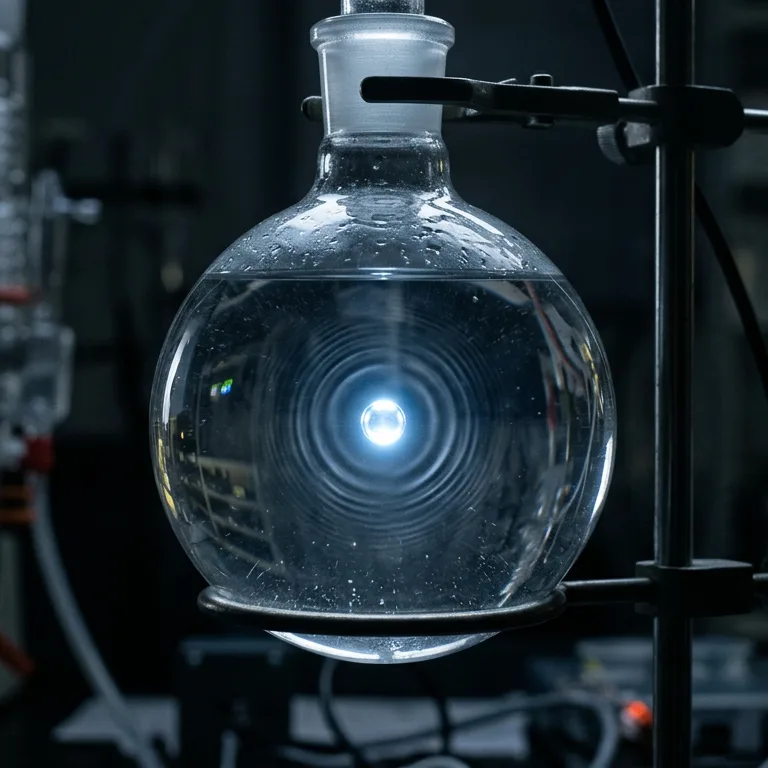
For exactly 130 years, all the mass on the planet depended on a single physical object: "Le Grand K". This platinum-iridium cylinder, forged in 1889 and kept under three airtight glass bell jars in an underground vault in Sèvres, France, was by definition the exact reference for a kilogram. However, periodic calibrations revealed a disturbing dilemma: despite its extreme isolation, the cylinder fluctuated by several tens of micrograms compared to its official copies due to microscopic contamination and the loss of gases trapped inside the metal.
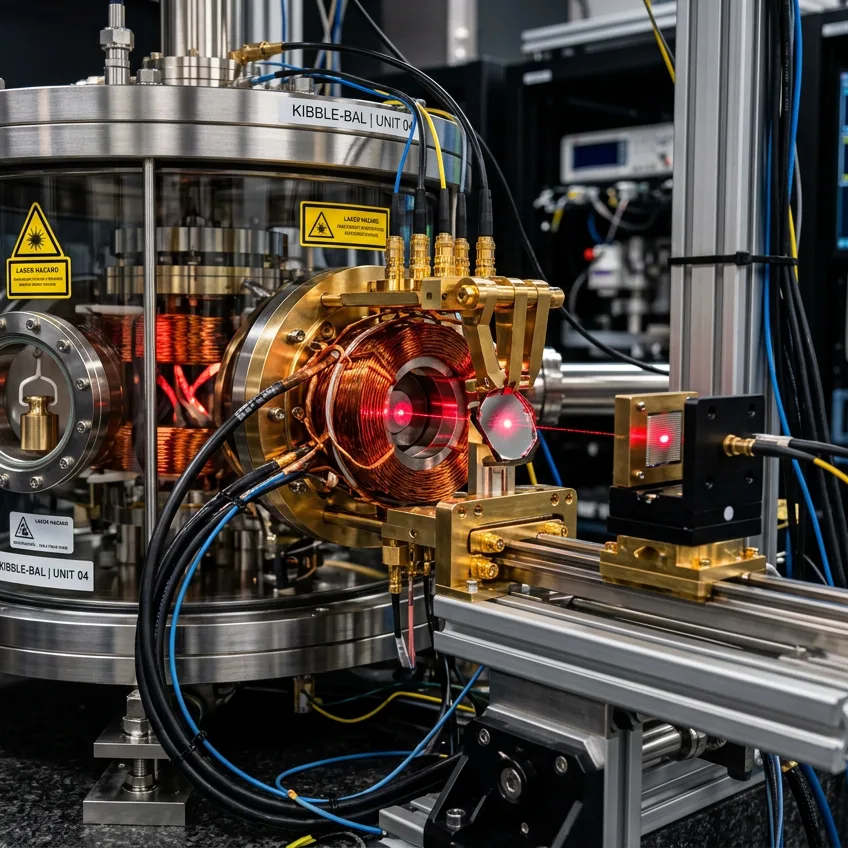
The answer to this metrological vulnerability arrived in May 2019 thanks to the Kibble balance, a sophisticated device originally conceived by British physicist Bryan Kibble. This instrument compares mechanical energy with electrical energy using two pillars of quantum physics: the Josephson effect and the quantum Hall effect, capable of measuring voltages and resistances with infinitesimal precision.
The mechanism balances the weight of an object through the magnetic force generated by a coil carrying an electric current within a magnetic field. Thanks to this electromagnetic calibration, the International System of Units succeeded in unlinking the kilogram from any perishable artifact, anchoring it for eternity to the Planck constant, an immutable number in every corner of the cosmos.
Source: Bureau International des Poids et Mesures (BIPM) / National Institute of Standards and Technology (NIST)