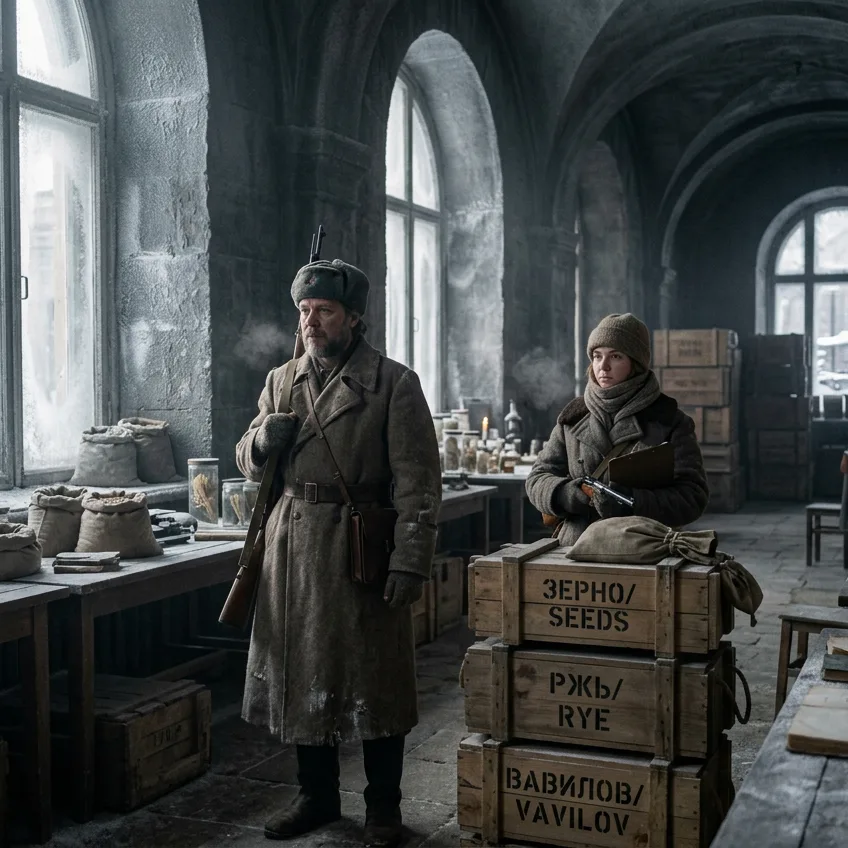
During World War II, the Siege of Leningrad (1941-1944) subjected the Soviet city to a relentless blockade of nearly nine hundred days, causing the deaths of more than one million civilians from extreme hunger and cold. At the epicenter of this humanitarian catastrophe was the Institute of Plant Industry of the Soviet Union, founded by the eminent geneticist Nikolai Vavilov, which housed the most valuable collection of seeds and crops on the planet: more than 250,000 samples of cereals, legumes, tubers, and fruits gathered from all over the world.
As the city's rations collapsed and residents were forced to consume sawdust, wallpaper paste, and boiled leather, a group of scientists took on the voluntary guard of the institute's fortified vaults. In the basement piled whole sacks of edible rice, wheat, barley, potatoes, and nuts of unique varieties that would have saved the custodians' lives for years.
Nevertheless, their loyalty to the agricultural future of humanity was unshakeable:
- Twelve scientists died of starvation at their posts while guarding boxes full of unprocessed food.
- Peanut specialist Alexander Stchukin died sitting at his desk, refusing to taste a single nut from his collection.
- Botanist Dmitry Ivanov, custodian of the rice varieties, perished surrounded by thousands of bags of grain without touching a single sample.
Thanks to their sacrifice, the gene bank survived intact through bombings, rat infestations, and sub-zero temperatures, allowing the reforestation and restoration of European agriculture after the war.
Source: Vavilov Research Institute of Plant Industry Archives / 'Where Our Food Comes From' by Gary Paul Nabhan