When we think about maintaining body heat, we usually imagine muscle shivering or fat insulation. However, our body's greatest source of constant heat is the liver. This organ, which accounts for barely 2% of an adult's weight, is responsible for generating approximately 20% of resting thermal energy.
The reason lies in its overwhelming workload: it performs more than 500 simultaneous metabolic functions, from processing nutrients and neutralizing toxins to synthesizing proteins. Each of these biochemical reactions is exothermic; that is, it dissipates residual energy directly as heat. Because of this, the temperature inside liver tissue typically ranges between 38 °C and 38.5 °C, nearly one degree above the body average.
This excess heat is not wasted, but channeled through an ingenious hydraulic system:
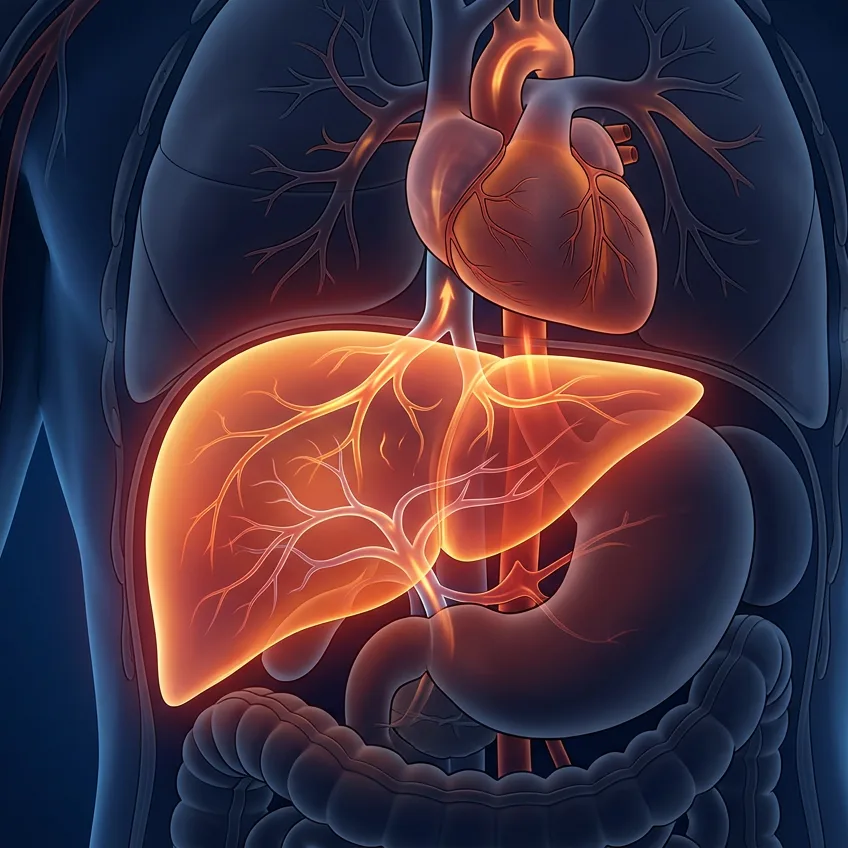
- Circulatory distribution: Blood passing through the liver picks up this heat and ascends through the hepatic veins toward the inferior vena cava.
- Central heating: This superheated blood arrives directly at the right side of the heart, distributing uniform temperature to the lungs and the rest of the body.
- Basal thermostat: During periods of fasting or prolonged rest, when muscles are inactive, the liver takes the lead to prevent central hypothermia.
Thus, the liver is not only the human body's detoxification laboratory, but also an authentic biochemical furnace that stabilizes the essential temperature of our most vital organs.
Source: Guyton and Hall Textbook of Medical Physiology (14th Edition) / Journal of Thermal Biology