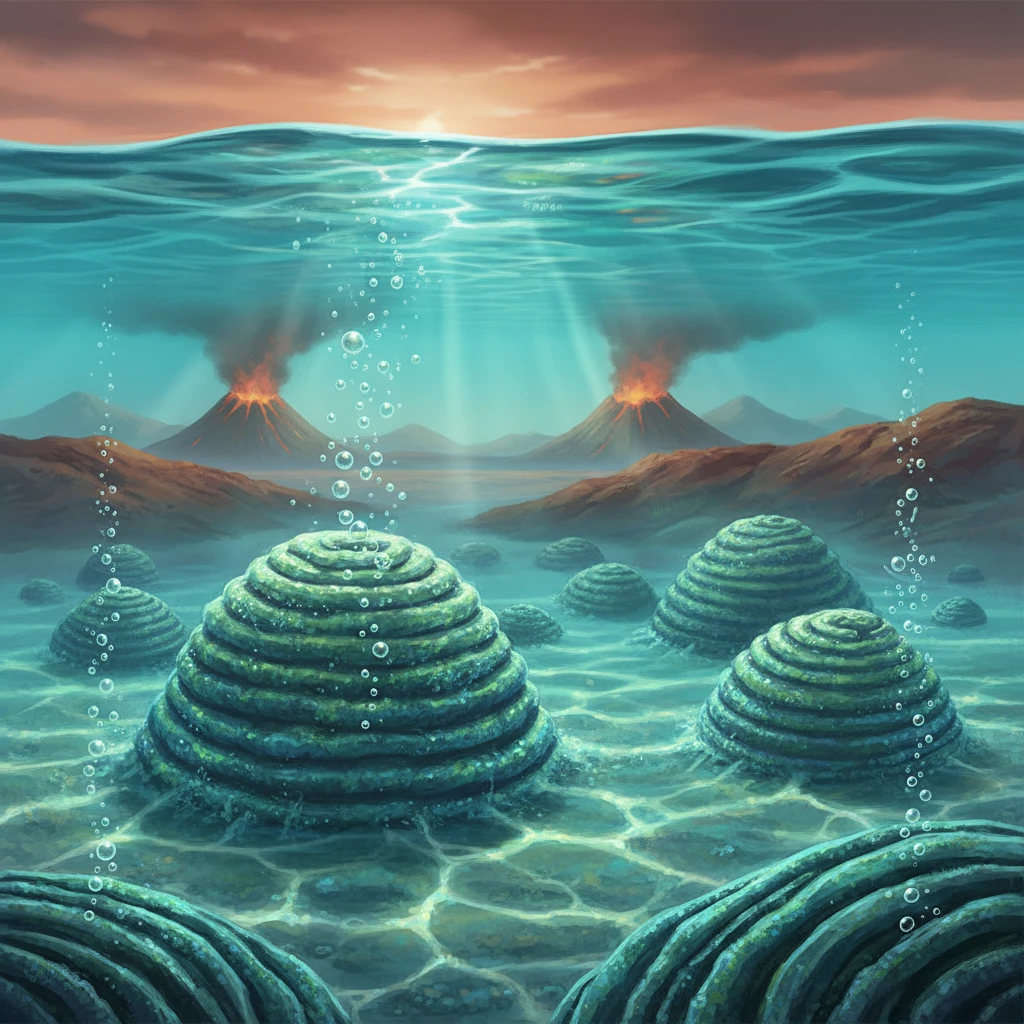
Stones have stories to tell, but few are as vital as those of stromatolites. These structures, which at first glance look like simple rocks, are actually the oldest living fossils on Earth, and their ancestors are the true architects of the atmosphere we breathe today. They formed billions of years ago, when the planet was a hostile place, devoid of free oxygen and dominated by volcanic gases.
Stromatolites are the result of accumulated layers of cyanobacteria (formerly known as blue-green algae) and sediments. These tiny bacteria were the first organisms to develop oxygenic photosynthesis, a revolutionary process that released oxygen as a byproduct. Little by little, over hundreds of millions of years, the oxygen bubbles released by countless stromatolite colonies saturated the oceans and, eventually, Earth's atmosphere. This event, known as the 'Great Oxidation Event', was a catastrophe for many anaerobic life forms of the time, but it laid the foundation for the evolution of all complex life we know today.
Today, stromatolites are much rarer and are found mainly in extreme environments, such as the hypersaline waters of Shark Bay, Australia, or in some lagoons and springs. Observing them is like looking through a window into the dawn of life on Earth, a silent and persistent reminder of how the microscopic action of a few organisms can transform an entire planet.
Source: National Geographic, Smithsonian Magazine, NASA, paleobiology publications.