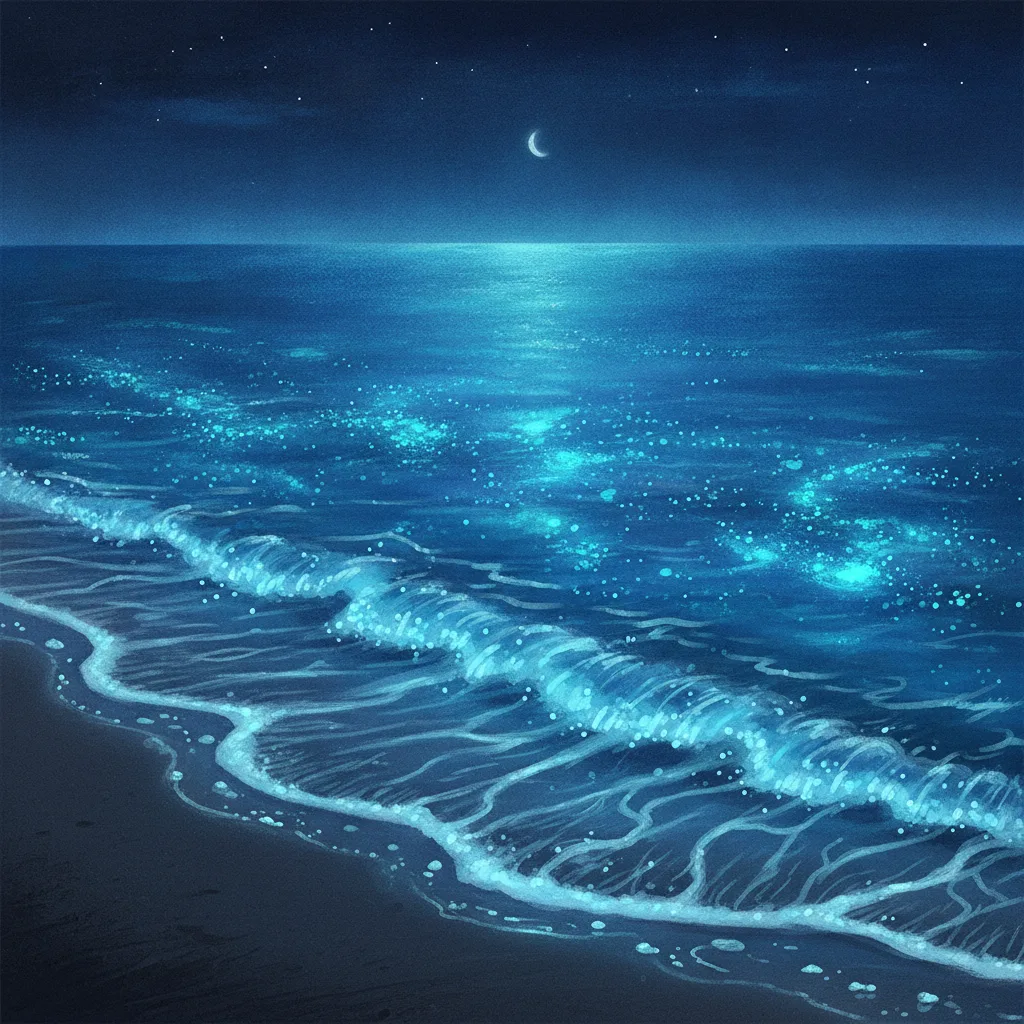
The ocean is a realm of mysteries, and one of the most captivating is bioluminescence. This phenomenon, the production of light by living organisms, is not exclusive to the abyssal depths or exotic creatures like jellyfish or lanternfish. In fact, one of its most impressive and widespread spectacles is starred by bioluminescent plankton.
These tiny organisms, mainly dinoflagellates, float in the upper layers of the ocean. When the water is disturbed, whether by the movement of a wave, the passage of a boat, or even a simple splash, these microbes react. When disturbed, they trigger an internal chemical reaction that releases energy in the form of light. The result is a blue-green flash that spreads across millions of individuals, turning vast stretches of sea into a liquid field of stars. It is a "cold" light because it generates very little heat, unlike the light from a light bulb.
This ability to emit light serves multiple purposes: from defending against predators (alerting larger predators to whatever is disturbing them) to attracting prey or communicating with other members of their species. The seas of Southern California, Toyama Bay in Japan, and the coasts of Puerto Rico are some of the famous places where this phenomenon can be observed at its best, especially on dark, moonless nights. It is a fascinating reminder of how marine life has evolved to create its own light show in the vastness of the ocean.
Source: National Geographic, Ocean Conservancy, Science Direct (on bioluminescence in dinoflagellates)



