In the arid landscapes of the Chihuahuan Desert, where life struggles to survive, there is a botanical marvel capable of defying death: Selaginella lepidophylla, popularly known as the resurrection plant. This fascinating organism is an extreme example of desiccation tolerance, an ability that allows it to survive prolonged droughts, sometimes for decades, without a single drop of water.
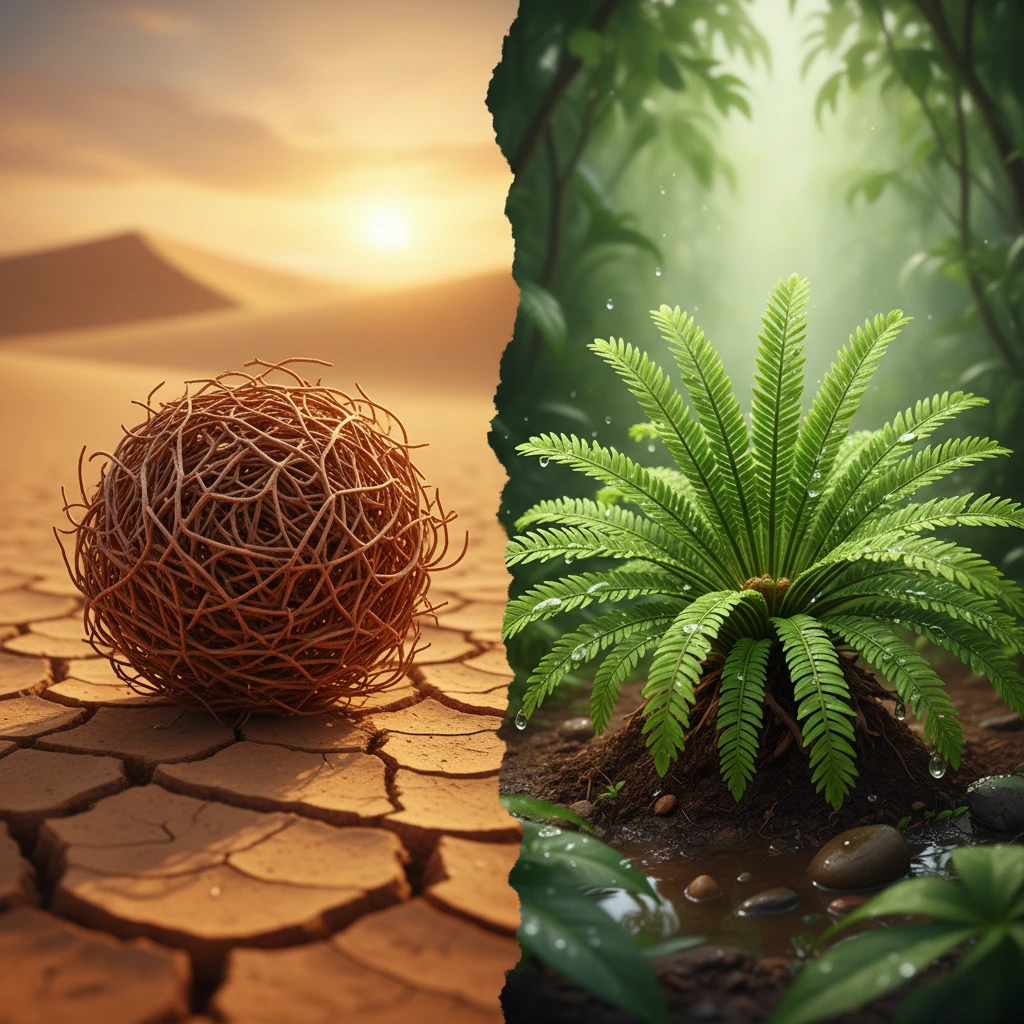
When water is scarce, Selaginella lepidophylla shrinks and curls in on itself, forming a tight, dry brown ball. In this state of suspended animation, the plant can be blown by the wind to new locations. However, as soon as its roots come into contact with moisture, a miracle occurs. In a matter of hours, the plant begins to unfurl its leaves, which gradually regain their vibrant green color, as if it had never undergone a period of dormancy.
This astonishing revival process is due to unique cellular mechanisms that protect its tissues from damage during dehydration and allow for rapid recovery upon rehydration. Scientists study Selaginella lepidophylla to understand its secrets, seeking to apply this knowledge in fields such as crop conservation, medicine (to preserve organs or tissues), and even in the development of new materials. It is a living testament to the resilience of nature and a reminder that, even in the most adverse conditions, life always finds a way to flourish.
Source: Revista National Geographic, botany and plant physiology studies on Selaginella lepidophylla, Missouri Botanical Garden.