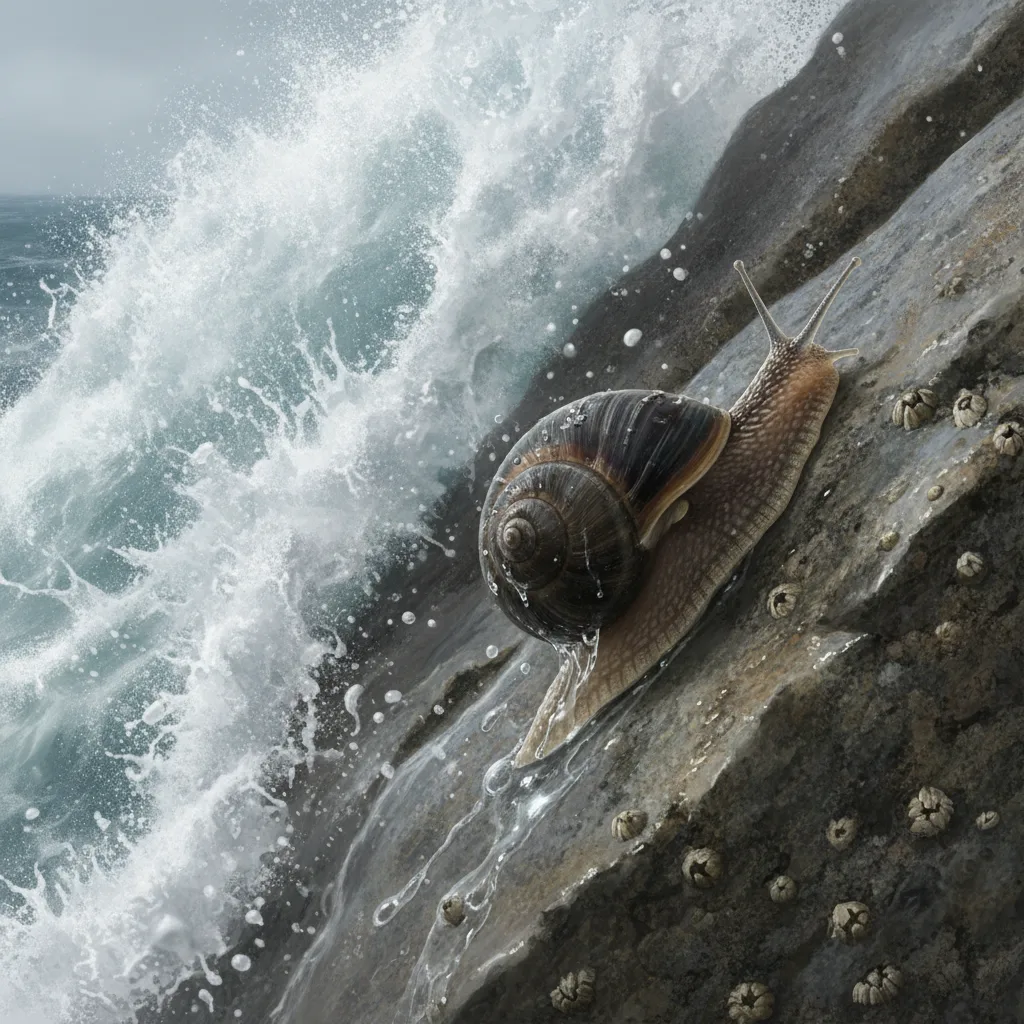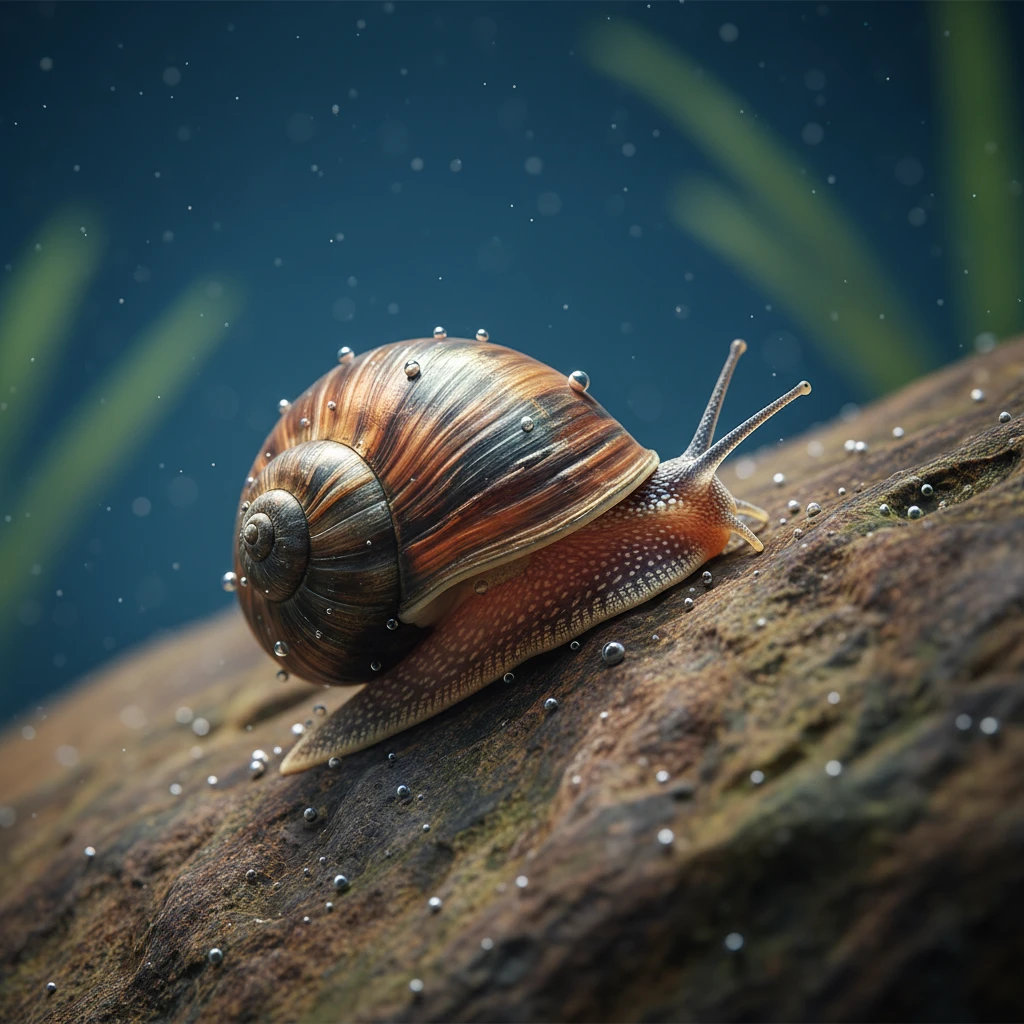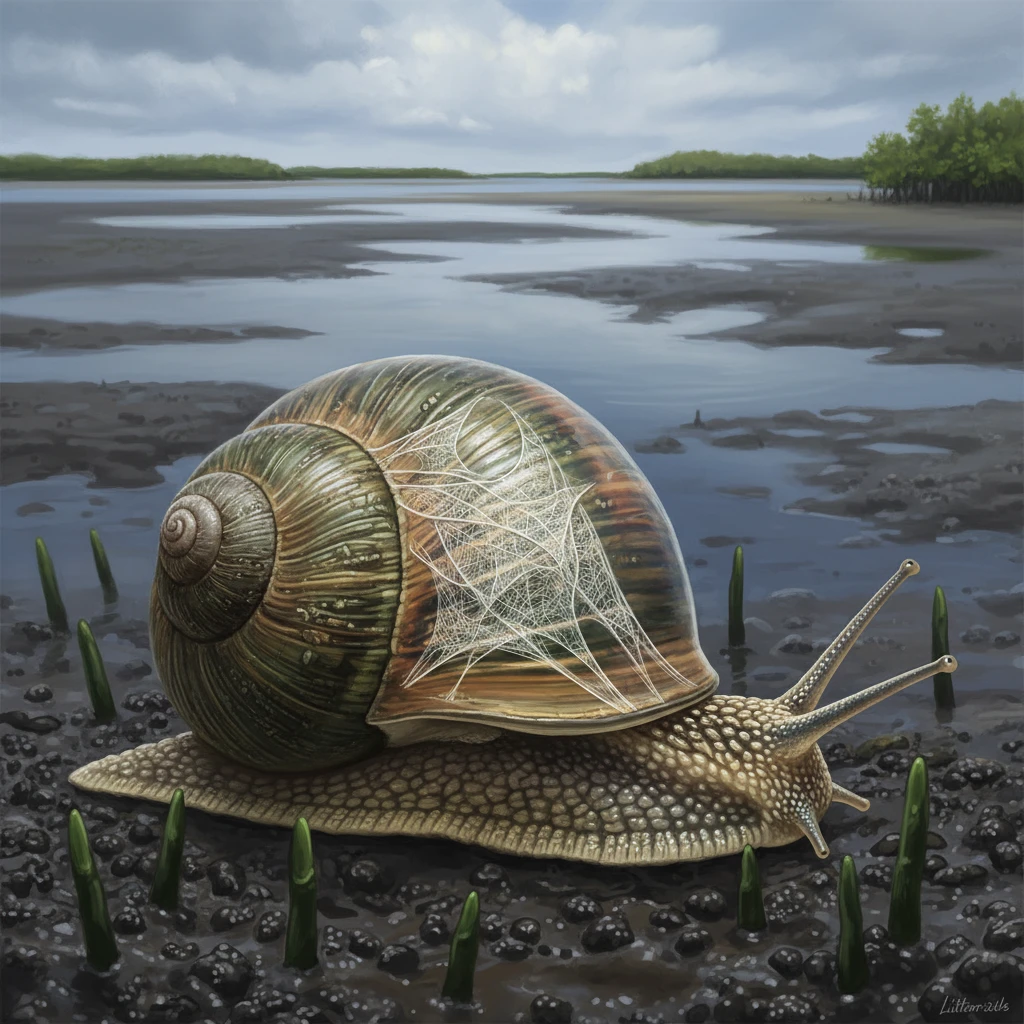
The marine snail Littoraria irrorata, common in western Atlantic estuaries, has developed a construction strategy as unexpected as it is effective: to reinforce its shell against sand abrasion and current pressure, it incorporates spider silk fibers into the calcium carbonate matrix it secretes.
Research led by Dr. David L. Hu at the Georgia Institute of Technology (2018) revealed that this process, known as composite biomineralization, is no accident. The snail actively collects cobwebs washed ashore by the tides and integrates them into the outermost layers of its shell during growth. The silk acts as a flexible aggregate, similar to rebar in concrete, distributing stress and preventing cracks from propagating.
- Increased resistance: Tests showed that shells containing silk can withstand up to 30% more compressive force before fracturing.
- Local adaptation: Silk incorporation is more frequent in populations exposed to strong surf, demonstrating a plastic response to the environment.
- Natural innovation: This mechanism inspires the design of new biomimetic composites for civil engineering and medicine.
This finding highlights nature's ability to recycle materials available in the ecosystem, creating energy-efficient solutions. The snail does not need to produce the silk; it only needs to recognize its value and know where to place it.
Source: Hu, D. L., et al. (2018). 'Silk-reinforced mineralized composites in the shell of the marsh periwinkle, Littoraria irrorata'. Journal of the Royal Society Interface.