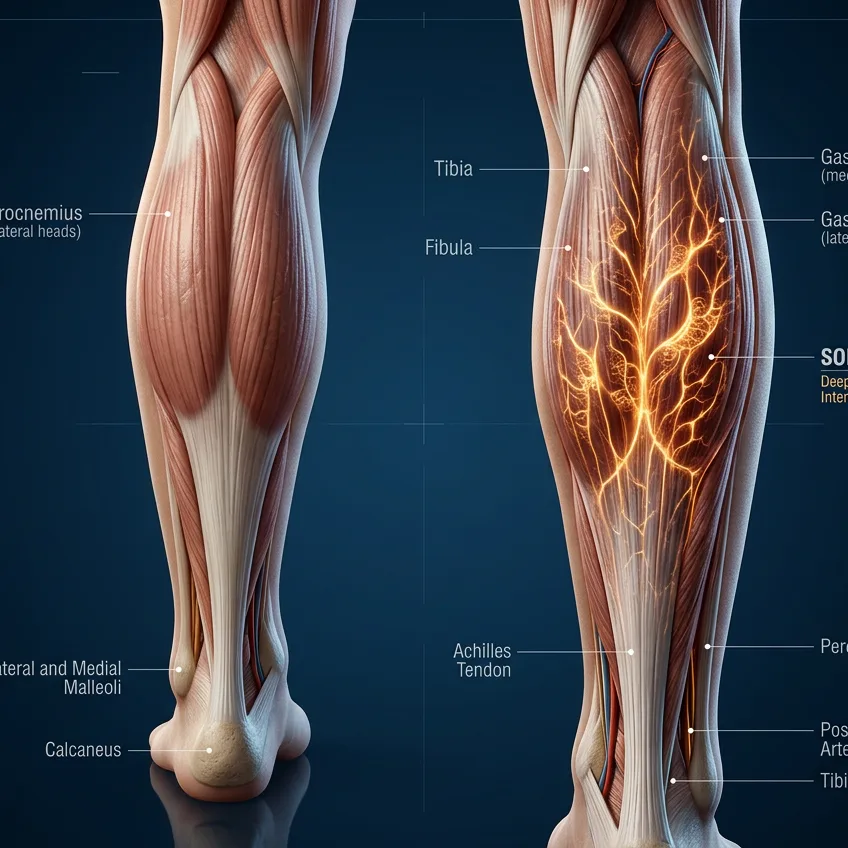
Hidden deep inside the calf, just beneath the gastrocnemius, lies a muscle with a unique physiology in the human body: the soleus. Although it represents barely 1% of total body weight, pioneering research from the University of Houston in 2022 showed that it possesses a metabolic machinery radically different from the rest of skeletal muscle.
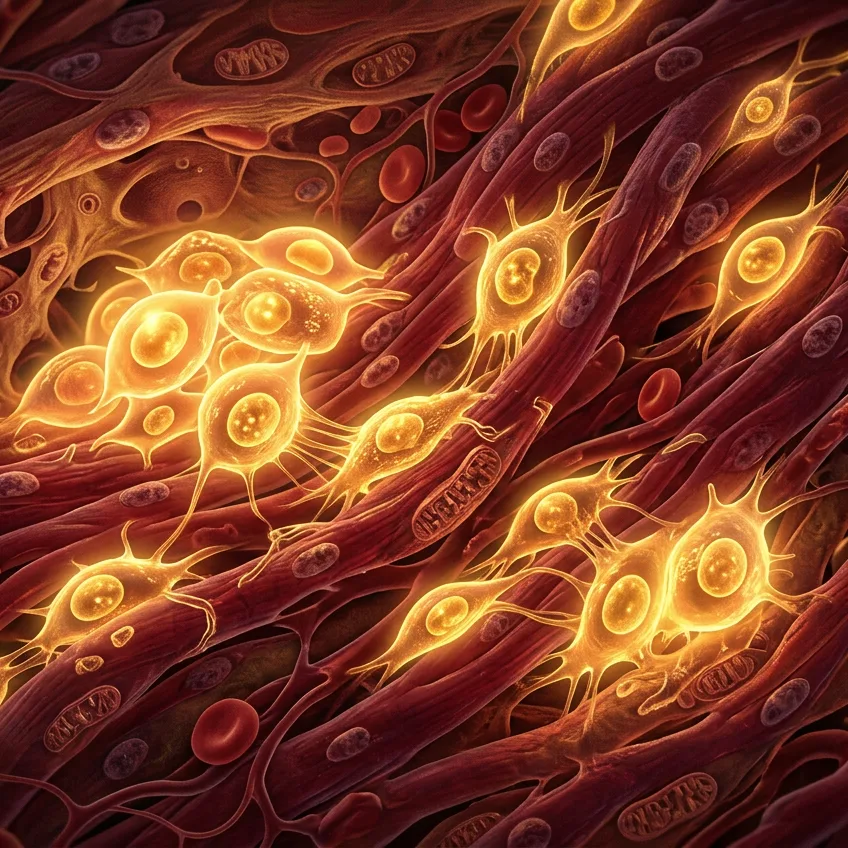
Most muscles in the body rely on their internal glycogen stores for energy, a process that creates byproducts linked to fatigue and quickly exhausts local fuel. The soleus, on the other hand, is composed almost entirely of slow-twitch muscle fibers with high mitochondrial density designed to stay active continuously without tiring.
When properly activated through a rhythmic movement while seated—raising the heels while the ball of the foot remains grounded—the soleus relies almost entirely on glucose and circulating triglycerides in the blood rather than glycogen. In clinical trials led by Dr. Marc Hamilton, this local contraction achieved:
- Reducing postprandial glucose fluctuations by up to 52%.
- Lowering insulin secretion requirements by 60%.
- Doubling the normal rate of whole-body oxidative fat metabolism.
This finding redefines preventive physiology, demonstrating that a tiny muscle group can act as a powerful metabolic buffer to counteract the effects of prolonged sitting.
Source: iScience (Cell Press) / University of Houston (Hamilton et al., 2022: 'A potent physiological method to magnify and sustain soleus oxidative metabolism')