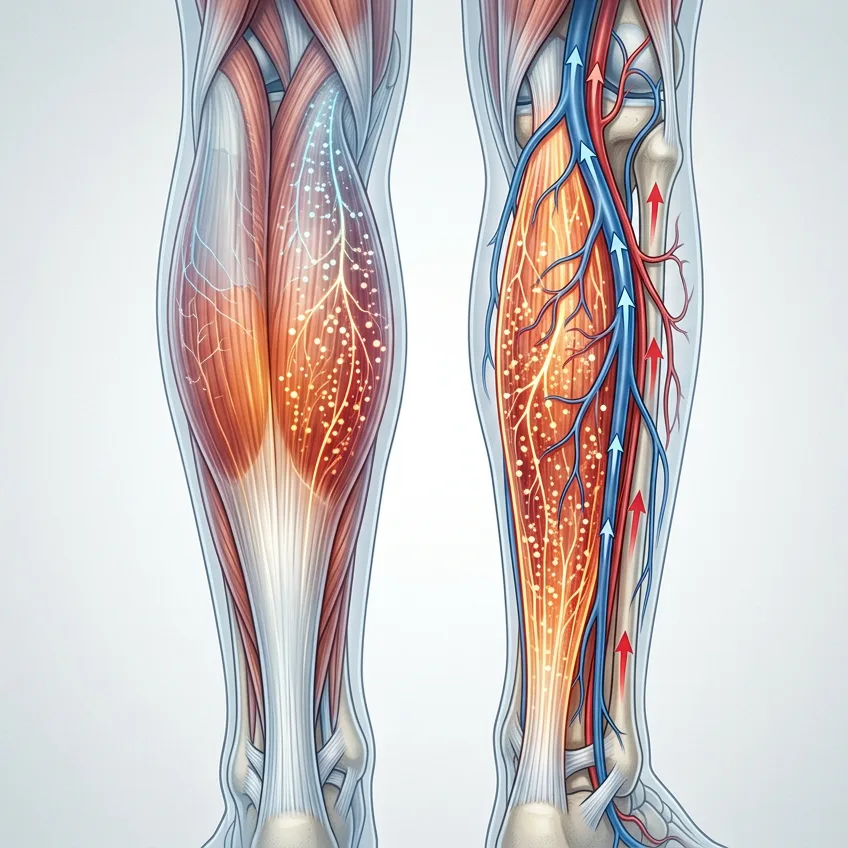
In the back of the calf, tucked beneath the gastrocnemius, lies the soleus muscle. Although it accounts for barely 1 % of total body weight, this discreet tissue possesses physiological adaptations so unique that cardiovascular medicine dubbed it the "second heart," while metabolic neurophysiology considers it a true marvel of energy efficiency.
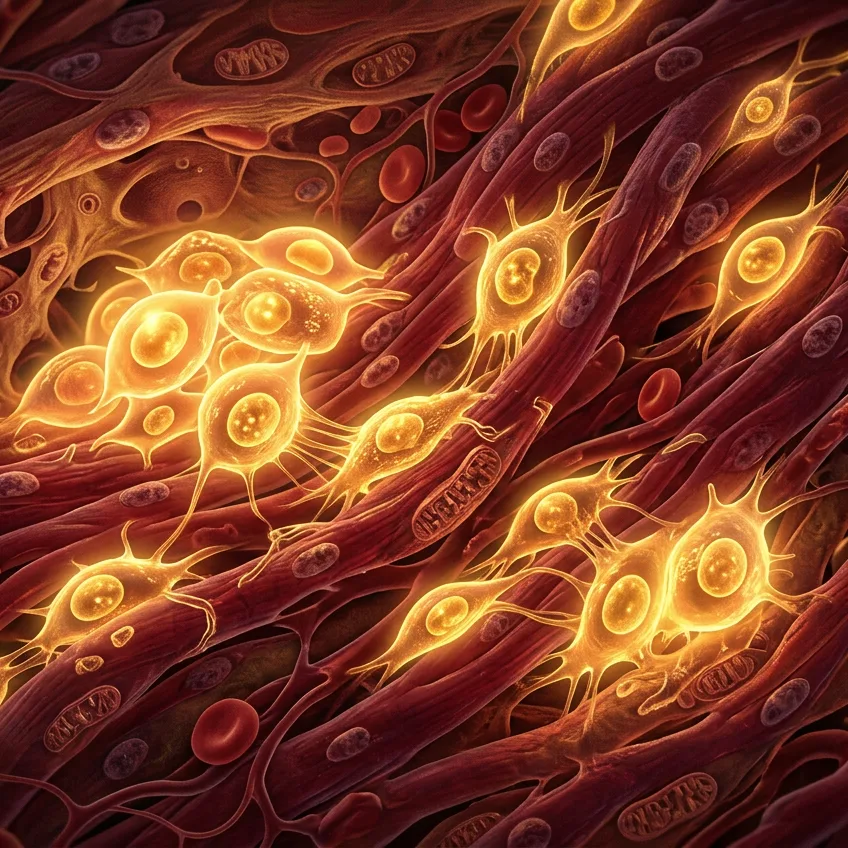
Unlike most skeletal muscles, the soleus is composed almost entirely of slow-twitch muscle fibers (type I), extraordinarily rich in myoglobin and mitochondria. Its first major feat is circulatory: when we move or flex the ankle, the soleus compresses a vast network of deep venous sinuses equipped with one-way valves, overcoming gravity to eject liters of pooled blood back to the cardiac atria.
However, its most astonishing secret emerged in 2022 thanks to research from the University of Houston. Scientists discovered that isolated activation of the soleus through specific biomechanical contractions (the seated soleus pushup) can double the normal oxidative metabolic rate without depleting local glycogen. Instead of fatiguing by breaking down its own sugar stores like other muscles, the soleus feeds directly on blood glucose and circulating triglycerides.
This mechanism allows the soleus to operate for continuous hours of sustained contraction while reducing postprandial glucose spikes by up to 52 % and lowering insulin demand by 60 %, showing that our body hides metabolic micro-reactors designed to protect vascular health even in the sedentary era.
Source: iScience (Cell Press) / University of Houston (Study by Dr. Marc Hamilton on soleus metabolism, 2022)