For more than a century, biology maintained a seemingly unbreakable rule: the complex immune system of vertebrates prevents any intracellular endosymbiotic relationship with photosynthetic organisms. However, a landmark study published in 2011 showed that the spotted salamander (Ambystoma maculatum) openly defies this evolutionary principle.
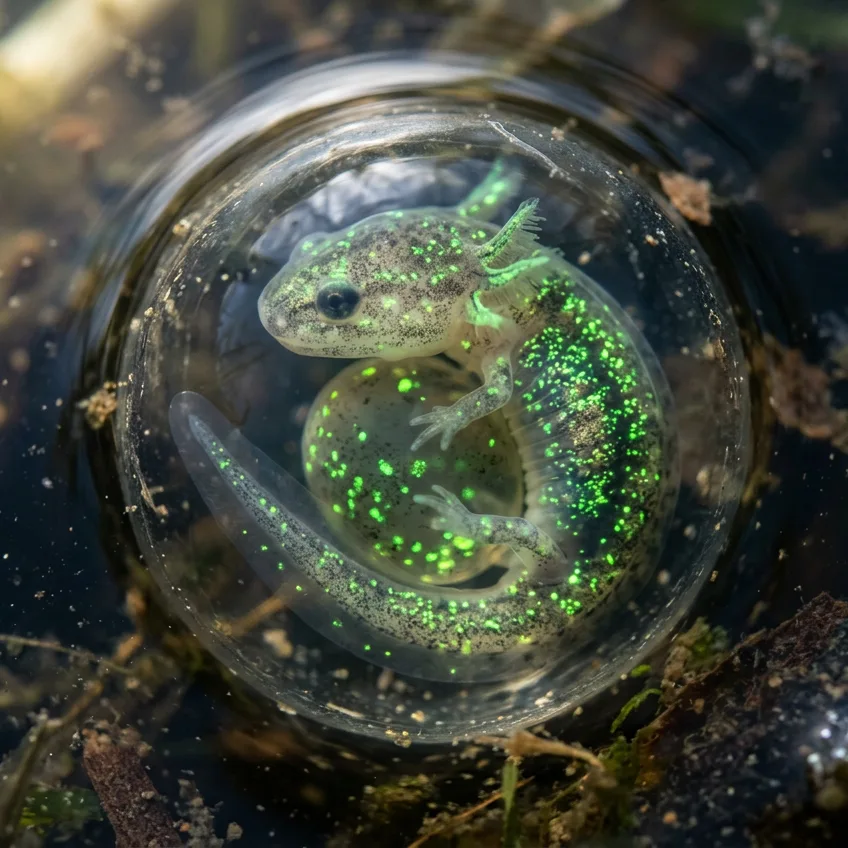
Since the late 19th century, it was known that the jelly-like egg masses of this salamander acquired an intense emerald color due to the presence of the green alga Oophila amblystomatis (whose name literally means "salamander egg lover"). Science assumed it was a classic external symbiosis: the alga supplied oxygen to the egg fluid and consumed the ammonium waste produced by the embryo. However, advanced fluorescence and microscopy techniques revealed that the algae cross the membranes and live inside the somatic cells of the embryo.
This milestone made the spotted salamander the first documented vertebrate capable of hosting intracellular photosynthetic endosymbionts. The microalgae colonize embryonic tissues before the immune system fully matures. Once housed alongside the mitochondria of the salamander's cells, they harness sunlight to produce glucose and oxygen directly for the host's development.
The finding is so profound that algal genetic material was even discovered in the oviducts of adult females, confirming direct hereditary transmission. This remarkable solar alliance between a single-celled plant and a four-legged animal continues to inspire cutting-edge research in immunology and regenerative medicine.
Source: Proceedings of the National Academy of Sciences (PNAS) - 'Intracellular invasion of green algae in a salamander host' (Kerney et al., 2011)