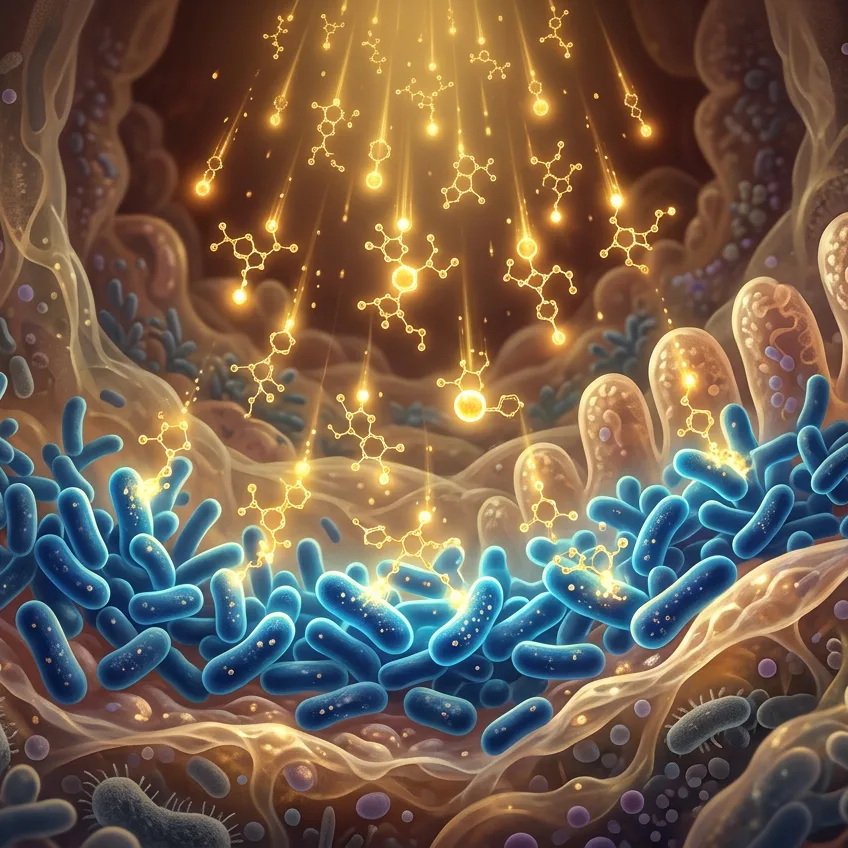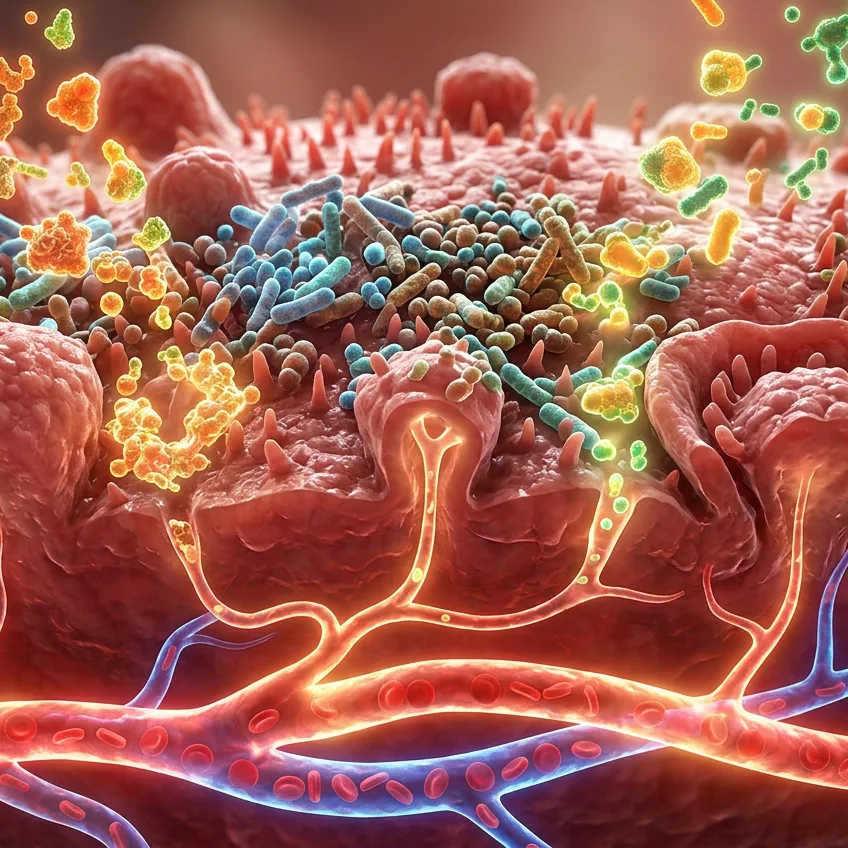
When you eat vegetables like spinach or beets, your body triggers a vital biochemical cascade it cannot perform on its own: it relies entirely on the bacteria colonizing the back of your tongue. Although the nitrates found in these foods are essential for cardiovascular health, the human genome lacks the enzymes required to process them efficiently. That task is carried out by specialized symbiotic microorganisms from genera such as Rothia, Actinomyces, and Veillonella.
These bacteria use dietary nitrates as an electron acceptor and chemically reduce them to nitrites. When you swallow the enriched saliva, the acidic environment of the stomach and vascular tissues ultimately transform these compounds into nitric oxide (NO). This gaseous molecule is a critical cellular messenger: it signals the endothelium to relax the smooth muscle of the arteries, allowing vasodilation that lowers peripheral resistance and reduces blood pressure.
The clinical impact of this mechanism was revealed in research led by Queen Mary University of London. When volunteers were given strong antiseptic mouthwashes with chlorhexidine for a week, the temporary elimination of the lingual microbiome caused a plunge in blood nitrite and an immediate increase of between 2 and 5 mmHg in systolic blood pressure, enough to raise long-term cardiovascular risk.
This finding showed that the oral cavity is not only involved in preliminary digestion, but also acts as an essential metabolic station for maintaining the flexibility and health of the circulatory system.
Source: Queen Mary University of London / Free Radical Biology and Medicine