In the sandy depths of the oceans, a tiny artist works tirelessly, but his canvas is not paper and his brush is nothing more than his own body. This is the Japanese pufferfish of the genus Torquigener, a master of underwater architecture.
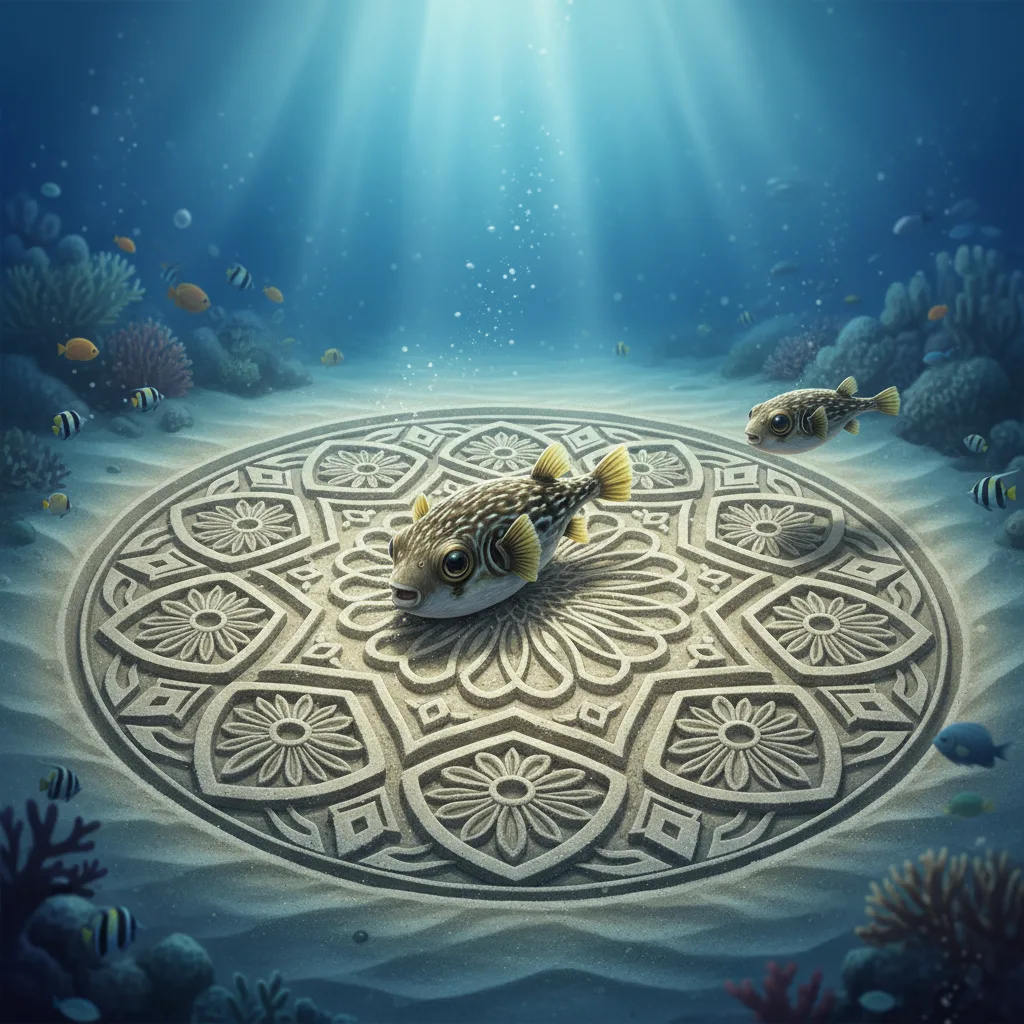
This amazing male fish is capable of creating complex and symmetrical geometric "works of art" on the seabed that can measure up to two meters in diameter. For days, or even weeks, the fish uses its fins to meticulously carve intricate ridges and valleys into the sand, forming concentric circles and radial patterns that seem taken from a sacred geometry manual.
But what is the purpose of this monumental feat? The answer is as old as life itself: love. These elaborate structures are, in fact, mating nests. Female pufferfish are attracted to the complexity and symmetry of these designs, which act as a display of the male's strength, health, and dedication. Once the female chooses a design and a partner, she lays her eggs in the center of the structure. The design of the nest is not only attractive, but also functional: the ridges and valleys help guide water currents, protecting the eggs from predators and from being swept away by tides.
First discovered in 1995 off the coast of Japan, this courtship ritual is a fascinating testament to how nature develops ingenious and beautiful strategies for survival and reproduction, turning the seabed into an ephemeral art gallery.
Source: National Geographic, BBC Earth, Art of the Pufferfish (documentary), marine biology studies on Torquigener sp.