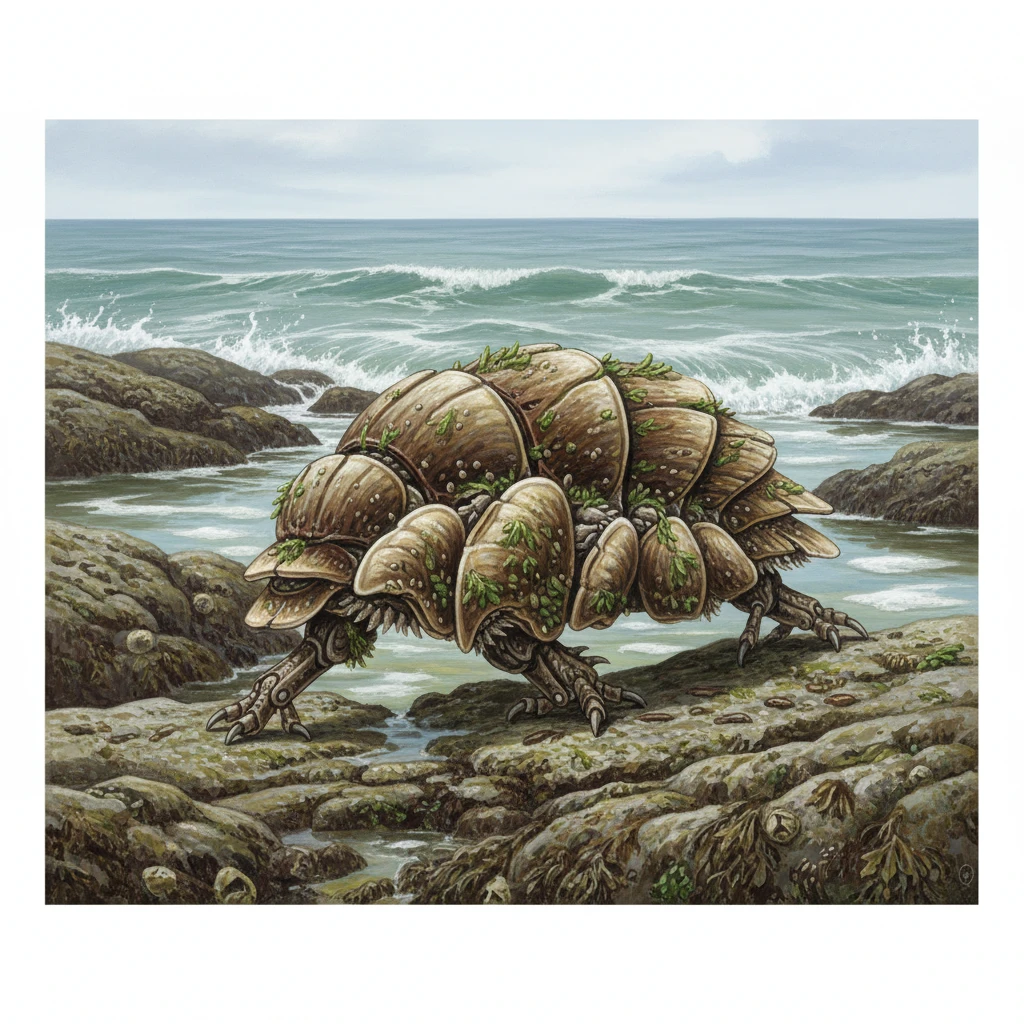
Imagine a fish that has given up swimming to become an expert walker among the slippery rocks of the roughest coasts. The stone barnacle (Lepidopeis gobio), popularly known as the "walking fish", is an evolutionary marvel that challenges everything you thought you knew about fish.
This small inhabitant of the European Atlantic coast, which rarely exceeds 15 cm in length, has developed a unique pectoral musculature that allows it to "take steps" on the rocks while feeding on algae and small invertebrates. Its secret lies in its modified pectoral limbs, which function like real legs capable of generating an alternating movement similar to that of an amphibian.
- Exclusive habitat: Rocky intertidal zones of the Atlantic, from Norway to Senegal
- Key adaptation: It can survive up to 4 hours out of water thanks to its cutaneous respiration
- Unique behavior: Males care for the eggs in nests built among rock crevices
Most fascinating is its life rhythm synchronized with the tides. During low tide, the stone barnacle comes out to "stroll" on the exposed rocks, but when the tide rises, it returns to deeper areas. This cycle has turned this species into a perfect bioindicator for measuring changes in coastal ecosystems.
Recent studies from the Universidad de Oviedo (2023) have revealed that its genome contains 23 unique genes related to the development of bone structures adapted to terrestrial locomotion, a discovery that is inspiring new designs in underwater robotics.
Source: Study published in 'Journal of Fish Biology' (2023), Universidad de Oviedo - Departamento de Biología de Organismos Marinos