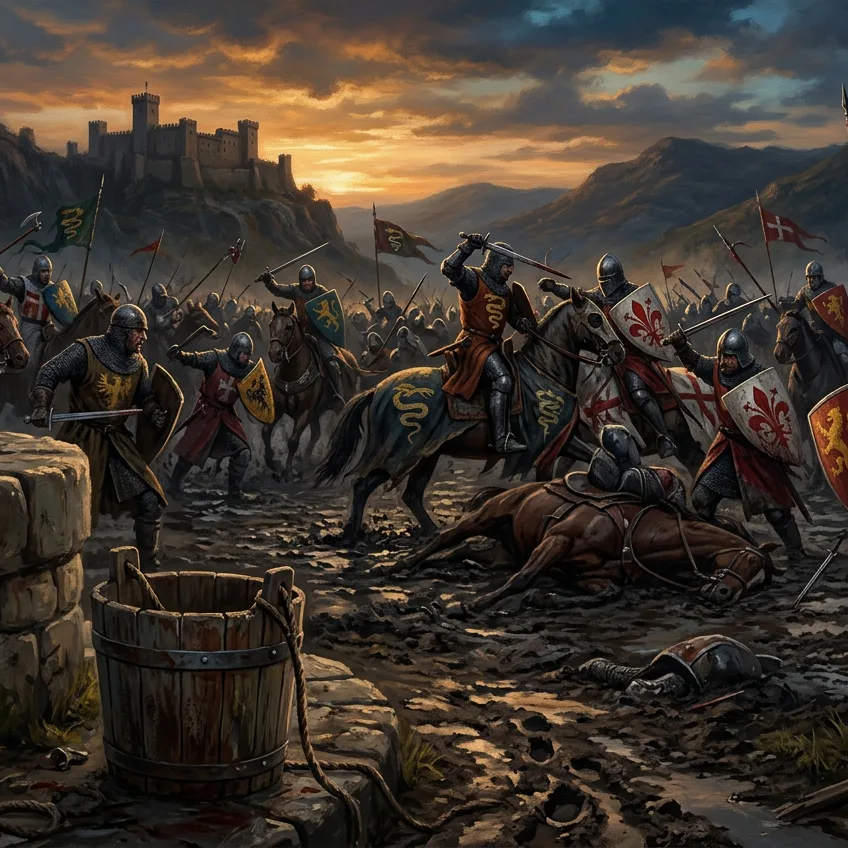
On November 15, 1325, one of the most unusual armed clashes of the Italian Middle Ages took place: the Battle of Zappolino, the bloody climax of the so-called War of the Oaken Bucket (Guerra della secchia rapita). Although territorial and religious tensions between the Guelphs of Bologna (loyal to the Pope) and the Ghibellines of Modena (supporters of the Holy Roman Empire) had been running high for decades, the triggering spark was a domestic object.
Taking advantage of a night raid into Bolognese territory, a group of Modenese soldiers took as mocking loot an oak bucket used to draw water from a public well, next to the gate of San Felice. Upon noticing the offense, the senate of Bologna demanded the immediate return of the bucket. Faced with Modena's refusal and mockery, Bologna formally declared war and mobilized a colossal contingent of 32,000 men.
Modena managed to gather only around 7,000 soldiers, but the severe numerical inferiority did not prevent a devastating tactical turnaround. In just two hours of fierce fighting at dusk, the Modenese cavalry broke through the enemy flanks and routed the papal army, leaving more than 2,000 dead soldiers on the battlefield.
The victors pursued the fugitives all the way to the walls of Bologna and, as the supreme trophy of their victory, kept the humble bucket. Seven centuries later, the original wooden relic is still kept with honor inside Modena's Palazzo Comunale, while a replica hangs from the iconic Torre della Ghirlandina.
Source: Archivio Storico Comunale di Modena / Chronicles of the Battle of Zappolino