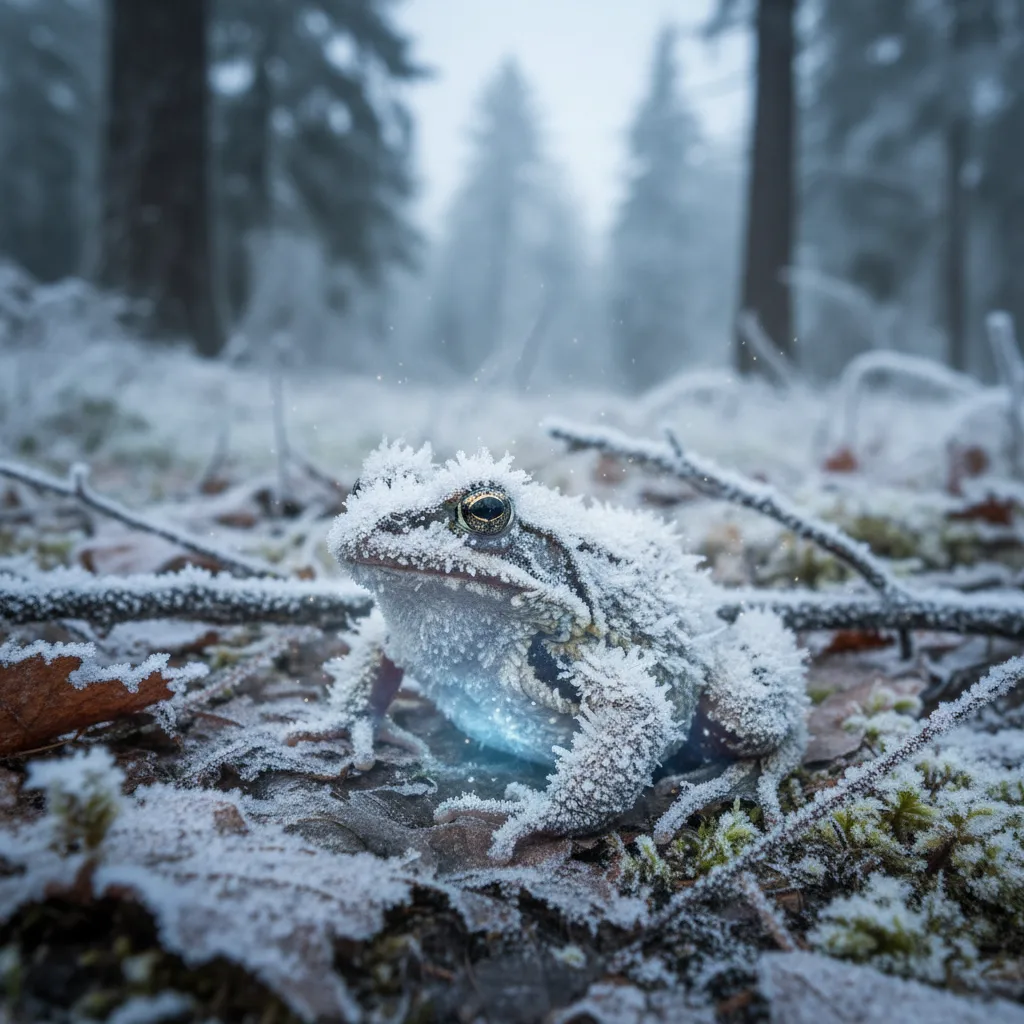
In the frigid forests of North America, there is a creature that defies the logic of life: the wood frog (Rana sylvatica). During the winter months, when temperatures drop below freezing, this small marvel of nature neither migrates nor hibernates in a warm shelter. Instead, it literally turns into an iceberg.
Surprisingly, up to 65% of the water in its body can freeze. Its heart stops beating, its breathing halts, and its brain ceases all electrical activity. The wood frog becomes as stiff as a block of ice, appearing completely dead. However, this state of suspended animation is a master survival strategy.
The secret lies in its ability to produce large amounts of glucose (a type of sugar) and urea in its liver. These substances act as a powerful natural antifreeze. When water begins to freeze, these cryoprotectants prevent ice crystals from forming inside the cells, where they would cause irreparable damage. Instead, ice forms in the spaces between cells, drawing water out and allowing cells to shrink while remaining intact and functional.
With the arrival of spring and the thaw, the wood frog slowly thaws out, its organs reactivate, and in a matter of hours, it hops away as if it had never undergone this incredible ordeal. This phenomenon is one of the most astonishing examples of natural cryopreservation known, and it remains a subject of fascination and study for modern science.
Source: Scientific journals such as 'Journal of Experimental Biology' or 'Nature'