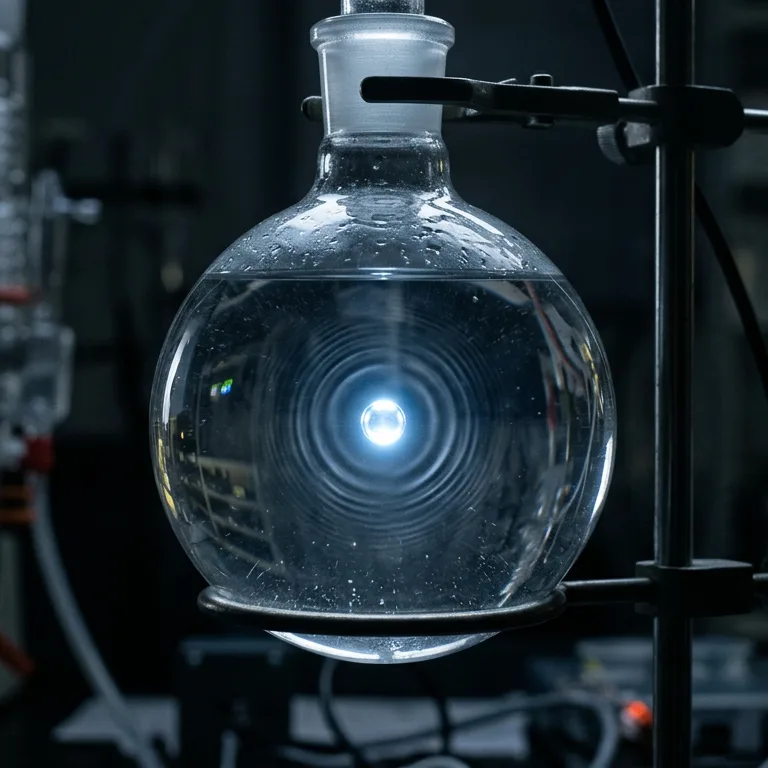
If you have ever opened an envelope or peeled a roll of adhesive tape in a dimly lit room, it is very likely you noticed a faint bluish line at the point of contact. This phenomenon is known as triboluminescence: the emission of light caused by the mechanical fracture of chemical bonds and the separation of electrostatic charges. However, in 2008, a team of physicists from the University of California, Los Angeles (UCLA) decided to see what would happen if they pushed this modest household adhesive to extreme conditions.
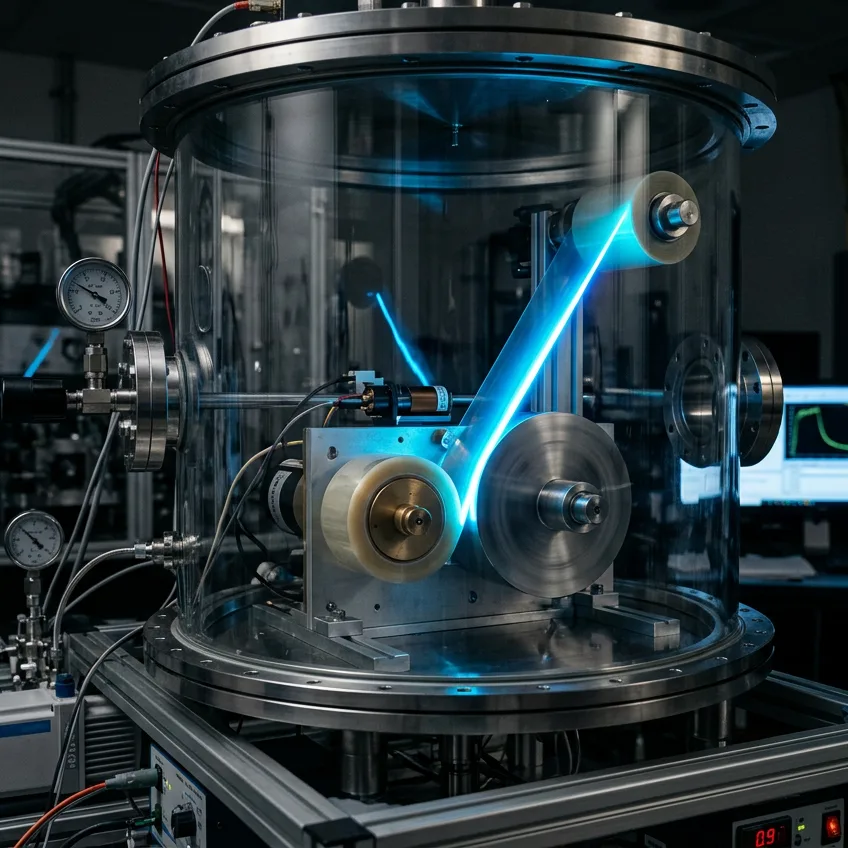
By placing a roll of standard cellophane tape into a vacuum chamber and mechanically unrolling it at a constant speed of about three centimeters per second, something startling happened: the absence of air molecules allowed the electrical charges accumulated between the glue and the plastic to accelerate freely without colliding with gases.
The result was an electrical discharge so violent that the electrons, abruptly decelerating against the substrate, generated braking radiation (bremsstrahlung), producing intense X-ray pulses lasting just billionths of a second. The released energy was so strong that the researchers managed to obtain a perfectly sharp X-ray of the phalanx bones of a human finger using conventional medical photographic film.
Although Soviet scientists had already detected hints in 1953, the UCLA experiment confirmed that everyday mechanical energy can be concentrated into a nanometer-scale space to multiply its power by billions, opening the door to the development of portable, inexpensive X-ray devices without radioactive components.
Source: Nature (Study by Carlos Camara, Juan Escobar et al., University of California, Los Angeles, 2008)