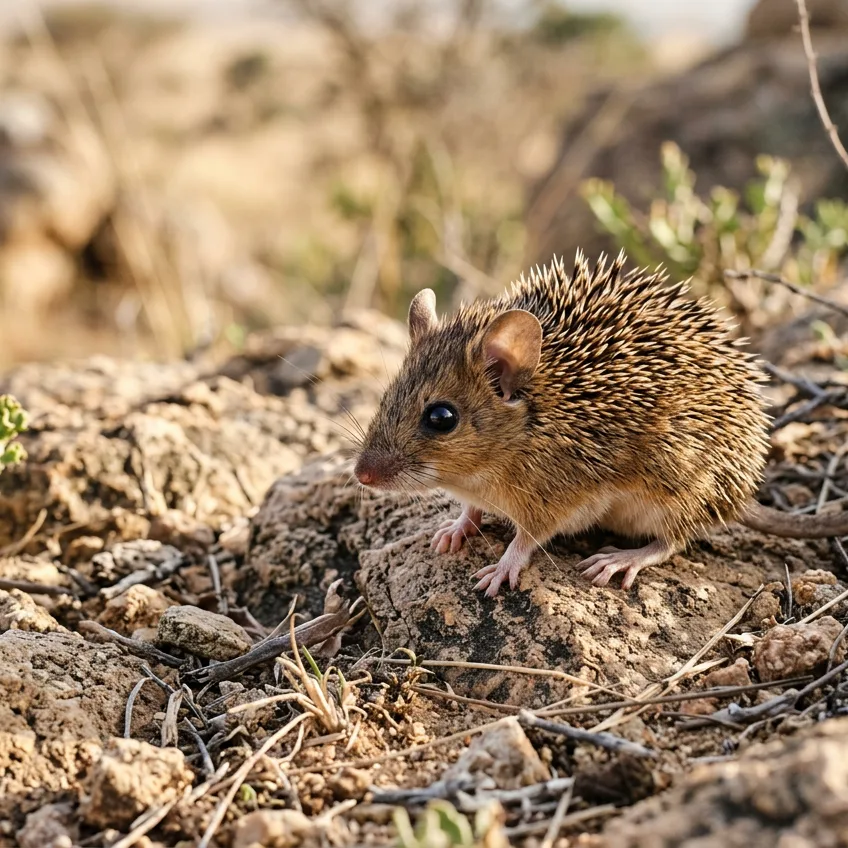
In the animal kingdom, losing large areas of living tissue is usually a death sentence. However, for African spiny mice of the genus Acomys (such as Acomys kempi and Acomys percivali), losing up to 60% of their skin is a clever survival strategy known as dermal autotomy.
When a predator catches them, the skin of these rodents tears with astounding ease, allowing them to break free and escape in exchange for leaving behind a fleshy piece. What is truly revolutionary is not how they escape, but what happens next: unlike any other known mammal, the spiny mouse does not scar, but regenerates completely.
In a landmark study published in the journal Nature in 2012, biologist Ashley Seifert documented how these creatures are able to rebuild:
- Complete skin: they regenerate dermis and epidermis without forming the classic fibrous, stiff tissue of scars.
- Complex structures: they regain functional hair follicles, sweat glands, blood vessels, and even cartilage after ear punch holes.
- Record time: they heal massive open wounds in just three weeks, growing new, smooth fur.
Until this discovery, this level of perfect reconstruction was only attributed to amphibians such as salamanders. Scientists discovered that these mice modulate an immune response low in inflammation and rich in soluble collagen, which prevents fibrosis. Currently, the genome of Acomys is being investigated in biomedicine with the hope of one day unlocking the ability to heal severe burns and heart damage in humans without leaving a mark.
Source: Nature (2012): 'Skin shedding and tissue regeneration in African spiny mice (Acomys)'