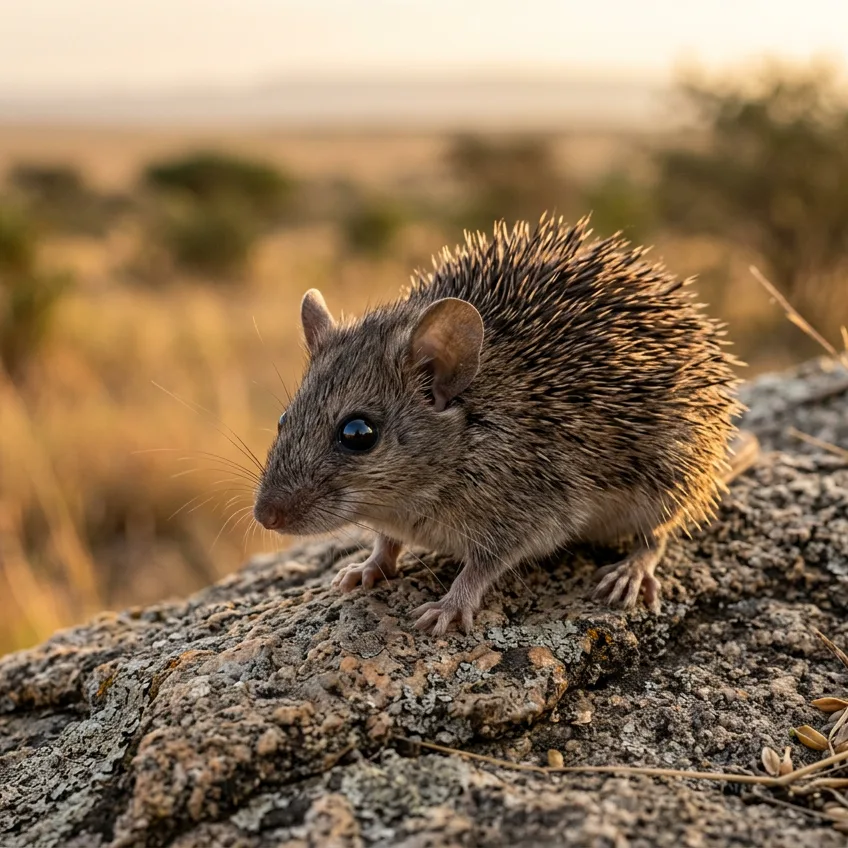
In the vertebrate kingdom, perfect regeneration of complex tissues used to be considered an ability reserved for amphibians such as salamanders. However, in 2012, researchers from the University of Florida confirmed a biological wonder in the African spiny mouse (genus Acomys): it is the first documented mammal capable of regenerating complete skin and functional cartilage without forming scar tissue.
To break free from the grasp of owls and snakes, this rodent relies on dermal autotomy. Its skin is up to twenty times more fragile and tear-prone than that of a common mouse, allowing it to shed pieces of up to 60 % of its body surface at the slightest friction, escaping alive while the predator is left with only a mouthful of skin.
What is truly astonishing begins hours after the injury:
- Regenerative blastema: Instead of filling the wound with fibrous collagen (a traditional scar), its cells form an undifferentiated embryonic mass similar to the one newts use to rebuild limbs.
- Complete restoration: In less than a month, it produces a dermal architecture identical to the original, repopulating the area with hair follicles, sebaceous glands, blood vessels, and nerves.
- Cartilage regeneration: Holes of up to four millimeters in its ear pinnae close up and regenerate cartilaginous tissue without any trace of prior damage.
The study of Acomys proved that mammals still retain the silenced genetic machinery for deep regeneration, putting this small rodent at the forefront of medicine for treating severe burns and human organ damage.
Source: Nature (Seifert et al., 2012: 'Skin shedding and tissue regeneration in African spiny mice (Acomys)')