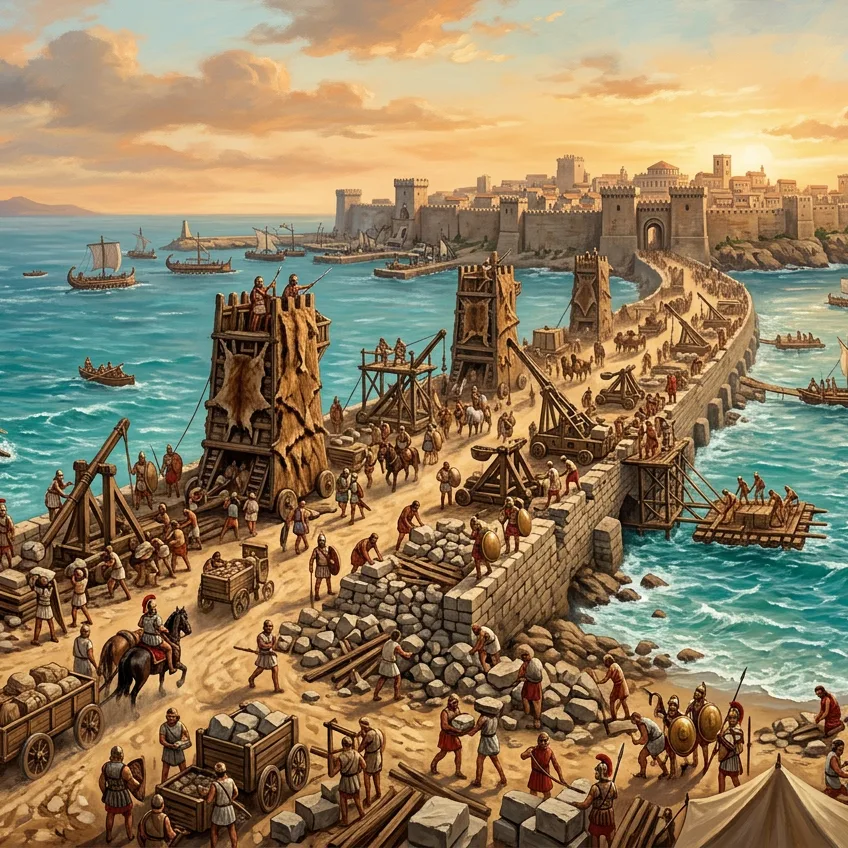
In 332 BC, during his relentless advance toward Egypt, Alexander the Great encountered a seemingly insurmountable obstacle: the Phoenician city of Tyre. Unlike other surrendered cities, the wealthy trading hub stood on a fortified island about 800 meters from the coast, surrounded by deep waters and protected by colossal walls over 40 meters high. Lacking a sufficient fleet at that time to besiege it by sea, Alexander made an unprecedented decision: bring the mainland to the island itself.
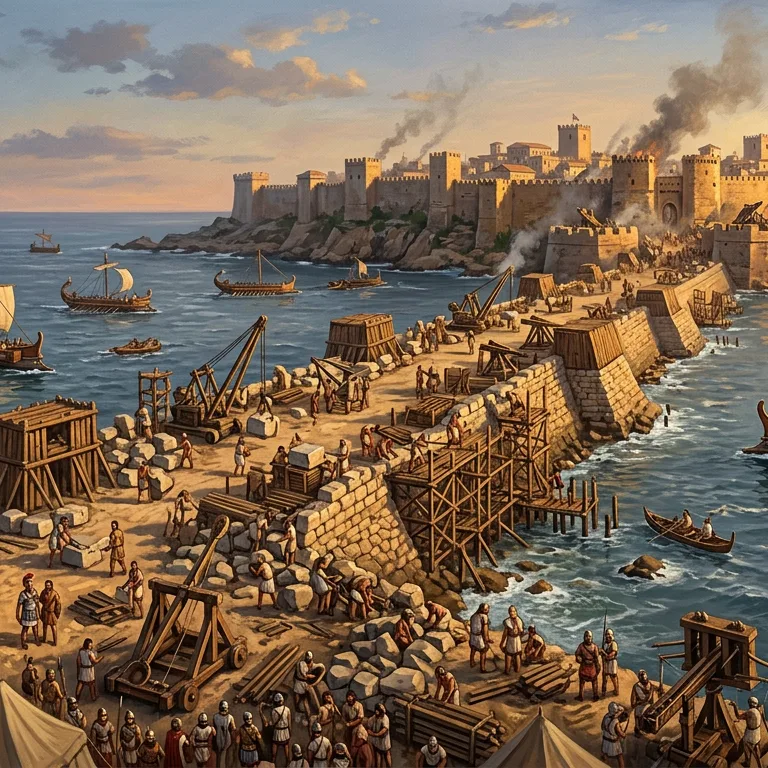
To achieve this, the Macedonian army demolished the ruins of the ancient mainland city and used millions of tons of rock and Lebanon cedar trunks to build a causeway about 60 meters wide across the seabed. The undertaking faced titanic challenges:
- Continuous naval attacks: The Tyrians relentlessly harassed the workers and even burned down two 50-meter-tall Macedonian siege towers using a fireship loaded with pitch and sulfur.
- Combined warfare: Far from giving up, Alexander widened the mole, mounted new torsion artillery, and assembled more than 200 triremes from Phoenicia and Cyprus to neutralize the enemy fleet.
After a seven-month siege, assault troops crossed the causeway and breached the walls. The victory was decisive, but its most enduring legacy was geological rather than military. The artificial structure permanently disrupted coastal currents, trapping sediment for centuries until it filled the channel and transformed the legendary island into the Lebanese peninsula we see today.
Source: Arrian of Nicomedia, Anabasis of Alexander (Book II) / UNESCO World Heritage Centre